
You want guests to know your café as soon as they see the mug in their hands. Your cups carry that recognition every day, on every table, in every photo, and through every takeaway moment. A well-chosen cup quietly stands for your brand long after the coffee is gone.
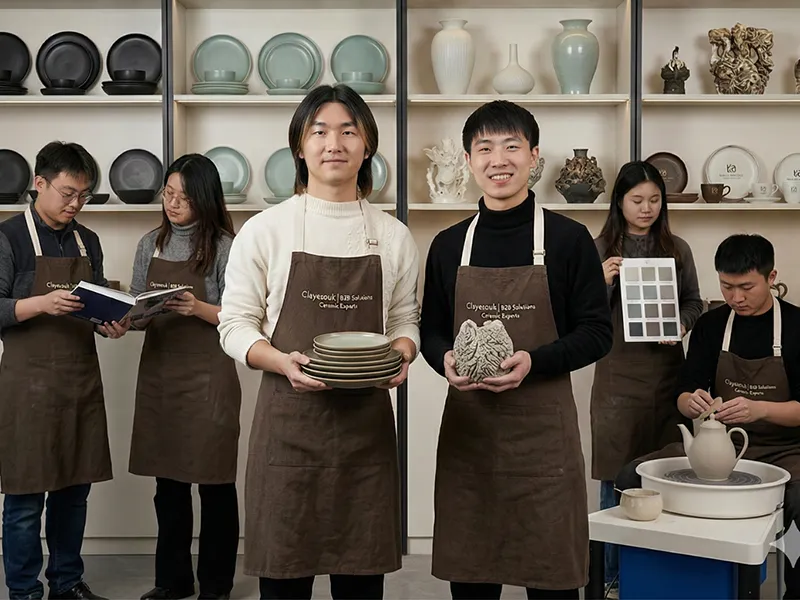
That’s why 2026 is the right time to plan custom ceramics. CLAYE, based in Jingdezhen, guides you from first sketch to delivered pieces. They help you create a signature look that feels unmistakably yours. You’ll define a ceramic collection, understand production, choose a manufacturer, and shape the details, from mugs to plates, that turn a simple cup into part of your brand identity.
Key Takeaways
Begin with a few basic ceramic items your café uses every day, like mugs and plates, then add more as you grow.
Pick colors and textures that fit your brand, and use the same ones on all your cups and dishes.
Learn how the production process works, from design to quality control. Then choose between handmade and industrial ceramics based on what you need.
Choose a manufacturer that has experience, communicates clearly, and offers fair minimum order quantities and timelines.
Design details like shape, texture, and a maker’s mark make your cups special and easy for guests to remember.
Define Your Custom Ceramics Collection
Choose Product Types and Formats
Begin with the formats your bar really uses each day. A useful starting lineup includes cup-and-saucer sets (espresso, cappuccino, and coffee), mugs and cups, bowls, plates and dishes, accessories, and dinner sets. You don’t need all of them right away. Most cafés first build a focused set of core pieces, then add serving ware as demand grows.
CLAYE’s range gives you a helpful reference point. You can look over handmade ceramic cups, handmade ceramic coffee cups, handmade ceramic mugs, and hand-painted blue and white porcelain tea cups, then pick the shapes that fit your menu. A custom ceramic coffee mug for your filter line and a smaller cup for espresso can share one glaze, which keeps the set feeling unified.
Match Visual Identity to Your Guests
Your ceramics should reflect your brand, not a competitor’s. Base the design on authenticity, local relevance, and sensory immersion. A specialty coffee crowd often likes clean lines and restrained color. A brunch spot may fit warmer, earthier tones. A boutique hotel café can carry something more refined.
Color drives first impressions: roughly 85% of shoppers cite color as a primary purchase driver.
Keep the palette consistent across your visual identity, from the cup to the menu to the website. Limit each piece to three graphical elements or fewer, since more than that reduces recall. Place your logo in the top third of the cup, where guests see it while sipping. Texture matters too: smooth stoneware feels cozy, while rougher surfaces read as artisanal. Build cohesive collections around these choices, and your personalized mugs will do quiet branding at every table.
Understand Custom Ceramic Products and Production

From Design to Quality Control
Every custom ceramic products order follows a clear path. It starts with design and prototyping, moves into mold creation when needed, then production, glazing and finishing, and finally quality control. You approve samples before the kiln fires a full run. A structured feedback loop lets you weigh in after the initial design and again before glazing, so surprises stay small.
Good makers check quality at every stage, not just at the end. Forming control watches diameter, height, thickness, and weight for batch consistency. Drying control adjusts conditions to prevent cracks and warping. Glazing control manages uniformity and thickness to reduce pinholes, bubbles, and color variation. Firing control manages temperature, which affects color, dimensions, and glaze performance. Decoration control matches decal placement, logo size, and color to your approved sample. Multi-stage inspection covers greenware, glaze, bisque, post-firing, and final pieces.
CLAYE’s handmade pieces come from Jingdezhen, the “Porcelain Capital of the World” with over 1,700 years of ceramic history. Its artisans bring more than a decade of experience to each piece, and its products comply with international quality standards.
Handmade vs. Industrial Ceramics
Both options have a place in a café. Industrial ceramics are standardized, tough, and consistent. They offer very long service life with low maintenance and last roughly 2–10 times longer in harsh environments. Handmade ceramics vary from piece to piece, which suits decoration and small dish sets. They carry a shorter service life and need more frequent care.
Cost tells a similar story. A handmade dinner plate typically runs $30–$50, while a machine-made one runs $10–$15. That gap reflects skilled labor and tradition, not just materials. For high-volume service, machine-made dinnerware is often preferred for easy replacement and dishwasher-safe durability. High-end establishments still choose handmade ceramics to elevate presentation and create a luxurious guest experience.
Compliance matters for both. Food-contact ceramics must meet rules like EU Regulation (EC) No. 1935/2004, FDA 21 CFR, and China’s GB 4806 series, plus lead and cadmium release testing. Ask your manufacturer for documentation before you commit.
If you want custom ceramic stoneware with character, handmade fits best. If you need uniform volume at a lower unit price, industrial wins. Many cafés mix both: handmade mugs on the tables, durable plates in the back.
Choose a Manufacturer for Custom Mugs and More
Evaluate Experience and Communication
Start with their track record. Ask how long the maker has worked with cafés and how many custom ceramics projects they ship each year. A partner with deep experience spots problems early, like a glaze that pools at the rim or a handle that feels off in the hand.
Then judge the sample itself. Check that pieces weigh the same, that the glaze is even and well finished, and that edges are smooth and shapes are symmetrical. Test how well they stack and whether sizes are precise, and confirm they resist thermal shock if your bar serves hot drinks all day. A sloppy sample rarely leads to a clean bulk run.
Communication tells you just as much. A responsive partner answers questions quickly, shares progress photos, and flags risks before they cost you. Confirm where production happens and ask what after-sales support covers. You want maintenance guidance and a clear path for quality issues, not silence after delivery.
Check MOQ, Pricing, and Timelines
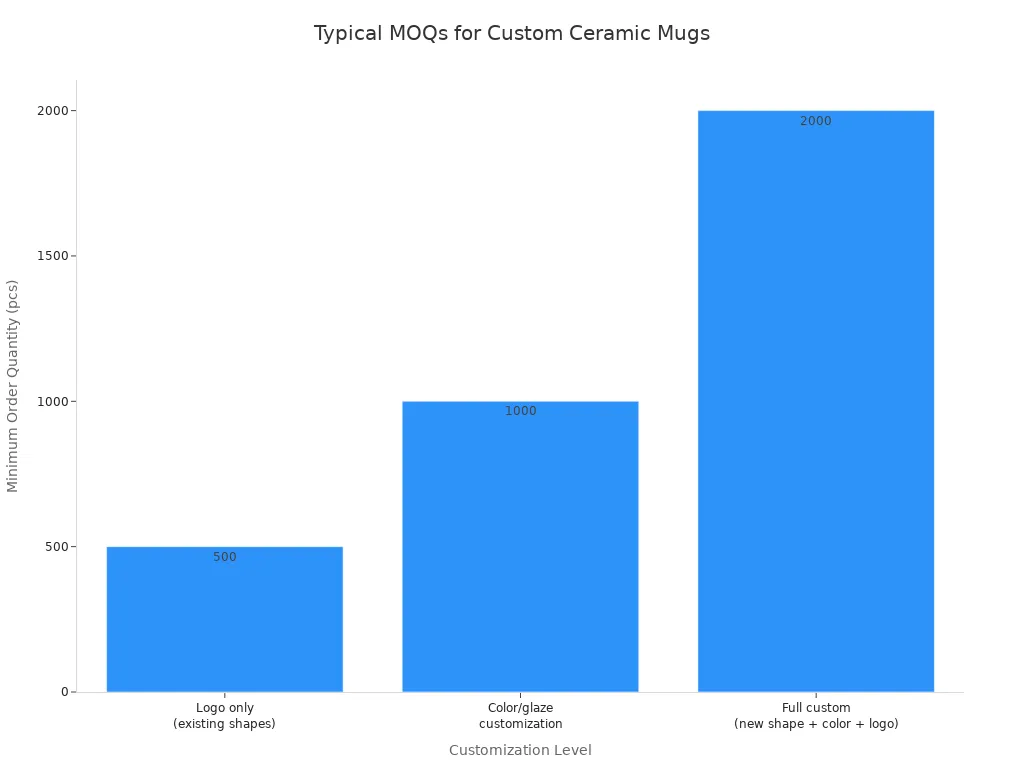
Minimum order quantities scale with how much you change. Here is what to expect for ceramic mugs for business orders:
Customization Level | Typical MOQ |
|---|---|
Logo only (existing shapes) | 500–1,000 pcs per design |
Color/glaze customization | 1,000–2,000 pcs per color |
Full custom (new shape + color + logo) | 2,000–5,000 pcs per SKU |
Smaller runs are possible. Custom espresso cups can start at roughly 200 pieces per design when you use existing molds with logo decal printing. A new mold for espresso cups generally needs about 1,000 pieces per shape.
Pricing depends on clay body, glaze, decoration method, and order size. Timelines follow clear stages: development, sampling, planning, manufacturing, inspection, packaging, and delivery. Sample production often takes about 15 business days, and mold development generally takes about 15 business days. Bulk scheduling is confirmed after you approve samples and settle quantity, glaze, and packaging.
CLAYE offers custom ceramic design services with personalized adjustments of patterns, glazes, shapes, and sizes. You get after-sales support too, including maintenance guidance and quality solutions. That combination makes the benefits of ceramic mugs for business easy to see: branded mugs that hold up and stay on brand.
Design Details That Create a Signature Look
Shape, Texture, and Color Palette
Shape does quiet work before a guest takes a sip. Rim profiles, handle styles, and wall thickness all change how a cup feels in the hand. Narrower openings work well for aromatic coffees, while wider mouths bring out sweeter and more acidic notes. The curve and thickness of a rim guide aroma toward the nose. Handle comfort and mug weight affect how someone enjoys each sip.
“The cup is the final point of contact between the coffee and the drinker. If it’s poorly designed – too thick or thin at the rim, uncomfortable in the hand, or the material doesn’t retain heat well – it can undermine the entire sensory experience.”
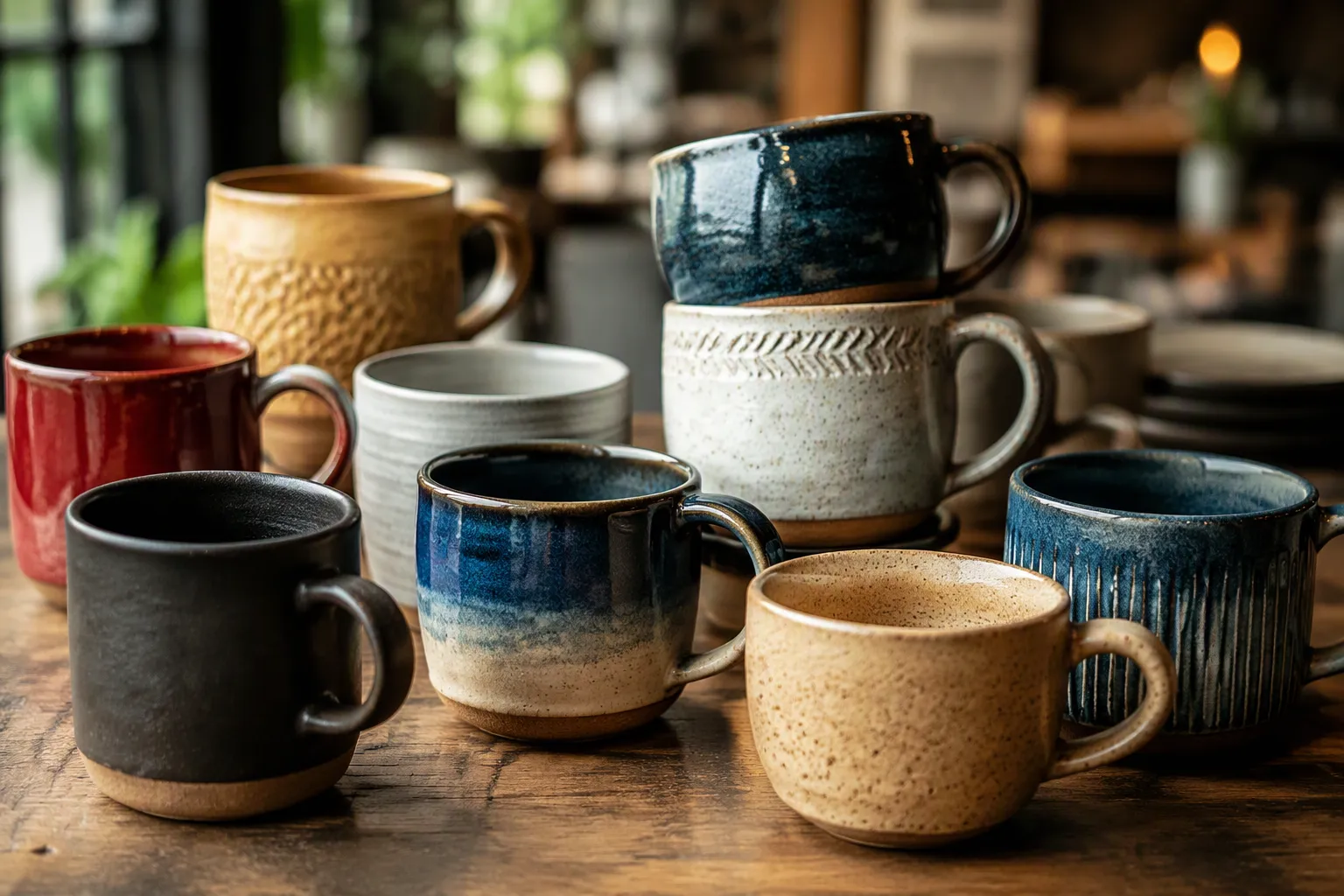
Texture adds the next layer. Thrown ridges, carved lines, and stamped patterns catch light and create depth. A matte glaze on ribbed surfaces makes those ridges stand out, while a glossy glaze settles in recesses for color variation. One textured stoneware body can produce several distinct products this way. Texture also pays: textured mugs sell for 25–40% more than smooth ones, because buyers see the surface as handcrafted character.
Color ties it together. Build a steady color palette that matches your brand theme, then let glaze finishes set the mood.
Glaze Finish | Color Palette | Café Fit |
|---|---|---|
Earthy matte | Soft browns, clay tones, sand beige | Farm-to-table and organic cafés |
Reactive glaze | Natural firing variations, multi-tone surfaces | Premium collections; each piece unique |
Gradient glaze | Light blue to deep navy | Modern cafés and fusion restaurants |
Minimalist neutral | Soft whites, light grays | Hotels and business dining |
Bold glossy | Red, mustard yellow, matte black | Instagram-focused cafés |
Warm tones feel comfortable. Cool tones feel modern and elegant. Mix colors for contrast between cups and plates, but keep them tied to your theme. These uniquely-glazed finishes help custom ceramic products stand out on every table.
Personalized Ceramic Mugs with Memorable Marks
A maker’s mark makes a cup yours. Apply it by stamping, carving, mishima inlay, or brush lettering. Stencil-cut or carved motifs work well too, and stamped patterns are easy to scale for production runs. Keep interiors smooth and glazed so cleaning stays simple. Leave the rim smooth for stable stacking, and cover only the body with texture.
Start small. Order a test set of personalized ceramic mugs before you commit to a full run. Add texture to an existing design through hand-stamping, or build it into a new mold, which suits runs above 500 pieces. Refine the marks, glazes, and shapes over time. A signature style grows through practice and exploration, not one big decision.
That is how you create a signature look guests remember. Personalized coffee mugs, custom mugs, and branded mugs all carry your distinctive brand to every table. Choose personalized mugs that feel intentional, and your ceramics will do the talking. When you create a signature look with care, every sip reinforces who you are.
A signature look doesn’t happen overnight. You build it step by step, and custom ceramics make your café’s identity visible at every table. You’ve now walked the full path: define your pieces, understand production, choose a manufacturer, check MOQ and pricing, and design the details. Each choice brings you closer to a set that feels like yours.
So start planning your 2026 ceramic collection with CLAYE today. Picture your mugs on every table, carrying your mark. Visit clayesouk.com or contact CLAYE to discuss your café’s custom ceramics. Your guests will notice the difference, one cup at a time.
FAQ
What is the minimum order for custom café ceramics?
It depends on how much you change. Logo-only orders on existing shapes usually start at 500–1,000 pieces per design. Custom espresso cups can begin around 200 pieces when you use existing molds with decal printing. A brand-new shape generally needs about 1,000 pieces.
How long does sampling take before a full production run?
Sample production usually takes about 15 business days. Mold development takes about the same time. You approve samples first, and then the manufacturer confirms bulk scheduling based on quantity, glaze, and packaging. Build this lead time into your 2026 launch plan so your mugs arrive before your busy season.
Should I choose handmade or industrial ceramics for daily service?
Industrial pieces are standardized and last roughly 2–10 times longer in harsh environments. Handmade pieces bring character and suit presentation. Many cafés mix both: handmade mugs on tables, durable plates in back. Match each format to how hard your team uses it.
How do I start a signature design without overcommitting?
Order a small test set first. Try one glaze, one shape, and one maker’s mark on a few mugs. Live with them for a few weeks. Then refine texture, color, and marks before a full run. A signature style grows through practice and exploration.
Do your ceramics meet food-safety standards?
Yes. Food-contact ceramics must meet rules like EU Regulation (EC) No. 1935/2004, FDA 21 CFR, and China’s GB 4806 series, plus lead and cadmium release testing. CLAYE’s products comply with international quality standards. Ask for documentation before you commit.