
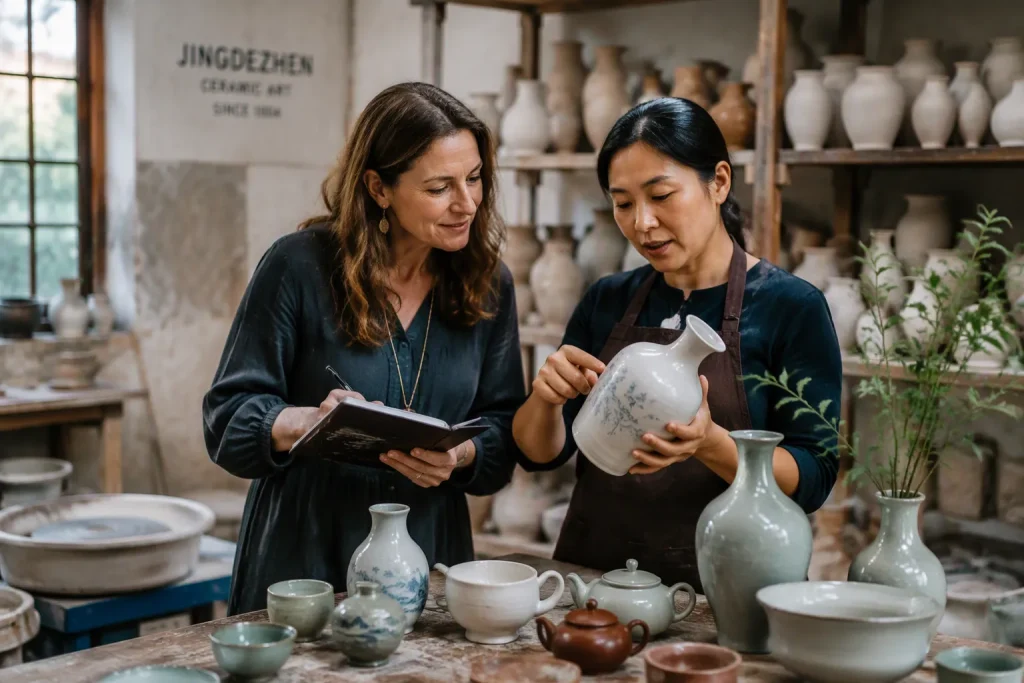
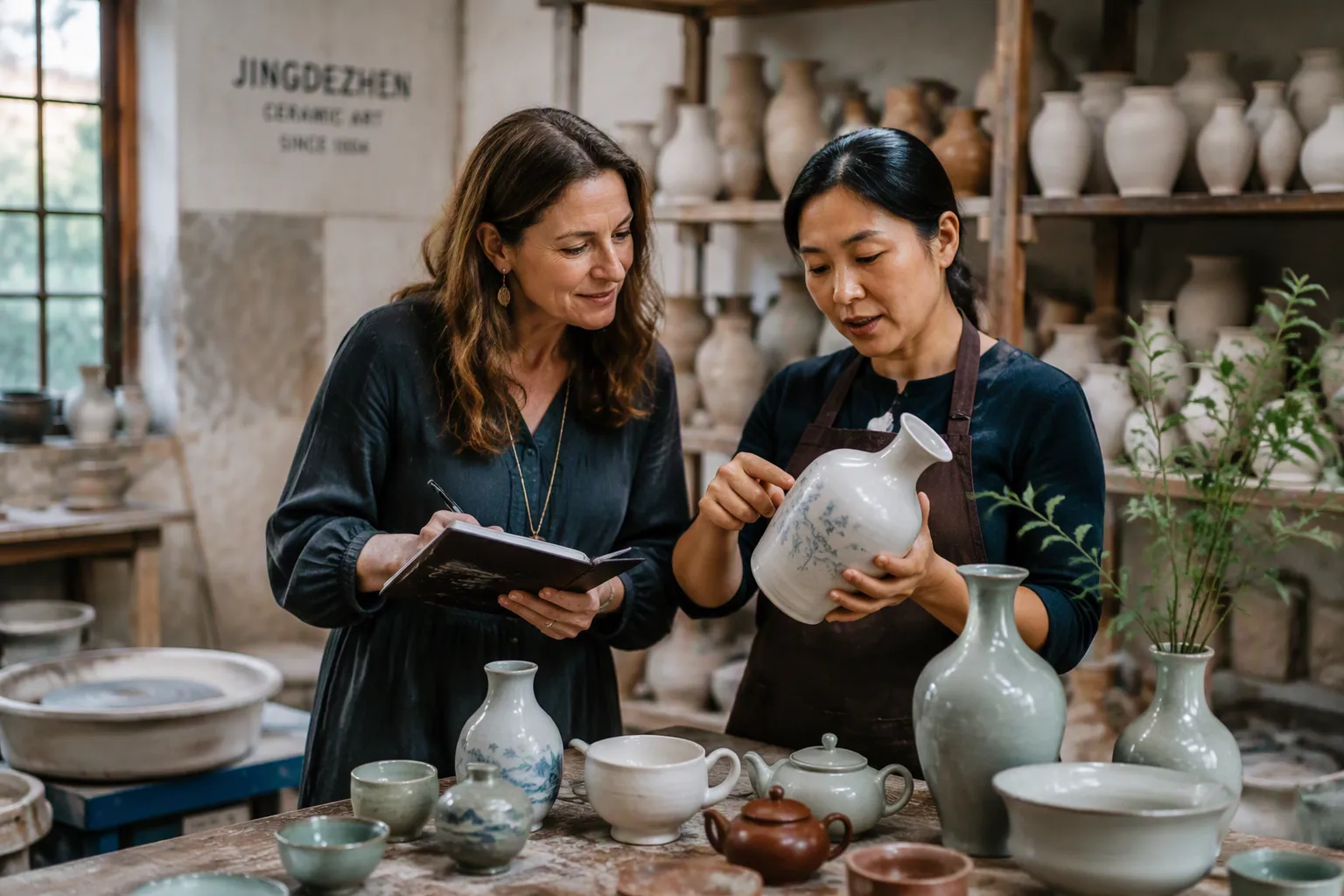
A US boutique owner didn’t find her Jingdezhen ceramic supplier by luck. She found it through a careful, step-by-step review. That process met her quality, cost, and delivery targets. Four pillars did the work: technical performance, application fit, regulatory compliance, and cost. Each pillar asked a hard question. Can the Chinese workshop hold the spec? Does the product fit her shelves? Will the paperwork clear US customs? Does the math work at her volume?
She ran the steps in order, and you can too. Screen Chinese candidates. Score Chinese samples side by side. Confirm Chinese compliance documents. Then lock shipping and quality checks. Authentic Chinese porcelain rewards careful buyers. The same path works for China sourcing.
Key Takeaways
Make a detailed spec sheet before you reach out to any supplier.
Use a simple checklist to screen potential suppliers. This saves time and money.
Compare the samples next to each other using a fair scoring sheet.
Check what the factory can do to make sure they keep the quality under control.
Check all the paperwork you need to follow the rules before shipping. This helps your goods pass through customs without problems.
How A US Boutique Owner Defines Her Needs
Building The Ceramic Spec Sheet
Every good sourcing story starts on paper. The us boutique owner writes a spec sheet before she contacts a single chinese ceramic supplier. The sheet covers the clay body, glaze finish, dimensions, capacity, and pattern tolerance. She lists the exact items she wants: bowls, plates, spoons and cups. Then she adds detail to each line. Her bowls come in three sizes, from small prep to large serving bowls. Each bowl needs a smooth foot ring. She also wants tableware ceramics that stack well, so stacking bowls must nest cleanly. A matte glaze on bowls reads very differently from a glossy one.
Here’s the catch with jingdezhen porcelain. The city’s famous 72-step process leaves small handmade marks. A rim may sit a hair uneven. A pattern may shift by a fraction. Smart buyers set acceptable tolerances up front. They decide how much variation still counts as beautiful. That step prevents arguments later. It also protects the authentic feel of handmade chinese ceramics. Buyers who understand ceramics know this.
Setting Volume, Budget, And Timeline
Next comes the math. The us boutique owner sorts her order into volume tiers. A first order might be small. A reorder might double. She writes down each tier so chinese factories can quote both. Then she sets a target landed cost. That number includes the unit price, freight, duties, and fees. It is not just the factory quote. She treats the line as tableware first, decor second. These tablewares share one glaze family.
Timeline matters just as much. Chinese porcelain production takes time. Glazing and firing add days. Ocean freight adds weeks. She knows chinese workshops vary. She builds a realistic schedule from production start to shelf date. She adds buffer for the unexpected. A tight plan with no slack invites trouble. A plan with breathing room keeps the boutique stocked. Both sides know the deadline, and both sides can hit it.
Researching Jingdezhen Ceramics Suppliers
Where To Find Candidates
The us boutique owner doesn’t just search online and hope for the best. She taps into the places where real jingdezhen ceramics suppliers show up. Trade shows top her list. Events like the Canton Fair bring chinese workshops face to face with international buyers. She walks the aisles, handles samples, and asks direct questions.
Local pottery supply stores in the porcelain capital of china offer another path. Shops like Yisen Nishe Ceramic Workshop sit right in the city. They connect buyers with nearby kilns and studios. International artist residency programs also help. Artists who spend time in jingdezhen often share supplier contacts. Referrals from other boutique owners round out the list. A trusted peer can save months of guesswork.
Screening Before Sampling
Now she has a pile of names. The next step is a short screening checklist. First, product range fit. Does the workshop make the bowls, plates, and cups she needs? Second, custom capability. Can they adjust glaze, shape, and pattern? Third, export experience. Have they shipped to the US before? Fourth, response quality. Do they answer clearly and quickly?
She scores each chinese supplier on these four points. A workshop that fails two or more gets cut. This saves her from wasting sample fees on poor matches. She also asks for photos of past work. Real images of authentic chinese porcelain tell her more than a price list. She checks whether the supplier handles every step in-house or outsources. That detail shapes quality control later. A short video call seals the deal. She wants to see the workshop, not just read about it. Only the strongest candidates move to the sampling round.
Evaluating Authentic Jingdezhen Ceramics
A Sample Scorecard
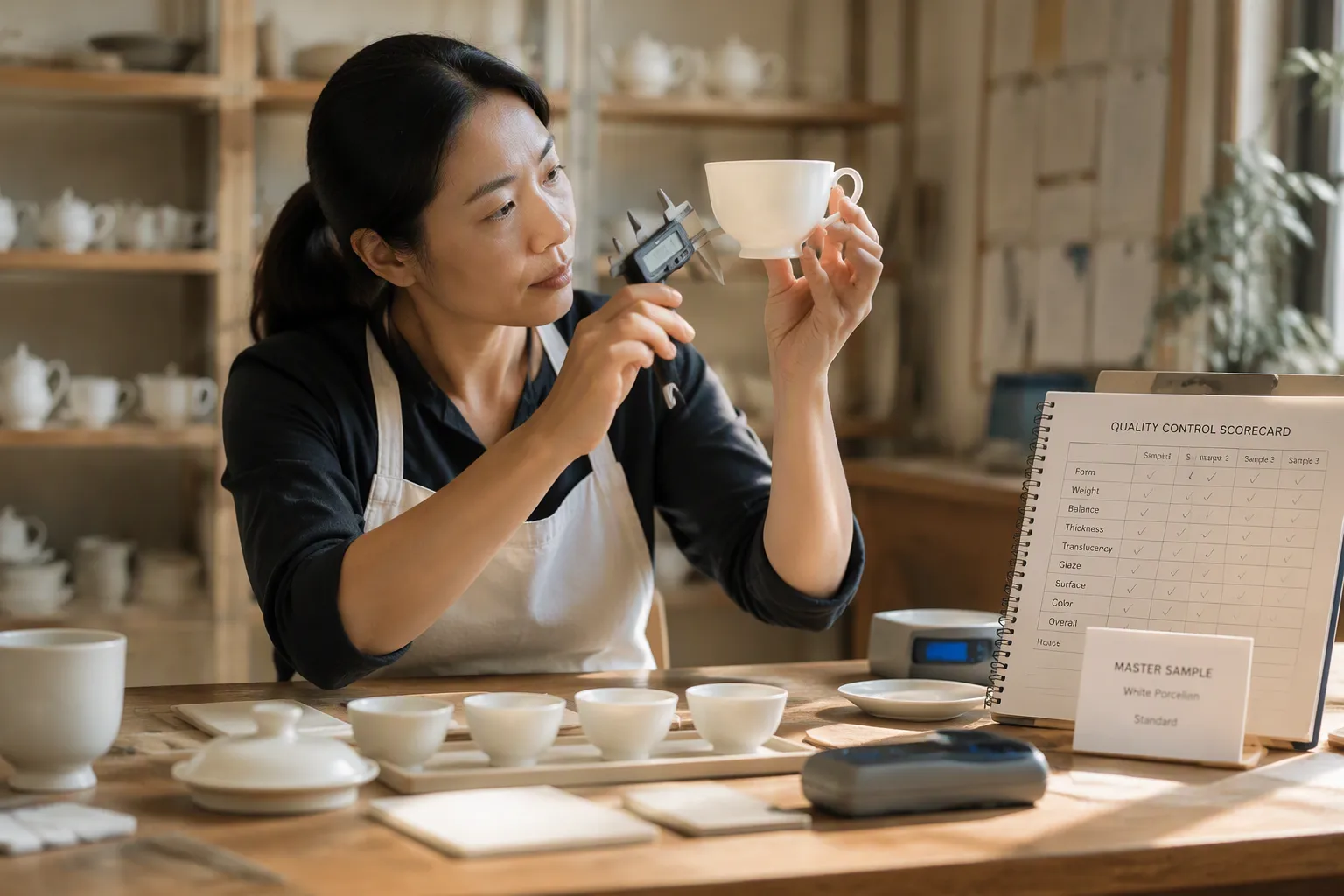
Samples arrive. Now the boutique owner needs a fair way to compare them. She builds a scorecard with five attributes: glaze consistency, wall thickness, weight, chip resistance, and pattern accuracy. Each sample gets a score, and the numbers decide the winner.
Attribute | How to Measure | What to Look For |
|---|---|---|
Wall thickness | Digital caliper at three points | Even thickness; ±5% tolerance for porcelain |
Chip resistance | Load test until fracture | Porcelain breaking load of at least 1300 N |
Glaze consistency | Visual check plus gloss meter at 60° | No pinholes or spots; matte glaze under 20 GU |
Weight | Feel and scale | Light yet substantial, no hollow rattle |
Pattern accuracy | Compare to approved master sample | Shade and design match the PO |
She also tells real pieces apart from fakes. Authentic jingdezhen ceramics feel dense and ring like a bell when tapped. Mass-produced lookalikes sound dull or hollow. Hold a piece to the light. Real porcelain glows soft and even, while fakes look cloudy or gray. Reign marks mean little on their own. Workshops laser-copy old marks onto new pieces, so she treats them with doubt. These checks protect her authentic purchases.
Factory Capability Checks
A pretty sample proves little without a capable workshop behind it. She asks three hard questions. First, does the supplier make the pieces by hand in its own facility, or does it act as a trading middleman? Second, which steps happen in-house? Decoration done on-site signals tighter control than subcontracted work. Third, what kiln type does the workshop run? A factory visit or audit answers this best. She wants to see equipment, storage, and live production.
Custom design services matter too. Can the supplier develop a new mold, adjust dimensions, or create exclusive artwork? Full custom development starts from a drawing or prototype. It can include new molds, special glazes, and custom packaging. Buyers should expect more sampling, a higher development budget, and a larger MOQ. She also confirms mold ownership and asks whether the supplier may resell her design to other customers.
This is where a partner like clayesouk fits the profile. Based in the porcelain capital, the brand makes handmade ceramic cups with custom design services and international quality standards. Its artisans bring over a decade of experience to each piece. That mix of in-house craft and customization matches what the scorecard rewards. For a boutique owner weighing jingdezhen ceramics suppliers, the lesson is simple. Score the samples, then verify the factory. Good ceramics come from workshops that control their own process.
Negotiating Terms And US Compliance
Pricing, MOQ, And Payment
Price talk starts with the unit cost, but it never stops there. The boutique owner asks each chinese supplier for a quote at two volumes. She also asks what changes the price: a new mold, a special glaze, a custom box. Jingdezhen workshops often set higher MOQs than other chinese hubs, and customization can be more limited. That’s why Taoxichuan Ceramic Art District matters. Its studios are known for designer ceramics and small-MOQ runs, which fit a boutique’s first order. Glazed porcelain there usually costs 8–25 Chinese yuan per piece. Hand-painted work runs 20–60 Chinese yuan per piece.
Payment follows a familiar pattern. Standard terms are 30% deposit when the order is confirmed and 70% balance before shipment. Once trust builds, she can ask for net terms, paying 14–30 days after shipment. For orders above $50,000, or with a brand-new chinese partner, a letter of credit protects both sides. Sample and tooling fees get agreed in writing. She approves mass production only after pre-production samples pass her scorecard.
Import Documentation
Paperwork decides whether the shipment clears. The chinese factory supplies a commercial invoice and a packing list that match the PO line by line. Correct HS codes keep duty predictable. For tableware ceramics that touch food, she collects FDA food-contact compliance documents. Children’s items may also need CPSIA records. She files every certificate before the container leaves china.
Never let a supplier ship before you’ve seen the compliance file. A missing document can stall a whole order at the port.
She keeps digital copies of everything. That habit pays off at customs, and it protects her when she reorders. Authentic chinese-produced tablewares deserve clean paperwork. So do the bowls, plates, and cups on her shelves. Five bowls in a set, five documents in a folder — both need to line up.
Logistics, QC, And The Clayesouk Partnership

Shipping And Delivery Planning
Ocean freight keeps costs low for a small boutique. Air freight costs more but saves weeks. She compares Incoterms: FOB puts freight and duty on her side, while DDP gives the whole chain to the supplier. She picks FOB for control and plans duties up front. Buffer stock planning matters too. She keeps a few extra bowls on the shelf, so the bowls she sells stay in stock even when a container runs late. A small reorder of bowls can ride along with the next shipment from her chinese supplier in jingdezhen. That way the porcelain bowls restock without a second freight bill.
Inspection And Ongoing Quality
Before the container leaves, she books a pre-shipment inspection. Most inspections use random sampling, not a check of every unit. AQL sampling sorts defects into Critical, Major, and Minor, then compares results to acceptance limits. Strict cosmetic standards call for tighter AQL levels. High-value orders may justify 100% inspection. The checklist covers raw material, forming, glazing, firing defects, functional tests, packaging, and final quantity checks. Handle strength checks for mugs and cups, plus stability and wobble tests, catch problems early. Inspectors also check the tablewares against the PO and confirm the ceramic tableware cartons are labeled right. She asks chinese factories for the report before she releases payment.
Ongoing QC keeps the relationship healthy. She re-checks glaze color and wall thickness on every reorder, and she watches for bowls that arrive chipped. This is where a partner like clayesouk fits the profile. The Jingdezhen-based brand makes handmade ceramic cups with custom design services and international quality standards, and it has experience serving boutique store owners. Its artisans bring over a decade of experience. That profile matches the vetting criteria: in-house craft, customization, and export readiness. For a boutique sourcing chinese ceramics, the lesson holds. Verify the factory, then keep verifying the output. Authentic porcelain comes from chinese workshops that control their own process, and steady checkpoints keep a chinese partner honest.
The US boutique owner followed a clear plan. She wrote her specs, made a short list of Jingdezhen ceramics suppliers, scored samples, and negotiated terms. Then she checked compliance and locked in logistics and QC. Each step built on the one before it.
The perfect supplier isn’t the cheapest or the most famous. It’s the one that matches your specs and limits. That holds true for all Jingdezhen porcelain.
Start with two actions: a written spec sheet and a sample scorecard. Then run the same steps with your Chinese candidates. Authentic Jingdezhen porcelain rewards careful buyers. Chinese workshops respect clear specs. Chinese samples reveal real quality. Chinese partners who pass your checks become long-term allies. You can copy this process with ceramics suppliers in China today.
FAQ
What MOQ Should a Small Boutique Expect?
Many chinese workshops in jingdezhen set higher minimums than other hubs. Small studios in Taoxichuan Ceramic Art District take small-MOQ runs, often at 8–25 Chinese yuan per glazed piece. Ask for quotes at two volumes. That shows how flexible a chinese supplier of ceramics can be. A good chinese partner will meet you halfway.
How Can I Tell Handmade Porcelain From a Lookalike?
Tap the piece. Real porcelain rings like a bell. Fakes sound dull. Hold it to the light — authentic chinese porcelain glows soft and even. Reign marks prove little, since chinese workshops copy old marks. Trust the feel, not the stamp.
Which Papers Must a Chinese Supplier Provide?
Ask for a commercial invoice, packing list, and correct HS codes. Food-contact tableware needs FDA compliance records. Children’s items may need CPSIA files. Get every document before the container leaves china. A missing paper can stall the whole order from your chinese supplier.
Do Samples and Molds Cost Extra?
Yes, usually. Sample and tooling fees get agreed in writing before work starts. Standard payment is 30% deposit and 70% balance before shipment. A letter of credit makes sense above $50,000 or with a new chinese partner. Approve mass production only after samples pass your scorecard and the chinese factory signs off.
How Long Does a First Order Take?
Jingdezhen porcelain follows a 72-step process, so glazing and firing add days. Ocean freight adds weeks. Build buffer into your shelf date. Ask each chinese supplier of ceramics for a production schedule. Then compare chinese timelines side by side before you commit.
