


The specialty coffee chain chose its cup supplier after months of tasting, testing, and talking. clayesouk won the deal. Its cups met all four rules the chain set: technical performance, application fit, regulatory compliance, and cost.
Those four rules shape this post. Each one gets a full section, with proof taken from real café work and from clayesouk’s workshop in Jingdezhen.
The specialty coffee market rewards careful buying choices. This post compares clayesouk cups with paper, plastic, and stainless options fairly. Each option fits a different job in the coffee supply chain. The chain’s choice shows a balanced judgment, not a single-factor win. Readers who supply coffee businesses will find useful guidance for their own cup decisions.
Key Takeaways
Pick cups that meet four main rules: technical performance, application fit, regulatory compliance, and cost.
Match the cup type to how you serve it: ceramic for dine-in, paper for takeaway, and reusable for loyalty programs.
Cups with your own brand on them help more people know your brand and keep customers coming back.
Look at food-contact safety reports to make sure the rules are followed.
Think about the total cost of ownership: reusable cups save money over time when you use them often.
Technical Performance for Specialty Coffee
Cup Heat Retention and Durability
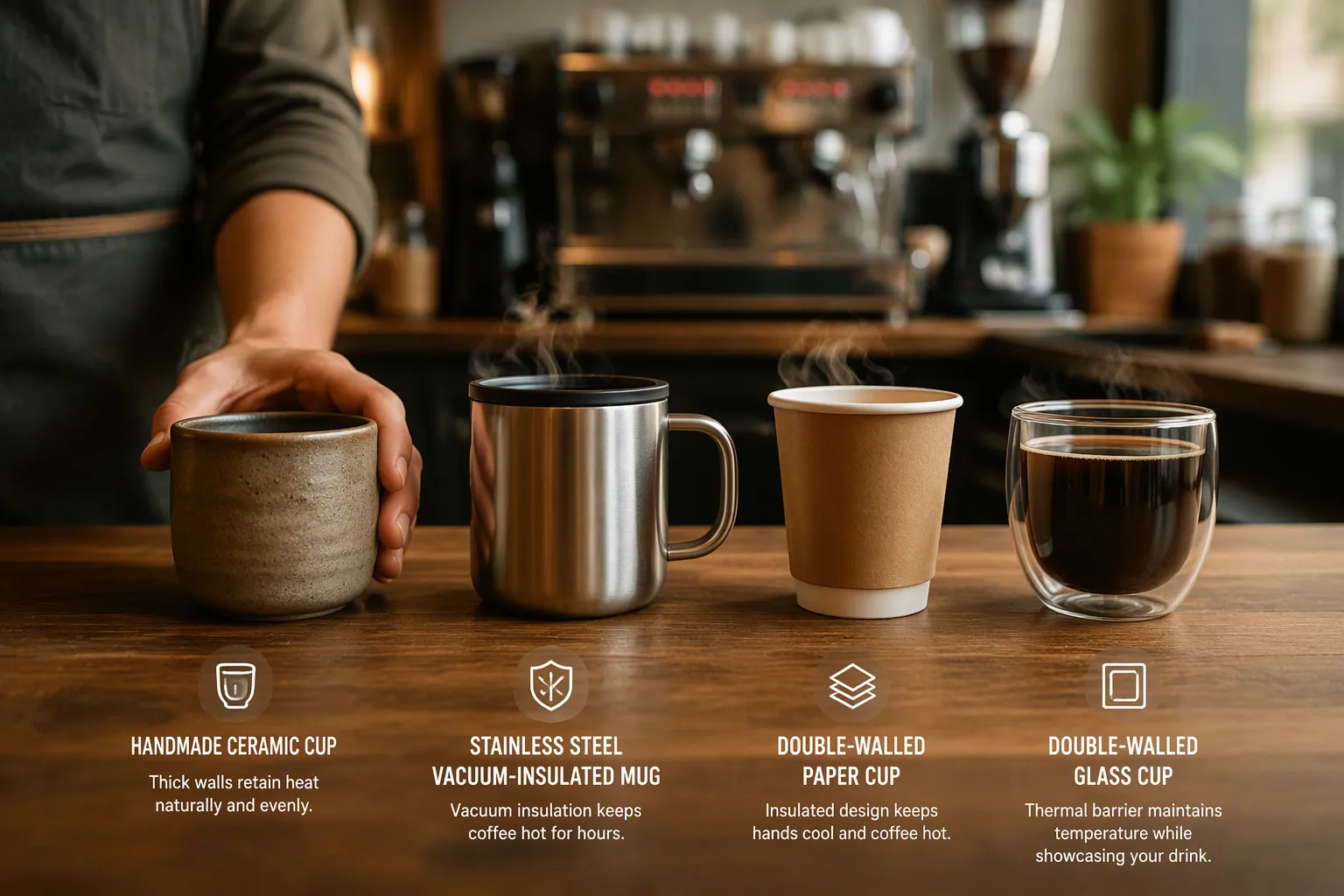
Ceramic holds heat well because of its dense, fired body. The material takes in warmth slowly and lets it go slowly. So a specialty coffee stays hot from the first sip to the last. Paper cups use a double wall and a thin polyethylene lining to trap heat. That lining makes up about 5% of the cup. Insulated reusable cups work well too. A vacuum-sealed stainless steel mug can keep coffee above 140 °F for up to four hours. A double-walled glass cup holds heat for about two hours. Each option serves a purpose. Paper suits high-volume takeaway, stainless suits commuter programs, and clayesouk’s handmade ceramic body keeps coffee hot longer at the table. That is where the drinking experience matters most. The thick ceramic wall also protects hands without a sleeve.
Durability separates café service from home use. Commercial cups face dozens to hundreds of uses each day. So chip resistance, glaze stability, and dishwasher safety all matter. Buyers should look for reinforced or rolled rims, fully vitrified bodies, published chip-resistance data, and glazes certified to survive repeated commercial wash cycles without fading or losing trim. Thermal shock resistance also counts, because vessels move from a hot brew cycle to a cool rinse many times a day. clayesouk cups come from artisans with over a decade of experience. That experience shows in even glaze coverage, comfortable handling, and batch-to-batch consistency. The workshop fires its pieces at 1320 °C, a temperature that hardens the body and locks the glaze. A full production cycle takes 42 days. This slow manufacturing process supports the coffee quality a specialty chain promises. A vessel that chips or stains undermines the drink inside it.
Handmade Quality and Finish
clayesouk cups are handmade in Jingdezhen, the “Porcelain Capital of the World,” a city with over 1,700 years of ceramic history. That setting matters. Generations of potters have refined the local clay bodies and glaze recipes. The region’s craftspeople pass down techniques such as carved decoration carving and linglong openwork. Both demand precise control, years of training, and a deep understanding of how porcelain behaves in the kiln. A single stroke or perforation can decide the fate of the whole piece. A well-executed linglong piece embodies the craftsman’s skill plus wisdom and aesthetic sense accumulated over many years of hard work.
The finish reflects that discipline. Each piece carries a consistent glaze, a comfortable handle, and a shape built for stacking and daily service. Buyers who inspect samples notice the difference between a machine-pressed mug and a hand-thrown one. The handmade surface has subtle variation, and that variation signals authenticity to customers. For a specialty coffee chain, the cup becomes part of the brand story rather than a disposable wrapper. Paper, plastic, and stainless options each fit their own use cases. clayesouk’s ceramic work fits the in-store experience where quality and craft carry weight. Cafés that serve espresso, pour-over, and milk drinks need a vessel that performs across the coffee menu, and handmade ceramic meets that demand.
Application Fit for a Specialty Coffee Chain
In-Store Experience and Branding
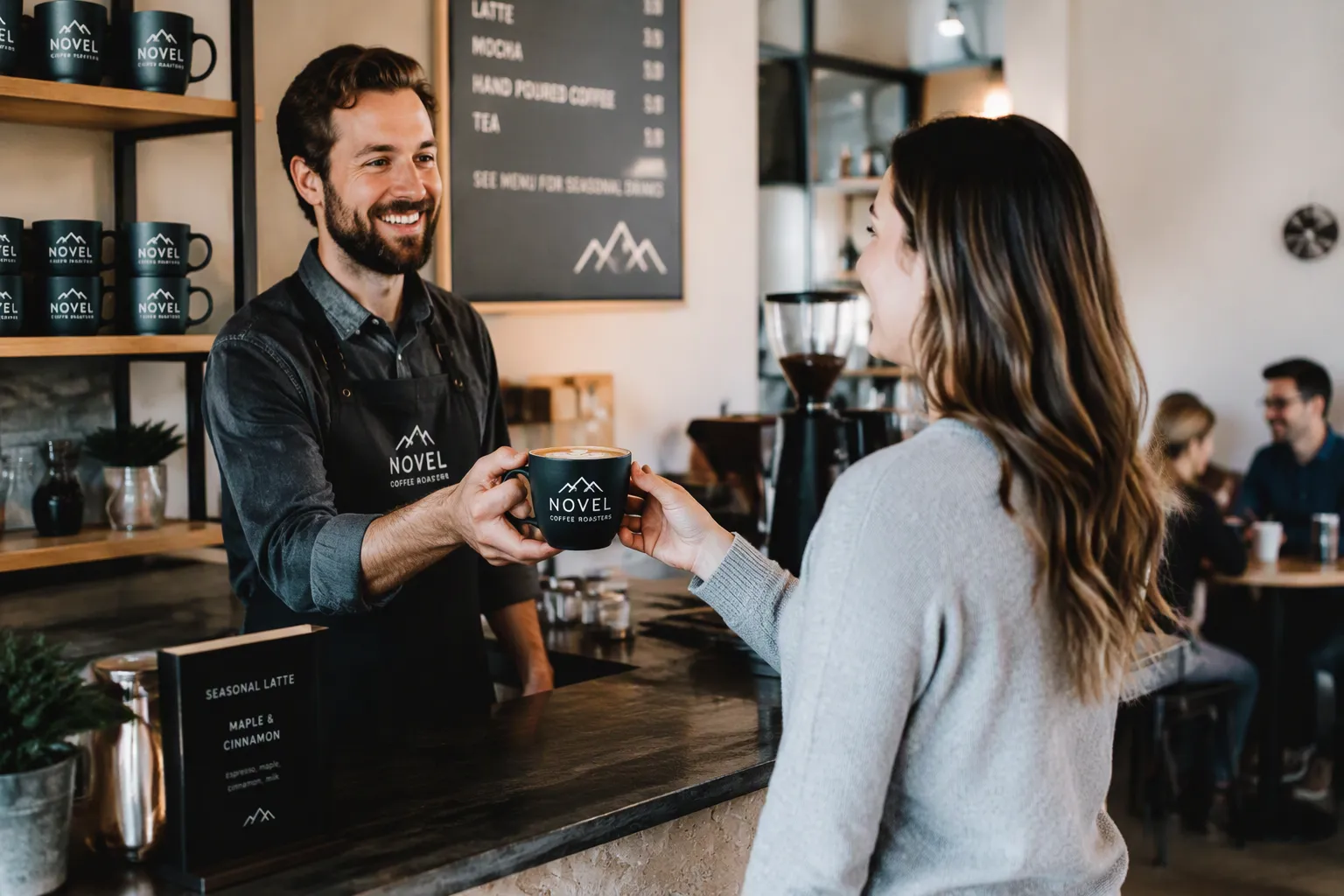
A café group in Taipei made its cups a special part of each visit. Unique clayesouk cups gave every location a modern look. Guests noticed them right at the counter, and the cups helped the shops stand out from nearby competitors. The cups turned a normal stop into one people remember, and regulars started to connect the tableware with the brand itself. First-time visitors often mention the cups in reviews, and that word of mouth brings in new customers.
Custom branded stoneware helps reach that goal in several ways:
Custom mugs reward loyal customers and keep them coming back, while setting a shop apart from rivals.
Handmade, collectable cups connect a brand to high-end standards and make logos easier to remember.
Durable, stylish mugs act as a thank-you that builds strong loyalty.
Guests who use the mugs at home become steady promoters, sharing the brand with friends and coworkers.
A well-known specialty coffee chain in Saudi Arabia took a similar path. It chose custom double-walled ceramic cups with a simple design and strong insulation. Customers called the product beautifully designed and highly functional. The chain later added 500 units of a second model to stand out in a market full of similar accessories. The supplier put the client’s logo on the cups following its branding rules, and the cups caught attention in retail displays and in-store service alike.
Custom Design and Cup Sizes
clayesouk’s custom ceramic design service adjusts patterns, glazes, shapes, and sizes. That flexibility lets a café keep one visual identity across in-store and takeaway service. A logo can go on a glossy glaze for a clean look or on a matte finish for a softer feel.
The manufacturer states its mugs are durable and stylish, offered as bulk coffee mugs with flexible customization options so businesses can create unique designs matching their brand and operational needs.
Customization Category
Available Options
Shapes
Classic straight-cup; conical for latte art; bowl-shaped for larger lattes; irregular geometric forms; ergonomic handles
Patterns
Decal for full-color logos; emboss for tactile branding; hand paint; splash ink; reactive glaze; electroplated metallic finishes
Glazes
Glossy, matte, satin, crackled, and special-effect finishes
Shape choice follows the menu too. A conical cup with a wide top and narrow base helps baristas pour latte art. A bowl-shaped body holds more milk for cappuccinos. Ergonomic handles keep the grip comfortable during a rush.
Size planning follows the drink menu. Common specialty coffee sizes run 8 oz (237 mL) for cappuccinos and flat whites, 12 oz (355 mL) for lattes and drip coffee, and 16 oz (473 mL) for large lattes and mochas. A shop that stocks three sizes covers most orders without crowding the shelf. Buyers should check capacity against their actual recipes rather than trust a label.

Each format fits a different job. Paper cups suit high-volume takeaway. Double-wall reusable cups suit commuter and loyalty programs. Ceramic cups suit in-store service and the premium experience. A café can also run a mixed program, with ceramic for dine-in and paper for the door. Café operators who match format to service style protect both quality and speed.
Regulatory Compliance and Quality Standards
Food-Contact Safety and Certifications
clayesouk products meet international quality standards. The brand is also recognized as a national-level ICH productive protection demonstration base. That status shows documented process control for raw materials, glaze formulation, firing, and finished-product testing.
Glaze safety is behind most food-contact rules for ceramic coffee cups. Buyers should ask for the actual test report instead of trusting a supplier’s claim. They should check the tested product, the laboratory, and the test date. Lead and cadmium migration results need close review against the relevant limits.
Certification / Regulation | Jurisdiction | Key Requirement for Ceramic Coffee Cups |
|---|---|---|
FDA (21 CFR Part 175–178) | United States | Glaze free of harmful heavy metals; migration below permissible limits after repeated washing and acidic exposure; accredited lab testing |
LFGB | Germany / EU | Overall migration tests with acidic simulants; odor and taste neutrality checks |
EU Framework Regulation (EC) No 1935/2004 & REACH | European Union | Traceability from raw materials to finished product; Declaration of Compliance |
California Proposition 65 | California, U.S. | Warning labels if listed chemicals such as lead or cadmium are present; testing via approved labs |
Retesting makes sense whenever a glaze, decal, or metallic finish changes. This practice supports quality assurance across every production run.
Reusability and Disposal Requirements
Reusable ceramic is a disposal-friendly choice. A ceramic mug needs about 18 uses to break even with a paper cup on water, energy, and waste. Office mugs usually get about 50 uses, which makes the benefit even bigger. Greenhouse gas break-even for reusable cups falls between about 20 and 100 uses. Frequent, long-term reuse with limited soap and hot water makes ceramic the better environmental choice.
Verve Coffee and Commonplace Coffee both reflect the sustainable ceramic trend in specialty coffee. Their programs show how dine-in service supports environmental sustainability goals.
Paper and compostable cups suit single-use programs well. Reusable ceramic suits dine-in service and loyalty-driven reuse. Each format fits a different operational need, and the right mix depends on service style.
Cost and the Coffee Supply Chain
Total Cost of Ownership
Cup costs look different across the coffee supply chain. A paper cup has a low price per unit, but you pay that price with every order. A café that serves hundreds of drinks a day keeps buying paper cups. A reusable clayesouk cup costs more upfront, but that cost is spread over many servings. The break-even point comes once a cup has served enough drinks to make up for its price compared to the paper cups it replaces. Buyers can figure out that point using their own volume and unit prices. The logic does not favor either option by itself. High-volume takeaway leans toward paper, and steady dine-in service leans toward ceramic.
Durability turns a cup into a long-term asset for the coffee supply chain. Promotional drinkware stays with customers for about 12 months on average, according to ASI data, and it creates thousands of brand impressions over that time. A regional coffee chain proved this with a limited-edition ceramic mug collection. Discounted refills for returning customers boosted repeat visits within three months and led to organic social media content. Durable mugs keep a brand visible in homes and offices for years, unlike digital ads that disappear fast. Several clayesouk works have been chosen as national gifts, which shows reliable quality and cultural value. That record supports steady help for a chain’s brand goals.
Where Each Cup Option Fits Best
Each format plays a clear role. The table below sums up the best-fit use cases.
Cup Type | Best-Fit Use Cases |
|---|---|
Paper cups | Take-out and travel; events or one-time gatherings; shops, offices, and events where washing isn’t possible; backup for on-the-go situations |
Handmade ceramic mugs | Office or home settings where reuse is easy and washing is routine; steady daily routines; regular drinkers who stick to reusables |
Reusable plastic and stainless cups suit commuter and loyalty programs, where customers carry a vessel between home and shop. A mixed program often works best. Ceramic covers dine-in service, and paper covers the door.
The specialty coffee chain picked clayesouk because its cups met all four rules at once: technical performance, application fit, regulatory compliance, and cost. No single factor decided the outcome. The choice showed a balanced review of the whole coffee supply chain, guided by clear criteria.
Other cup options still work well for different business needs. Paper cups serve high-volume takeaway, and reusable plastic or stainless cups suit commuter programs. Each format brings its own strengths to a coffee program. Buyers who weigh quality, sustainability, and long-term resilience will find a mix that supports their service style.
FAQ
Why did the specialty coffee chain choose clayesouk cups?
The chain used four rules to decide: technical performance, application fit, regulatory compliance, and cost. clayesouk cups met all four at the same time. No single factor made the choice. The chain looked at the whole coffee supply chain and picked the option that met every rule.
How do clayesouk cups support a café’s branding?
clayesouk offers a custom ceramic design service. A café can change patterns, glazes, shapes, and sizes. The Taipei chain used special cups to create a modern café experience. Guests remembered the visits, and the tableware became part of the brand story.
Do clayesouk cups meet food-contact safety standards?
Yes. clayesouk products follow international quality standards, and the brand holds national-level ICH productive protection demonstration base status. Buyers should still ask for the actual test report. They should check lead and cadmium migration results against FDA, LFGB, EU, and California Proposition 65 limits.
How does a café justify the higher upfront cost of ceramic cups?
A reusable cup spreads its cost across many servings. A ceramic mug needs about 18 uses to break even with a paper cup on water, energy, and waste. Steady dine-in service reaches that point quickly. High-volume takeaway still leans toward paper.
What role does sourcing play in cup quality?
Clay bodies and glaze recipes come from Jingdezhen, a city with over 1,700 years of ceramic history. Artisans with over a decade of experience shape and fire each piece at 1320 °C. That sourcing discipline supports consistent quality. Buyers who value ethical sourcing and transparent sourcing can trace the craft behind each cup.
