
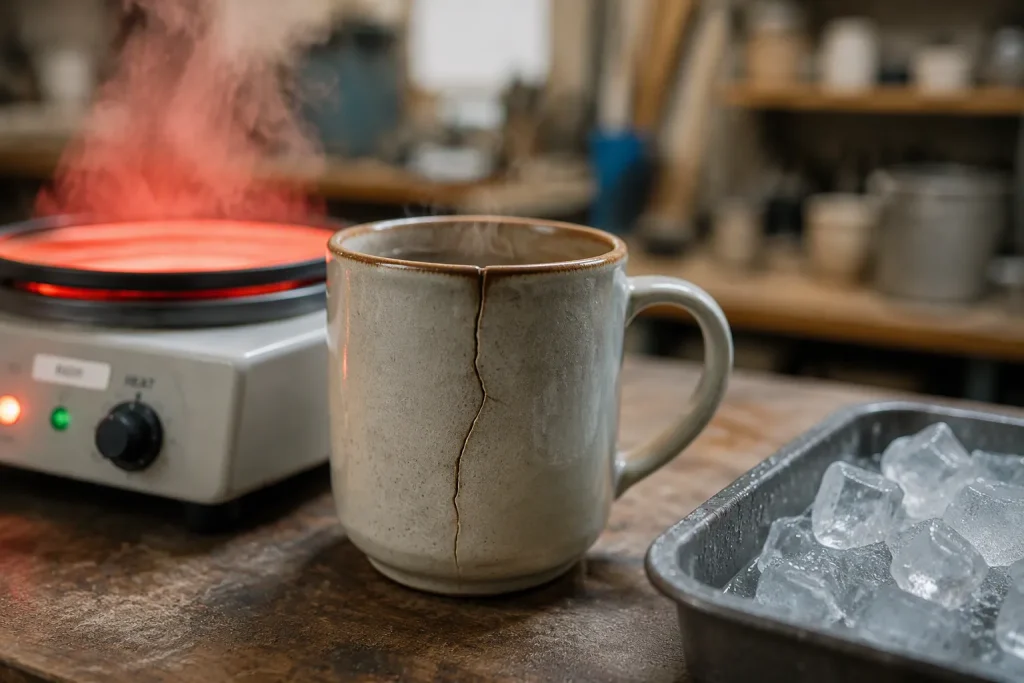
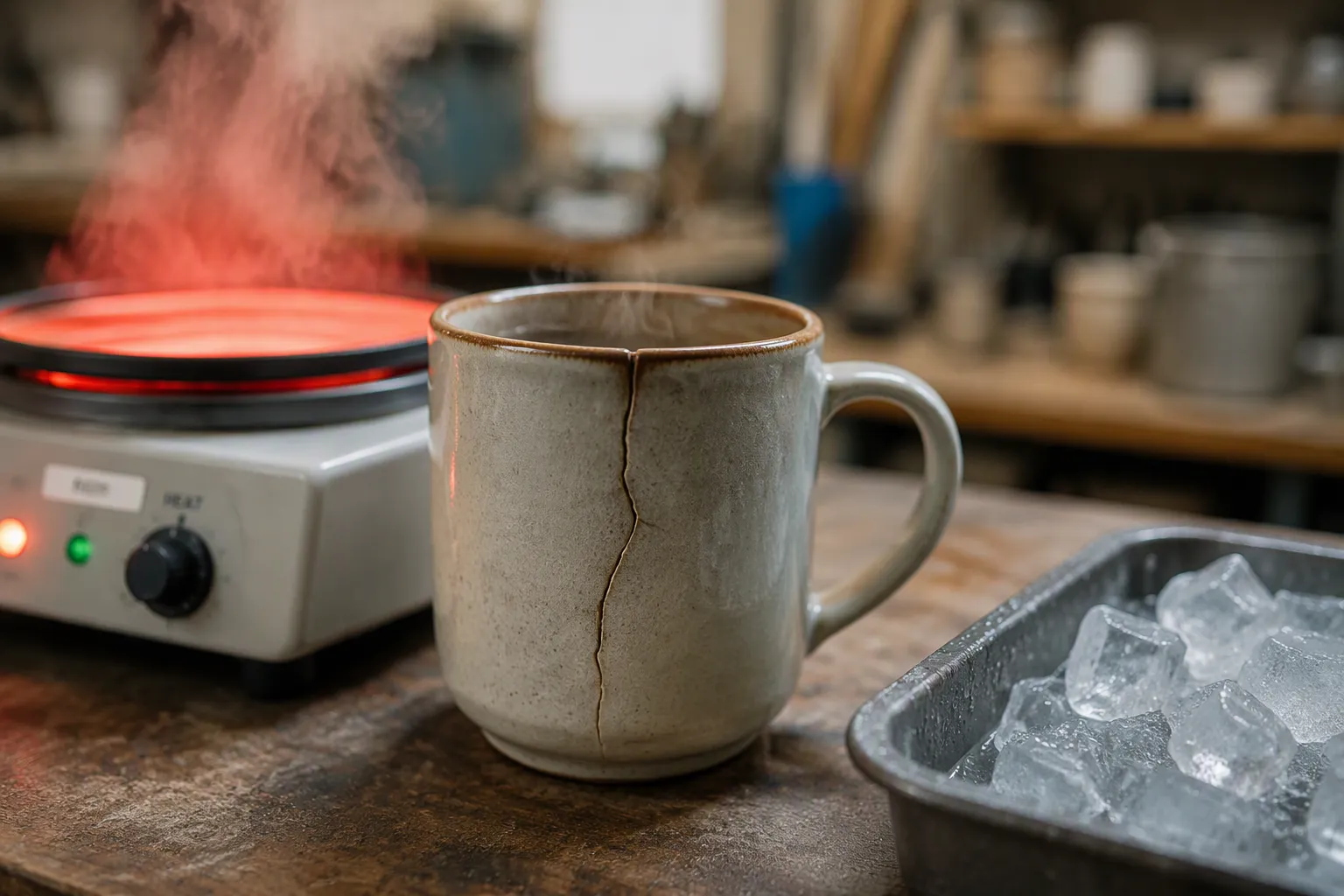
Thermal shock is a fast change in temperature. It causes stress inside ceramic objects. You see this stress when a hot cup meets cold water. The surface cools quickly while the inside stays warm.
Ceramics are brittle materials. They cannot spread stress out by bending. The stress can get higher than the material’s breaking strength. Then cracks form, and the piece may break completely.
Knowing how thermal shock affects ceramics helps you protect your pieces. You need to know the resistance factors and the mitigation strategies. This knowledge helps with long-term durability and prevents unexpected cracking in daily use.
Key Takeaways
Thermal shock happens when a ceramic’s surface heats or cools faster than its inside. This creates stress that can cause cracks.
Ceramics cannot bend to release stress, so they break all at once when the stress is stronger than they can handle.
Control the speed of heating and cooling to keep temperature differences small and lower stress.
Pick ceramics that expand little when heated and conduct heat well, so they resist thermal shock better.
Use thermal shock tests on ceramics to find weak spots before you use them.
How Thermal Shock Affects Ceramics
Temperature Gradients and Stress
A fast temperature change never heats or cools a ceramic evenly. The outside surface reacts first. It shrinks or grows faster than the inside. This mismatch creates temperature gradients across the body. Heat cannot move through the material fast enough to keep every region at the same temperature. The surface and the core end up at different temperatures for a short time.
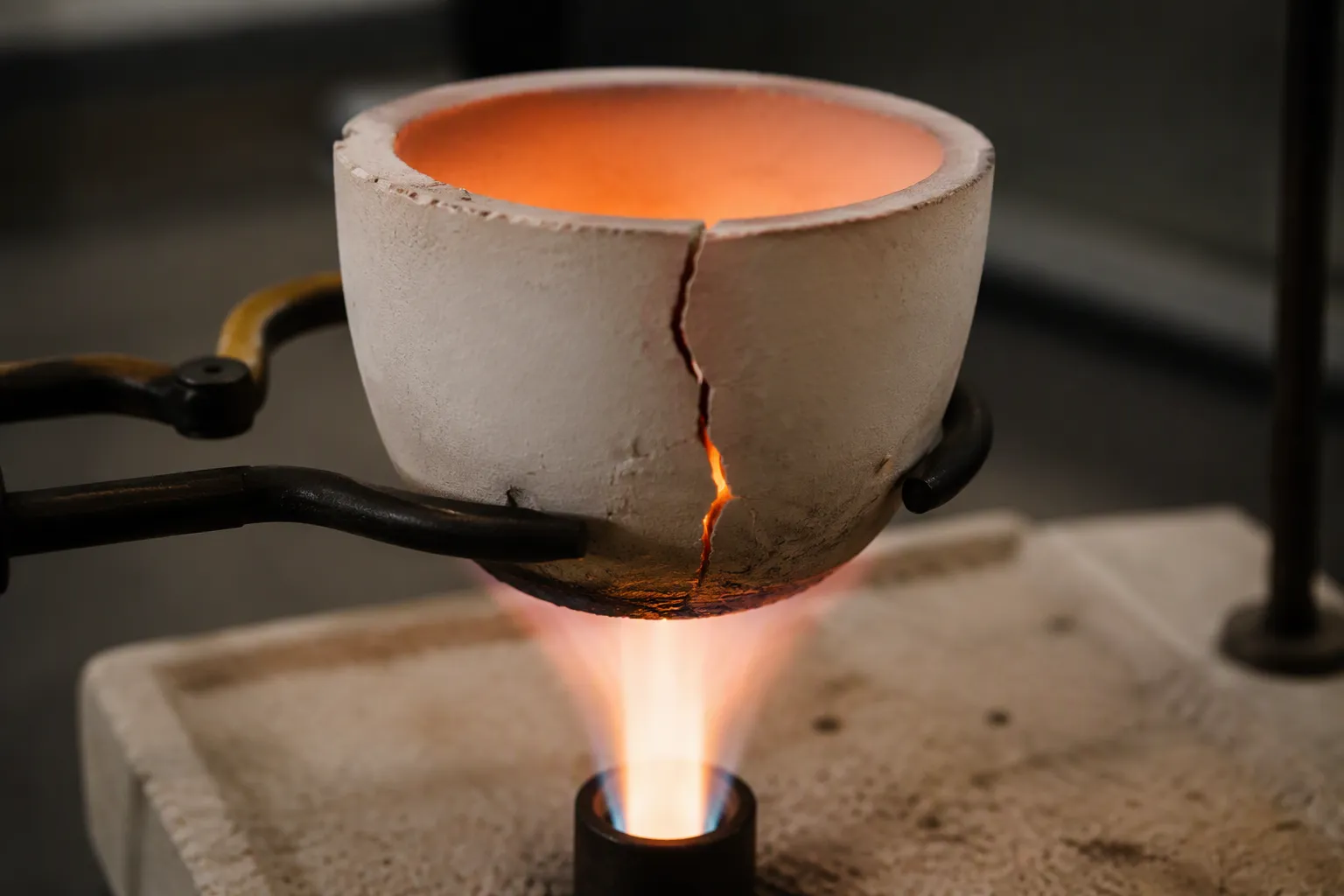
You can see how thermal shock affects ceramics in a simple crucible. Place a cold crucible over a hot flame, and the inner wall heats before the outer wall. The inner surface tries to expand. The cooler outer surface holds it back. Thermal stresses build at the boundary between the two zones. The same thing happens in reverse when a hot crucible touches a cold surface. Uneven or rapid heating pushes the stress past the material’s fracture strength. A crack forms, and the crucible fails.
The mechanism comes down to differential thermal expansion. Each region changes size by a different amount. The constraint between them generates thermal stress. Ceramics have low thermal conductivity, so steep temperature gradients persist during thermal transients. These gradients keep the differential strains high. The stress concentrates at the surface in most cases. Rupture occurs once the surface thermal stress exceeds the temperature-dependent fracture strength of the material. The fracture strength acts as a threshold. The thermally generated stress must cross that threshold to cause failure. This chain of events defines thermal shock behavior in brittle materials.
Brittle Failure Without Plastic Deformation
Ceramics are elastic and brittle. They cannot yield or flow to relieve stress. Metals redistribute stress through plastic deformation. Ceramics do not have that option. The stress keeps building until it passes the strength limit. Then a crack starts. The material has no way to shed the load.
This is why thermal shock behavior in ceramics differs from metals. The material cannot absorb the strain. Thermal stress drives crack initiation instead of being accommodated. Once a crack forms, crack propagation can follow quickly. The result is sudden failure, often without warning. A part that looks fine can fail in an instant. This sudden failure makes thermal shock damage hard to predict.
The thermal shock resistance parameter R’ captures the properties that govern this process. R’ equals breaking strength times conductivity, divided by the coefficient of thermal expansion times the elastic modulus. A high conductivity and a low thermal expansion coefficient raise R’. Both reduce the thermal stress that initiates cracks. Fracture toughness also matters. It resists crack growth once damage begins. A material with high fracture toughness can stop a small crack before it spreads. This parameter helps you compare ceramic thermal shock resistance across materials.
Repeated thermal cycling makes the problem worse. Each thermal cycling event adds new thermally induced microcracks. These flaws lower strength over time. Cracking can appear after many mild shocks, not just one severe event. Understanding thermal shock affects how you handle and design ceramic parts. Good ceramic thermal shock resistance depends on material choice and careful control of heating and cooling.
Ceramic Thermal Shock Resistance Factors
Heating and Cooling Rates
Slow, steady heating and cooling give you the best thermal shock resistance. A gentle ramp keeps temperature differences small. Small differences mean low thermal stress. Uneven cooling builds thermal stress at the surface. The material evens out its temperature, so the surface and core stay closer. This control matters most during thermal transients.
Fast ramps raise the risk. A ceramic heater-holder case study shows the point. Parts had to survive tough thermal cycling at a ramp rate of ±200 °C per hour up to 1600 °C. The supplier switched from 99% to 95% alumina. The slightly lower-purity material handles expansion mismatches better and lowers the risk of thermal cracking at these fast rates, while still meeting the temperature limit. Match the ramp rate to the material, and run thermal shock testing before you commit. Good ceramic thermal shock resistance starts with this kind of process control, and it shows up in thermal shock performance over time.
Density, Porosity, and Material Properties
Density and porosity shape how stress moves through a ceramic. Dense bodies carry thermal stress more evenly. Pores act as stress concentrators. They also give cracks an easy path, so crack propagation speeds up. A porous body may absorb strain, but its lower strength often cancels that gain. Weigh both effects.
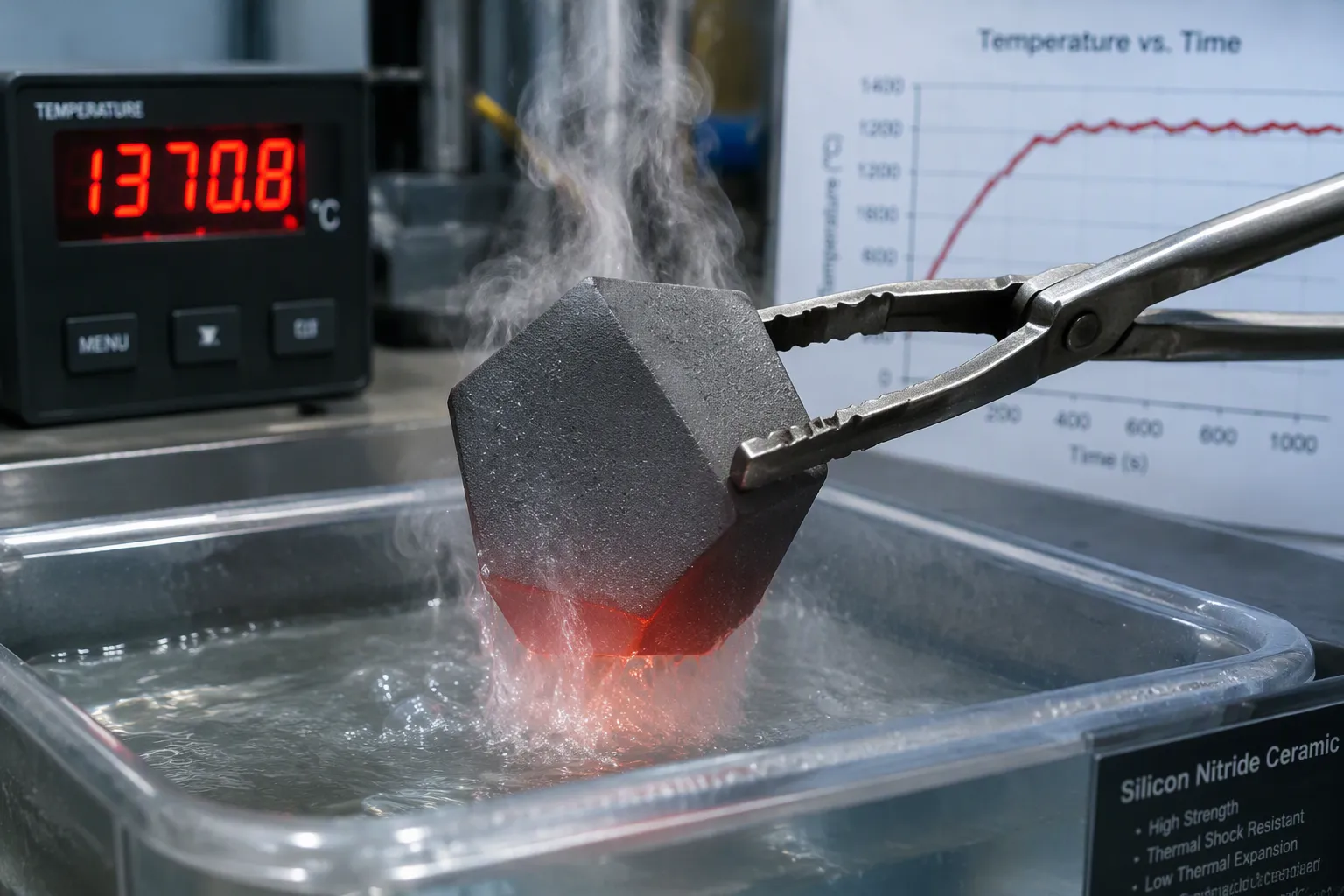
Material properties set the baseline for thermal shock resistance. A low coefficient of thermal expansion keeps differential strain small. The thermal expansion coefficient is the key number to check. High thermal conductivity lets heat spread quickly and flattens temperature gradients. Low thermal conductivity does the opposite. High fracture toughness resists crack growth once damage starts. These traits combine into ceramic thermal shock resistance, and you can rank candidates with thermal shock tests. The water quenching thermal shock test is a common screen. Water quenching thermal shock tests show how a sample survives a sudden plunge from hot to cold. Use these results alongside thermal shock testing in real service. Thermal shock behavior in service often differs from a single lab quench, especially after repeated thermal cycling. Each thermal cycling event adds stress. A material with strong thermal shock resistance in the lab may still show fracture after a rapid temperature change in the field. Fracture can follow. Good thermal shock resistance depends on both.
Mitigating Thermal Shock in Advanced Ceramics
Thermal Shock Resistance of Advanced Ceramics
Some advanced ceramics handle fast temperature changes with surprising ease. Silicon nitride is a top example. Its six-sided lattice structure gives it high-temperature oxidation resistance, mechanical strength, and controlled thermal expansion. Together, these traits produce excellent thermal shock resistance. Silicon nitride can take a temperature difference of at least 1,000°C without catastrophic failure. That means you can expose it to extreme thermal transients and still trust its integrity.
The R parameter helps you rank materials by approximate thermal shock resistance. A higher value means better resistance. Silicon nitride scores around 350 K, which balances strength, modulus, and low expansion. Magnesia-stabilized zirconia reaches about 450 K, and graphite climbs to roughly 800 K thanks to its very low thermal expansion. These numbers guide your material choice, but context matters.
R applies to thin parts or very fast cooling where heat leaves the surface almost instantly. R’ includes thermal conductivity and governs thicker parts or moderate heat flux. For ceramics, ignoring R’ in thick-walled parts can make you greatly overestimate shock tolerance.
Fully dense silicon nitride shows a coefficient of thermal expansion between 3.1 and 3.58 × 10⁻⁶/°C. Porous reaction-bonded silicon nitride shows CTE rising from 1.25 to 3.75 × 10⁻⁶/°C over 100–1000°C. Porosity and CTE move in opposite directions. Highly porous samples at 62% withstood 600°C thermal shock without strength loss. You can tune porosity to influence thermal shock performance directly.
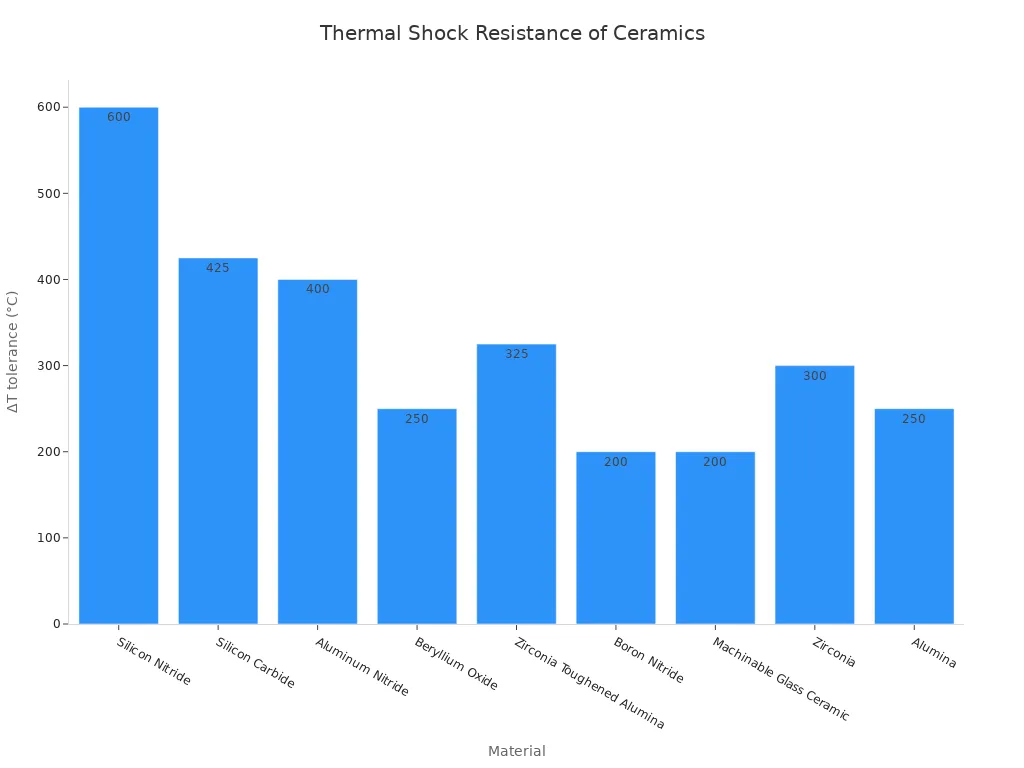
Different advanced ceramics fit different applications. Silicon nitride suits thermal shock duty because it pairs high fracture toughness with medium-to-high thermal conductivity. Silicon carbide offers high conductivity and high strength for metallurgical and chemical thermal use. Aluminum nitride serves thermal management where conductivity matters most. Boron nitride provides very low expansion for insulation interfaces. Each option has a natural home.
Improving Thermal Shock Resistance
You can raise thermal shock resistance for advanced ceramics through composition and process control. Alumina with small additions of TiO₂ and Na₂O forms needle-like phases that create a low-expansion, interlocking microstructure. This approach reaches a temperature differential near 1,000°C with over 80% strength retention after 20 cycles. Zirconia stabilized with Y₂O₃ uses transformation toughening to absorb stress energy and stop cracks. Cordierite formulations with TiO₂ or Y₂O₃ keep CTE below 2.5 × 10⁻⁶/°C and withstand a temperature differential above 800°C.
Microstructure matters just as much. Spreading flaked boron nitride in alumina, magnesia, or zirconia matrices turns cracks aside and prevents catastrophic fracture. Controlled porosity between 15% and 25% open lets stress relax through microcracking instead of sudden failure. Firing conditions lock in the result. Sintering alumina between 1500 and 1650°C with heating rates of 50–200°C per hour allows the phase formation that supports durability.
Clayesouk‘s handmade ceramic cups from Jingdezhen show how careful material and process selection supports durability in daily use. Traditional clay bodies and controlled firing manage thermal stress during repeated thermal cycling. The same principles scale up to industrial advanced ceramics. Standard thermal shock testing, including water quench methods under ASTM C1525, lets you check thermal shock behavior before service. Match your material to the application, control your heating and cooling, and your ceramics will last.
Rapid temperature changes and brittle failure are the main reasons thermal shock affects ceramics. You now know the chain: uneven shrinking, stress that cannot spread out, and sudden breaking. Three factors decide thermal shock resistance. Controlled heating and cooling rates keep temperature differences small. Density and porosity shape how stress spreads and how cracks travel. Suitable advanced ceramics, such as silicon nitride, extend thermal shock behavior into extreme service. Thermal cycling tests reveal weak points before real use. Remember that thermal shock affects every ceramic piece differently. Thoughtful process control and material selection preserve ceramic durability over time, and that same care protects thermal shock resistance in the cups you use daily.
FAQ
What makes a ceramic cup crack when you pour boiling water into it?
A quick temperature change makes the surface shrink or grow faster than the inside. This mismatch builds stress at the surface. Ceramics cannot bend to release that stress. Once the stress goes past the breaking strength, a crack starts. Slow, even warming keeps the temperature gap small and lowers the risk.
Which ceramics hold up best to thermal shock?
Silicon nitride stands out. Its lattice structure gives it high strength and controlled thermal expansion, so it handles a temperature difference of at least 1,000°C without catastrophic failure. Magnesia-stabilized zirconia and graphite also score well on the R parameter. Match the material to your application, because each option fits a different job.
Does heating and cooling speed really matter for durability?
Yes. A gentle ramp keeps the surface and inside closer in temperature, so thermal stress stays low. Fast ramps do the opposite. One heater-holder case study survived ±200 °C per hour up to 1600 °C after switching from 99% to 95% alumina. Control the rate, and you protect thermal shock resistance over many cycles.
How do you check thermal shock resistance before service?
Run thermal shock testing first. The water quenching test is a common screen, and ASTM C1525 sets a standard method. Compare results with real-service conditions, since repeated thermal cycling adds stress that a single lab quench misses. Testing finds weak points before a part fails in the field.
