


Retailers who act fast in the Growing Artisan Ceramics Market earn high profits and keep loyal customers. More people want handmade cups, bowls, and vases every year. Large chain stores cannot tell the story behind each piece.
This article shares seven insider secrets. These secrets cover what drives demand, where to buy, pricing, marketing, and future trends. Most retailers overlook them.
A store’s profit relies on buying well and positioning well. Artisan ceramics give you both. Shoppers pay high prices for real craft. They come back for more. They tell their friends. That loyalty builds a barrier competitors cannot break.
The chance is here right now. It will not last forever. Keep reading to grab your share.
Key Takeaways
The artisan ceramics market is growing quickly. Retailers can make big profits and build loyal customers by acting early.
Learn about your buyers. Different groups like different styles and prices. Carry a mix to bring in more customers.
Find artisans you can trust. Check the quality of their samples and packaging. Work with partners like clayesouk for unique, high-quality pieces.
Set prices to make a profit. Use a simple formula: cost plus markup. Premium items can sell for more when you tell a good story.
Share the story. Talk about the artisan’s process and heritage. This builds trust and makes your store a place people want to visit.
Inside the Growing Artisan Ceramics Market
Why Handmade Wins Today
Shoppers now like handcrafted décor, artistic tableware, and sustainable ceramics more. They want pieces with a human story. In the U.S. market, handcrafted ceramics hold 60% of the pottery market. Buyers value artistry and craftsmanship heritage. Mass-produced items cannot match that appeal. Retailers who ignore this change lose customers to competitors who accept it.
Growth Drivers to Watch
Several forces push the Growing Artisan Ceramics Market forward. Premium hospitality chains, fine-dining restaurants, and luxury real estate projects use ceramic tableware to create upscale experiences. Rising disposable incomes let more people buy aesthetic, durable lifestyle products. Consumers also seek personalized, limited-edition, and eco-friendly ceramics. Online retail platforms help independent artisans reach wider audiences.
Driver | Supporting Evidence |
|---|---|
Hospitality and premium real estate demand | Premium hotels, restaurants, and luxury projects use ceramics for distinctive interiors |
Rising disposable incomes | Changing lifestyles support purchases of premium lifestyle ceramic products |
Preference for handcrafted and sustainable products | Consumers seek personalized, limited-edition, eco-friendly ceramics |
E-commerce expansion | Online platforms connect artisans with domestic and international buyers |
New potters now turn their hobbies into money, which increases competition. Standing out becomes critical. Retailers must pick unique pieces, tell artisan stories, and team up with established makers. Those who act early grab high margins and loyal customers.
Who Buys Artisan Ceramics
Profiling the Ideal Buyer
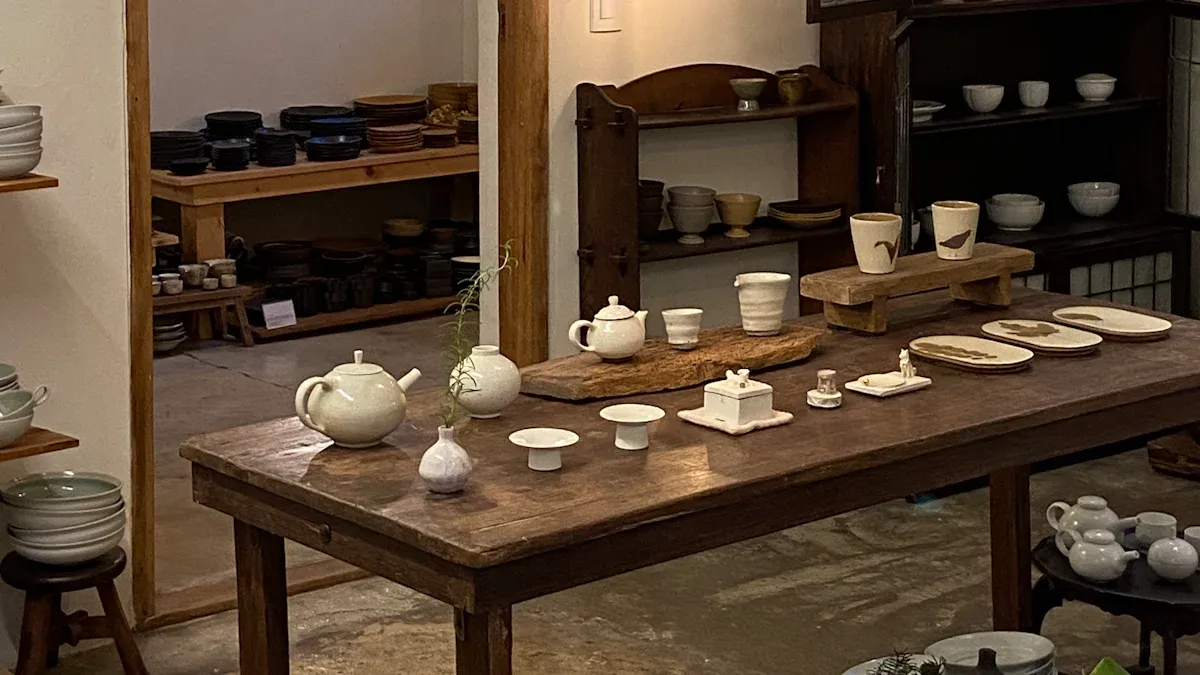
Artisan ceramics draw in five clear groups of buyers. Home décor fans look for vases, bowls, and bold pieces that make a room feel warm. Premium gift shoppers want presents that feel special and carry cultural meaning. Coffee and tea lovers care about how a cup feels in the hand and handles heat. Boutique store owners stock handmade goods to make their shelves stand out from chain stores. Collectors chase limited editions and signed works from known artisans.
Each group shops in its own way. Décor fans often buy on impulse when a piece matches their room’s colors. Gift shoppers need help understanding why a handmade cup costs more than a factory one. Aficionados read about glaze chemistry and firing methods. Boutique owners buy in small batches and reorder what sells. Collectors follow specific artists and pay extra for early or rare work. Retailers who learn these habits can match inventory to the right audience and cut down on dead stock.
Styles and Price Points That Sell
Style preferences line up closely with price tier. Minimalist designs in matte earth tones appeal to younger buyers and first-time shoppers at entry-level prices. Rustic glazes with visible texture draw décor fans who want a handcrafted look. Blue-and-white porcelain commands higher prices because of its heritage and the skill required to paint each piece by hand.
Buyer Group | Preferred Style | Typical Price Tier |
|---|---|---|
Home décor enthusiasts | Rustic glazes, sculptural forms | Mid-range |
Premium gift purchasers | Blue-and-white porcelain, gift sets | Premium |
Coffee and tea aficionados | Minimalist, functional shapes | Mid to premium |
Boutique store owners | Mixed curated styles | Varies by store |
Collectors | Limited editions, signed works | High-end |
The Growing Artisan Ceramics Market rewards retailers who stock across tiers. A store can use entry-level mugs to bring customers through the door. Those same customers often trade up to premium tea cups once they trust the quality. This ladder strategy builds repeat business and protects margins.
Sourcing Secrets With Artisan Partners
Finding and Vetting Ceramic Artists
Good sourcing starts with a clear vetting process. Retailers should compare sample quality against the quoted specification, not just reference photos. They should ask whether the quote assumes current fuel cost or includes an adjustment clause. They should check if packaging is export-tested or only suitable for domestic movement. They should review breakage allowance and replacement terms before shipment. They should confirm whether decorations are hand-applied, transfer-printed, or machine-assisted. They should track lead-time consistency across two or three inquiry rounds. A comparison sheet tracking raw material notes, glaze details, carton standard, sample pass rate, lead time, and freight assumption beside quoted price keeps every option visible.
Cost layers matter just as much as the artist’s skill. Raw materials like clay grade, feldspar, kaolin, pigments, and glaze chemicals affect color stability, texture, shrinkage, and breakage. Energy from gas, electricity, kiln efficiency, and firing cycle length directly changes unit cost in energy-intensive production. Labor for hand forming, painting, trimming, and inspection drives price differences between simple and artistic items. Packaging with foam, dividers, cartons, and gift boxes protects landed cost and transit loss. Logistics including freight rates, route reliability, and port handling can erase the advantage of a low factory quote.
Cost Layer | What Influences It | Why It Matters in Sourcing |
|---|---|---|
Raw materials | Clay grade, feldspar, kaolin, pigments, glaze chemicals | Affects color stability, texture, shrinkage, and breakage |
Energy | Gas, electricity, kiln efficiency, firing cycle length | Directly changes unit cost in energy-intensive production |
Labor | Hand forming, painting, trimming, inspection | Drives price differences between simple and artistic items |
Packaging | Foam, dividers, cartons, gift boxes, drop protection | Important for landed cost and transit loss control |
Logistics | Freight rates, route reliability, port handling | Can erase the advantage of a low factory quote |
Retailers can discover reputable artists through dedicated wholesale channels. Maine Pottery Company provides a dedicated section for retailers and galleries and directs them to wholesale purchasing through Faire. Still Life Ceramics accepts a limited number of custom orders each year and invites potential collaborators to submit details such as quantity, style, color, and other project specifics. The studio also accepts a select few retail partnerships each season for galleries, museum shops, or specialty retailer buyers.
Partnering With clayesouk and Studios
clayesouk stands out as a Jingdezhen-based brand with over 1,700 years of ceramic heritage. Its artisan teams bring more than 10 years of experience to every piece. The brand holds national-level ICH productive protection demonstration base recognition. This status confirms reliable quality and cultural value.
The brand offers handmade ceramic cups across several lines. The Handmade Ceramic Master Cup, Handmade Ceramic Coffee Cup, Handmade Ceramic Mugs, and Hand-Painted Blue and White Porcelain Tea Cups each carry traditional techniques. clayesouk also provides custom ceramic design services. Retailers can adjust patterns, glazes, shapes, and sizes to meet diverse customer needs. Notable clients include boutique hotels and premium tea suppliers who value traditional craftsmanship.
Smart retailers diversify suppliers to avoid dependence on a single artisan cluster or region. They invest in long-term supplier relationships for consistency and ethical sourcing. They establish clear quality control parameters covering material integrity, craftsmanship consistency through spot checks, and protective packaging. Flexible payment models with advance payments, milestone-based releases, and co-investment mitigate cash-flow risk for both retailer and artisan. Data-driven forecasting using historical sales and trend analysis optimizes inventory and reduces overstock. These habits strengthen any partnership within the Growing Artisan Ceramics Market.
Pricing and Positioning for Profit
Pricing Handmade Ceramics Right
Retailers need a clear pricing system for handmade ceramics. Cost-plus pricing is a simple way to start: Cost + Markup Percentage = Price. This formula gives you a steady retail price based on cost and the margin you want. The break-even point checks if a price covers your costs: Fixed costs divided by (Price per unit – Variable costs per unit). If that number is higher than expected sales, you need to change the price.
COGS includes labor, overhead, packaging, shipping, and marketing. Many retailers forget overheads or labor time. Making labor should reflect the maker’s time and skill. Overheads are ongoing business costs spread across all products. Retailers divide total yearly overheads by yearly making hours, then multiply by the hours needed for each product.
Wholesale pricing starts at COGS x 2. This is the standard keystone point for handmade goods. Retail markup over wholesale usually runs 2x to 3x. Premium gift products, strong brands, or limited designs can support a 2.2–2.5x wholesale-to-retail multiplier. As an overall check, COGS x 4 should give a believable retail price. If it goes over that value, the product may not be wholesale-ready.
Upscale handmade ceramics fit a prestige pricing model. Higher quality and perceived value justify a higher margin. It needs marketing that explains why items cost more. The full pricing chain runs:
Materials + Making Labor (hours x hourly rate)
Overheads (total overheads / annual making hours x hours per product)
Equipment (purchase + maintenance / lifetime units produced)
Profit Margin = Wholesale Price
Selling Costs = Retail Price
Retailers should compare table costs to realistic revenue when picking sales venues. A high-rent fair or gallery may not pay off if sales stay low. Figuring out expected traffic and average transaction value helps decide which venue earns its cost.
Positioning as a Curated Destination
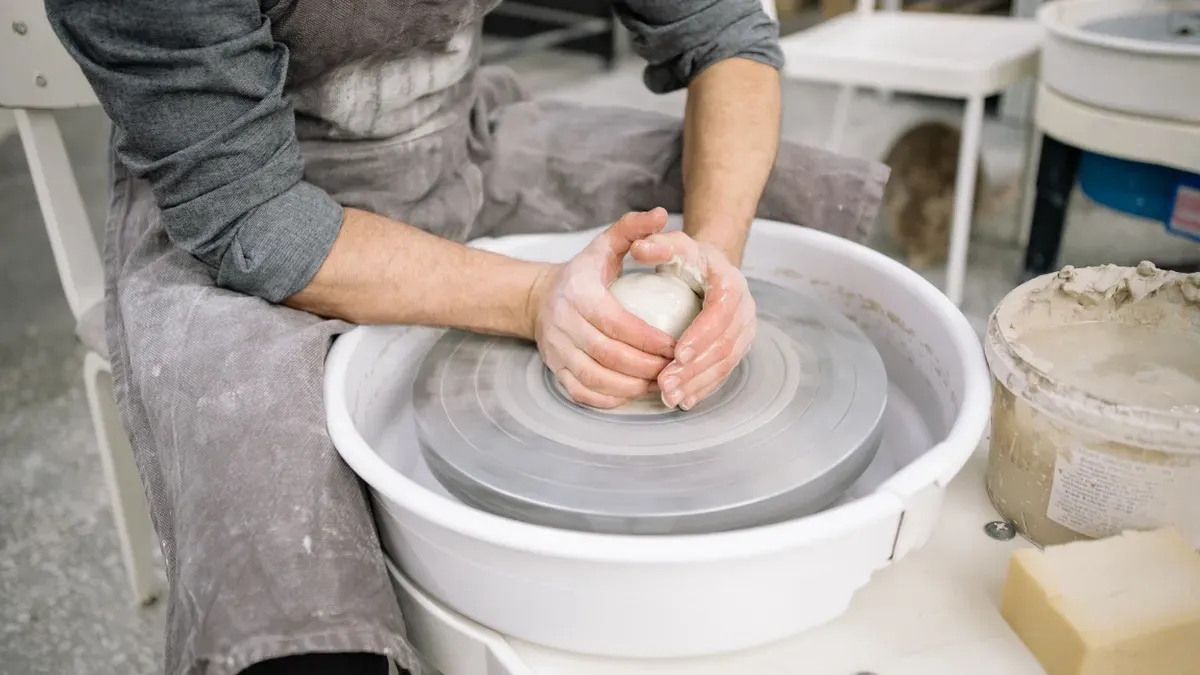
Premium prices hold only when the store tells a convincing story. Artisan process descriptions teach customers. A handmade mug gains value when described in detail: clay hand-wedged, thrown on a manual kick wheel using techniques from a long apprenticeship, dried, fired multiple times, and handled many times over weeks. Concrete process details make premium prices feel earned.
Materials-focused descriptions build credibility. High-fired porcelain achieves density and translucency that lower-temperature ceramics cannot. This measurable physical difference limits who can make premium porcelain. Documented craft lineage becomes a value asset buyers pay into.
Cultural storytelling drives emotional investment. Pieces tied to a specific tradition or a named artisan’s signature style hold value better than generic décor. Buyers purchase the story the object represents. Social impact metrics, such as the artisan’s share of the purchase price, set a purpose-led brand apart.
The secondary market proves the payoff. Collectible porcelain with documented artisan marks has traded at Christie’s and Sotheby’s at multiples of original retail value once the edition sold through. This price floor protects early buyers.
Genuine production caps, artisan craft, and documented provenance form the only combination producing strong long-term value retention. Retailers who position their stores around this story thrive in the Growing Artisan Ceramics Market. They turn a shelf of cups into a curated destination customers trust and revisit. Each purchase becomes a relationship rather than a transaction.
Marketing, Operations, and Future Trends
Storytelling That Sells Ceramics
Online sales of handmade pottery at tracked retailers show clear problems. Retailers have to plan for them. Good storytelling is a proven way to move forward.
Pottery artisans can use social media, websites, and online marketplaces to reach more people. Marketing plans should use eye-catching visuals, strong storytelling, and interactive content. These things get potential customers involved and spark interest. One ceramic artist and marketing consultant said it simply:
“Spend time making high-quality product photos and engaging content. In the handmade market, storytelling matters just as much as the product itself.”
Stories based on heritage make this approach stronger. Retailers can build product lines tied to certain historical dynasties or art movements. They can put QR codes on packaging that link to videos sharing the artisan’s personal story. Working with museums or cultural groups on co-branded collections adds cultural value. The rise of the Guochao movement shows consumers are actively looking for products that feel culturally real.
Operations and Emerging Opportunities
Good storage, displays, and packaging keep fragile ceramics safe. Retailers should keep storage areas cool, dry, and steady. They should not stack or crowd items. Labeled fragile boxes and inventory lists stop mishandling. Custom padding, foam inserts, and edge protectors cut down breakage during shipping.
Preservation Focus | Recommended Actions |
|---|---|
Environment | Keep storage areas cool, dry, and stable; use desiccants; avoid excessive light |
Handling | Avoid stacking; label fragile boxes; create inventory lists; rotate stored items |
Packaging | Use foam inserts, edge protectors, reinforced cartons, and double boxing |
Display | Use accent-piece display methods; consider professional preservation services |
clayesouk offers a model for retailer service. The brand gives maintenance guidance and fixes quality problems after the sale. This support builds customer trust and repeat business.
Future chances in the Growing Artisan Ceramics Market include:
Sustainable ceramics: Manufacturers are responding with eco-friendly production methods and expanded product portfolios.
Personalized commissions: Custom orders and digital customization are growing as new paths for growth.
Boutique hospitality collaborations: Demand comes from boutique décor, hospitality buying, and refurbishments.
Retailers who act on these trends set themselves up for long-term success.
The Growing Artisan Ceramics Market favors retailers who act early and stay honest. Retailers should respond now to rising demand, know their customers, and price for value. They should work directly with makers like clayesouk to get unique pieces and true stories. Putting stories first turns items into experiences. Quick action builds profits and loyalty. Acting fast and staying authentic keeps those gains.
Retailers can use one secret this week. They might contact an artisan, rearrange a shelf, or start a storytelling campaign. Small steps build lasting gains. Retailers who do these things turn a plain shelf into a trusted place. Those who wait face even tougher competition each month.
FAQ
Why should a retailer enter the artisan ceramics market now?
Handcrafted ceramics hold 60% of the U.S. pottery market, and consumers increasingly seek handcrafted, personalized, limited-edition, and environmentally sustainable ceramics. Stores entering early gain high profits and loyal customers before rivals close.
Which customers drive the strongest repeat sales?
Five groups drive repeat sales: home décor fans, gift shoppers, coffee and tea lovers, boutique owners, and collectors. Every group buys differently. Décor fans buy on impulse. Collectors chase limited editions. Retailers who match stock to these habits cut dead stock and build reorders.
How does a retailer find a reliable ceramic partner?
Checking a maker starts with sample quality, not photos. Retailers should compare quotes against specs, check export-tested packaging, and review breakage terms. clayesouk has 1,700 years of Jingdezhen heritage. Its artisans bring 10+ years of experience. Custom design services cover patterns, glazes, shapes, and sizes.
What markup keeps handmade ceramics profitable?
Start wholesale pricing at COGS times 2. Markup from wholesale to retail usually runs 2x to 3x. Premium gifts and limited designs can support a 2.2–2.5x multiplier. A good final check: COGS times 4 should give a believable retail price.
Why are online pottery sales struggling?
Online sales channels for handmade pottery face clear problems. Retailers should plan around them. Good stories, clear product photos, and engaging content help reverse the trend and rebuild buyer interest.
