
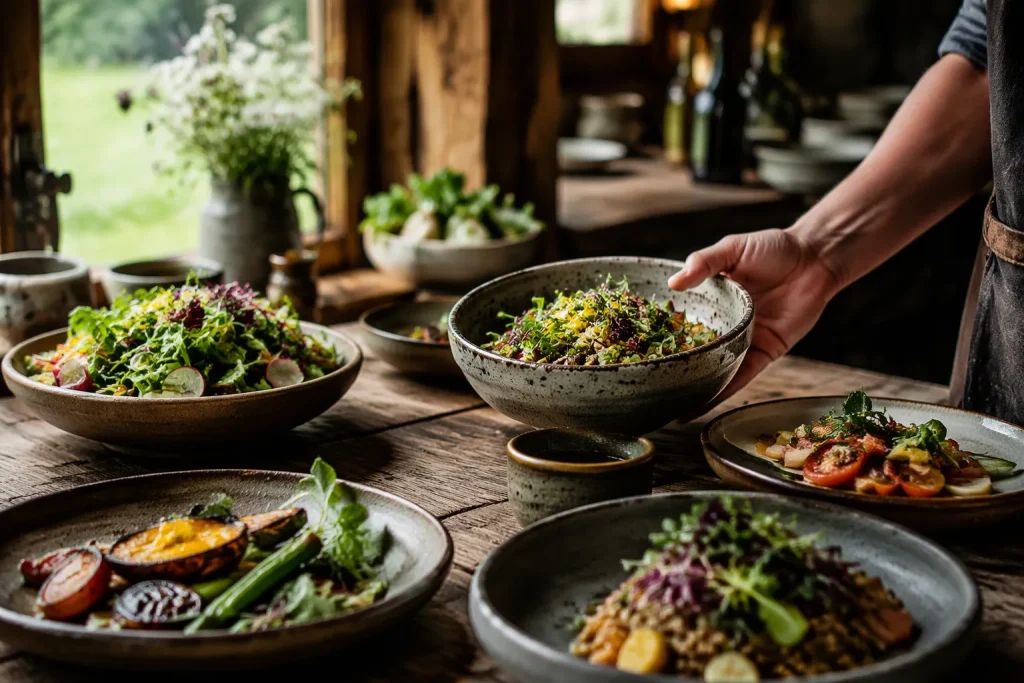
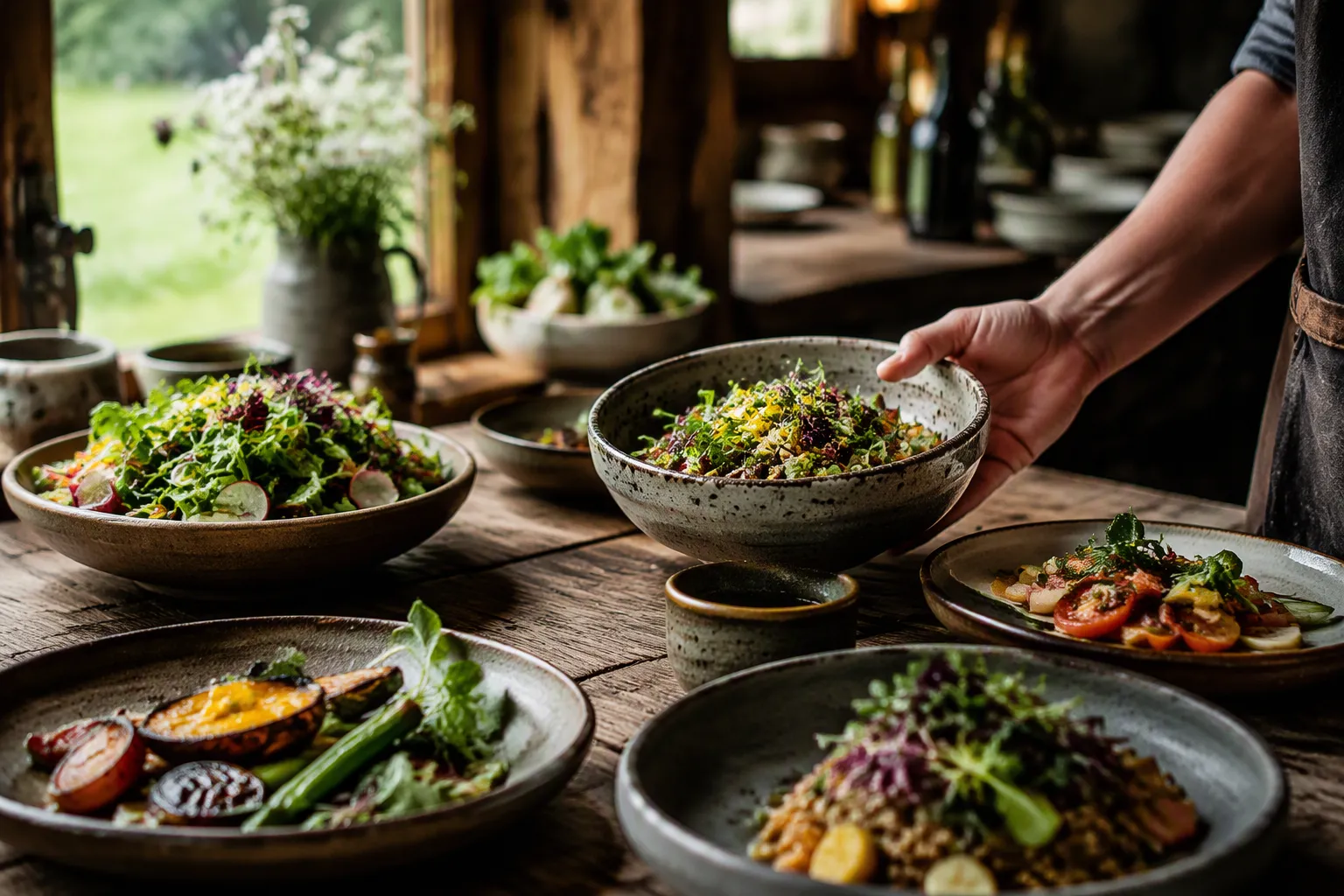
You lift a warm plate from the pass. Its glaze catches the light. The weight feels solid in your hand. This is not factory china. This is artisan ceramics, and it changes how you see the meal.
Farm-to-table dining celebrates local farms, skilled hands, and the seasons. Handmade plates share those same values. A one-of-a-kind dish also makes your food look better. The right plate turns a simple carrot into a small work of art.
A restaurant that sources from nearby fields should set its tables with equal care. Handmade pottery brings that care to every course. You will learn why this pairing works so well.
Key Takeaways
Handmade plates show the farm-to-table spirit. Each piece displays the maker’s skill. They fit local food values.
Handmade ceramics make food look nicer. Earth colors help fresh vegetables stand out. Guests see each plate as a work of art.
Handmade dishes that last can handle busy kitchens. Strong glazes stand up to heat, washing, and stacking. Good pieces handle everyday wear.
Special plates make people eat more slowly. That short break helps a meal feel like a memory. Handmade pottery makes each dish feel special.
Custom ceramics share your restaurant’s story. They help local makers. They help the community. This choice builds trust with guests.
How Farm-to-Table Values Extend to Restaurant Tableware
The Values of Origin and Craft
A farm-to-table movement restaurant is rooted in the land where food grows. The kitchen gets its carrots from a nearby field. The menu changes with the seasons. The same thinking applies to the plates below the food. You want dishes that reflect a similar sense of place and skilled human work. Handmade ceramics carry the fingerprint of their maker. Each piece holds a story of local clay and careful hands.
clayesouk draws on Jingdezhen’s porcelain-making heritage. For centuries, this city in China has fired kilns. That craft from this place matches the farm-to-table thinking you bring to your menu. When you set a table with artisan ceramics, you link the diner to a longer chain of care. The farmer tends the soil. The potter shapes the clay. Both jobs require patience and local knowledge.
Why Mass-Produced Plates Fall Short
Factory dishware aims for perfect sameness. Every plate looks the same. Every bowl stacks neatly. This uniformity helps with storing many dishes and washing them fast. But it takes away the character that makes a meal feel personal. Handmade ceramics accept variation. You will see slight differences in glaze, shape, and surface from one piece to the next.
Attribute | Handmade Stoneware Plates | Mass-Produced Porcelain Dinnerware |
|---|---|---|
Glaze variation | Intentional variations; reactive glazes make one-of-a-kind patterns; 5–12% defect rate seen as character | Made for uniformity; even results; 2–3% defect rate |
Plate profile | Heavier, textured surfaces; natural rims; 15–25% heavier clay body | Standard, stackable shapes; same dimensions |
Surface irregularity | Dimpled surfaces, visible brushstrokes, unpredictable glaze flows | Smooth, even surfaces; precision-molded |
Ceramic plates can be a little porous, so they may absorb liquids and stains over time. When you buy them, check the plate to make sure the glaze is even, with no flaws or worn spots.
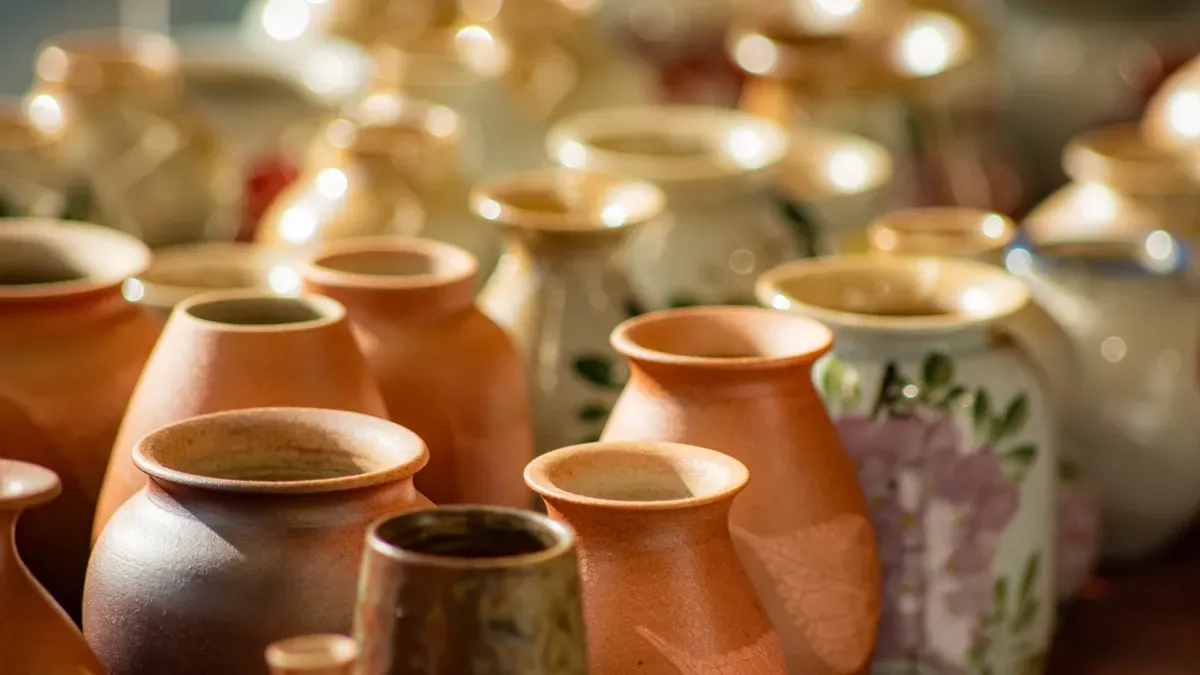
You can choose from matte glazes, glossy glazes, reactive glazes, and speckled finishes. Each choice gives your restaurant a completely different feel. A reactive glaze changes inside the kiln. No two plates come out the same. That small surprise pleases diners. It also goes well with fresh, seasonal food.
The Aesthetic Power of Handmade Ceramics
Texture, Color, and Form That Complement Food
Chefs often say farm-to-table food looks best on handmade glazed ceramic in stone and earth colors like gray and brown. These soft tones let the food stand out. A bright orange squash or a deep green herb pops against a calm, natural background. Artisan ceramics give you that backdrop without pulling focus.
The shape, size, texture, and color of your dinnerware affect how guests enjoy each meal. A peer-reviewed catering study of 1005 people found that plate size, shape, and color changed how they rated visual appeal, portion expectations, expected price, and taste. Larger plates (31 cm versus 24–27 cm) significantly lowered ratings of appearance, portion size, and energy value. Round desserts on square platters were rated much less appealing. Black plates were liked most and seen as appetizing, while white and red plates were liked less. Colored plates also seemed more expensive than white ones, and red plates came across as artificial and unappetizing.
Plate attribute | Effect on diner perception |
|---|---|
Size | Larger plates (31 cm vs 24–27 cm) lowered appearance, portion, and energy ratings |
Shape | Round desserts on square platters rated less appealing |
Color | Black liked most; white and red liked less; colored plates seemed pricier |
Weight matters too. Hospitality research shows heavier pieces feel more solid and signal higher quality. Guests see unexpectedly light tableware as neglect and a lack of attention to detail. Handmade stoneware has that reassuring heft. Tactile rims, carved exteriors, unglazed edges, and expressive glazes tell diners a human hand shaped this piece. Keep the center smooth, though, so delicate plating and cutlery still work.
How Ceramics Shape the Dining Experience
The link between food and tableware goes deeper than looks. A one-of-a-kind plate invites a thoughtful presentation. You cannot slap down a rushed plate of food on a gorgeous handmade dish. The dish demands care. That pressure pushes your kitchen toward cleaner plating and better composition.
Handmade tableware also turns a meal into a memory. When you match hand-thrown dishes to your menu, service, lighting, and atmosphere, they become part of the experience guests describe later. Hand-made ceramics convey intentionality. They show you chose every element on purpose.
Texture needs calibration. A highly textured eating surface interferes with delicate plating and cutlery movement. Successful fine-dining plates keep the center smooth and place texture on the rim or exterior. That way, textured, raw-looking plates support the chef instead of fighting the plate.
Consider how bowls and plates work as a set. A shallow bowl frames a broth. A wide plate gives a main course room to breathe. Handmade ceramics let you mix profiles across a table while keeping one glaze family. The variation reads as deliberate, not sloppy.
One-of-a-kind plates also change guest behavior. Diners slow down. They notice the glaze, the weight, the rim. That pause is exactly what farm-to-table dining wants. The meal becomes an event, not a transaction. Your presentation gains a partner in the pottery itself.
Practical Durability for Restaurant Tableware
Strength, Glazes, and Everyday Wear
Plates get punished in a busy kitchen. Many times a day they are stacked, scraped, and run through hot commercial dishwashers. Restaurant tableware must survive this hard life. The most important things are chip resistance and glaze durability.
Check that edge chip resistance is tested to ASTM C368 or EN 12875-1. A standard plate should not chip after 50 impacts. Fast-casual chains often require 100 or more impacts. For glaze hardness, aim for 5 or higher on the Mohs scale. Ratings below 4 lead to utensil marks within weeks. Thermal shock resistance should handle at least a 150°C temperature difference. When going from freezer to oven quickly, it should handle 200°C or more. Dishwasher endurance should reach 500 or more cycles, with no visible glaze change, no edge chipping, and no body staining.
Specification | Required Rating for Commercial Dishwasher Use |
|---|---|
Edge chip resistance | Baseline: no chip after 50 impacts; fast-casual chains: 100+ impacts |
Thermal shock resistance | At least 150°C differential; 200°C+ for rapid swings |
Glaze hardness (Mohs) | 5+ |
Dishwasher cycle endurance | 500+ cycles with no visible change |
Water absorption — porcelain | <0.5% |
Water absorption — stoneware | <3% |
A food-safe glaze must also stand up to alkaline detergents. Repeated washing wears away the silicate glass matrix. Hard crystals are left exposed, and the surface gets rough. That leads to metal marks from cutlery. Matte glazes with high sintering density reduce this risk. Gloss reactive glazes resist cutlery scratches and let dishwashers check cleanliness at a glance.
Design Choices That Serve Busy Kitchens
Studio-made ceramics are strong enough for commercial kitchens. You can set tables and serve a full dining room at once. clayesouk meets international quality standards. The brand has national-level ICH productive protection demonstration base status. That recognition proves reliable quality for demanding restaurant durability.
Breakage is reduced by smart design. Reinforced rims spread the weight. Uniform base rings improve stability. When diameters match, plates stack at a right angle without stress points. A rim shape difference of even 3–5 mm causes instability. Use one maker for your dishware to get stable vertical stacking.
Stackable designs save space. For 200 dinner plates, traditional plates stacked 12 high need at least 17 stacks. Engineered plates stacked 20 high need only 10 stacks. That frees a whole shelf for prep containers or extra inventory. The savings add up across bowls, side plates, and serving platters.
When vitrified, porcelain gives the best strength and chip resistance. Bone china is good for upscale dining because it is light and durable. Stoneware looks rich, but it chips more easily without commercial-grade formulation. Pick stackable shapes rather than ornate ones. Ornate edges take up vertical space and slow down service. Standardized rims and bases lower the chance of breakage. Your staff can also learn faster loading routines in the first 1–2 weeks.
These practical choices should match your restaurant tables. From the first course to the last, good tableware supports the farm-to-table story.
Real Restaurants Making the Switch
Farm-to-Table Restaurants Using Artisan Ceramics
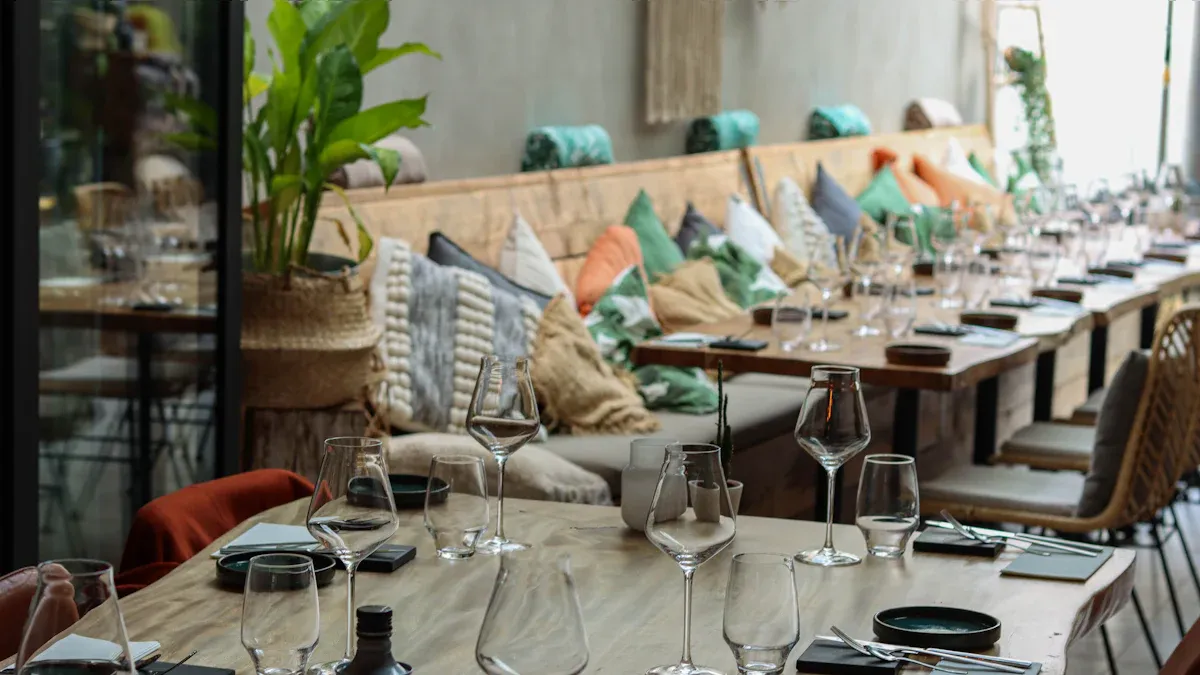
You can see a clear change in dining rooms today. Many restaurants now swap plain white china for handmade ceramics. This choice creates a dining experience that guests remember. A boutique hotel dining room might serve its seasonal menu on earthy stoneware. The warm gray glaze matches the wooden tables. The food looks grounded and honest.
Premium tea suppliers also join this trend. They pair delicate teas with artisan ceramics that honor traditional craftsmanship. A tea master picks a cup for its weight and texture. The cup becomes part of the ritual. These businesses value the human story behind each piece. They want tableware that shows patience and skill.
What These Pairings Reveal About the Trend
These examples show a deeper pattern. Restaurant owners want their plates to tell a story. A mass-produced dish says nothing. A handmade piece speaks of local clay and careful hands. Guests notice this difference. They feel a link to the maker and the place.
This trend also shows what diners value now. They look for authenticity in every detail. Your restaurant tables become a canvas for that authenticity. When you choose artisan ceramics, you signal that you care about craft. You show that your restaurant honors the same values as the farms you source from. The table setting becomes part of the meal itself.
Custom Restaurant Tableware and Local Collaboration
Telling a Story Through Custom Design
Custom restaurant tableware lets you control every part of your dining room. You can change patterns, glazes, shapes, and sizes to fit your menu and your space. A chef who serves simple farm dishes might pick custom stoneware with a dull earth glaze. A chef who plates delicate seafood might choose a shiny finish and a shallow bowl shape. The choice is up to you.
clayesouk offers custom ceramic design services. The brand mixes handcrafted textures with Oriental aesthetics for daily life and retail spaces. This mission suits a restaurant that wants its tables to feel planned. Chef testimonials show the result. Matthew Padilla of White Barn Inn found that guests often talked about the plateware, making it the restaurant’s most talked-about line. Stuart Cameron of Azhar noted that custom plates stood apart from commercial dinnerware through their shapes, lines, and materials. Michael Lomonaco of Porter House Bar and Grill described how working with the ceramist helped create an authentic dining-room experience and tied his cooking style to the craftsmanship behind the plates.
Supporting Local Makers and Community
Hiring local makers does more than fill your restaurant tables. It builds a bond. You talk with the potter about your vision. You visit the studio. You watch the kiln fire the glaze. That link echoes the farm-to-table story you tell about your food.
When you buy custom dishware from a nearby studio, your money stays in the community. You support a craft tradition. You also gain a partner who knows your restaurant’s needs. A local maker can swap a broken plate fast. They can tweak a glaze batch to match your first order. This partnership strengthens the values your guests already like. They see handmade ceramics on the table and know you picked them with care. That choice ties your restaurant to the place it calls home.
Artisan ceramics and farm-to-table dining both value the same things. They honor local craft, the seasons, and patient hands. Handmade plates add warmth and texture to your tables. They also stand up to busy kitchens and daily washing. Real restaurants already show this pairing works. Your guests see the difference, and your community feels the good it brings.
You can take the next step today. Look into a custom order with a local ceramicist. clayesouk offers custom design services that mix handcrafted texture with Oriental aesthetics. Your restaurant tableware can tell your story from the first course to the last.
FAQ
Are handmade ceramics strong enough for daily restaurant use?
Yes. Ceramics made in a studio hold up well in busy kitchens. Look for chip resistance tested to ASTM C368 or EN 12875-1. Check for glaze hardness of 5 or higher on the Mohs scale. Also check dishwasher endurance of 500 or more cycles. clayesouk meets international quality standards. It also holds national-level ICH productive protection demonstration base status.
How do I pick the right glaze and shape for my menu?
Match the glaze to the colors of your food. Earth tones like gray and brown let bright vegetables stand out. Choose shallow bowls for broth and wide plates for main courses. Keep the center smooth so plating is easy. Put texture on the rim or outside instead.
Can I order custom tableware that fits my restaurant’s brand?
Absolutely. Custom ceramic design lets you change patterns, glazes, shapes, and sizes. clayesouk offers custom design services that blend handcrafted textures with Oriental aesthetics. You can create a look that tells your restaurant’s story from the first course to the last.
Why does handmade pottery cost more than factory china?
You pay for skilled hands and time. A potter shapes each piece, applies glaze, and fires it in a kiln. No two pieces come out the same. That variation carries value. Your guests see the care behind every plate. Factory china aims for sameness and loses that human touch.
How does local ceramic sourcing help my community?
Buying from a nearby studio keeps money in your area. You build a relationship with the maker. They learn your restaurant’s needs and can replace broken pieces fast. This partnership echoes the farm-to-table values your guests already appreciate. Your tableware becomes part of a larger local story.
