Kaolin is a soft, white clay made mostly of the mineral kaolinite. It is the key ingredient in porcelain. People often ask, what is kaolin? The answer starts with weathered rock, not a factory.
Jingdezhen’s kaolin is known for its purity, its rich alumina content, and its ability to survive high heat when fired. That mix earned it the name china clay. The name comes from Gaoling, a hill near Jingdezhen, China. Potters there mined this special clay. Today, the same material is used in everyday objects, like porcelain coffee mugs.
Key Takeaways
Kaolin is a soft white clay that comes from rock worn down by weather over millions of years.
Jingzhen’s kaolin is special because it has a lot of alumina and particles of many different sizes.
Potters mix kaolin with porcelain stone to make real porcelain that bakes at over 1300°C.
Kaolin is used in many products besides mugs, such as paper, toothpaste, and cosmetics.
You can check if porcelain is real kaolin at home by looking at its glow, listening to its ring, and feeling its weight.
What Is Kaolin? The China Clay Behind Porcelain
A Soft White Mineral Made by Weathering
What is kaolin? It is a soft, white clay. It forms when aluminum silicate rocks break down through chemical weathering. Its main mineral is kaolinite, a hydrated aluminum silicate with the formula Al2Si2O5(OH)4. This mineral kaolinite does not show up right away. It takes millions of years to form.
Rainwater takes in carbon dioxide from the air and turns into weak carbonic acid. This acidic water soaks into granite and other rocks that are rich in feldspar. The H+ ions in the acid go after the crystal structures of feldspar. Sodium, potassium, calcium, magnesium, and iron wash away into solution. What is left behind is a leftover deposit of the mineral kaolinite. Granitic rocks have a lot of feldspar, so they are a common source of kaolin deposits around the world.
The chemical makeup of pure kaolinite stays about the same every time. The table below shows the usual weight percentages.
Property | Value |
|---|---|
Chemical Formula | Al2Si2O5(OH)4 |
Al2O3 (alumina) | 39.50 wt% |
SiO2 (silica) | 46.55 wt% |
H2O | 13.96 wt% |
Total | 100.00 wt% |
In pure, high-purity kaolin, SiO2 and Al2O3 together usually add up to more than 90% by weight. Their molar ratio should be close to 2:1, which matches the kaolinite formula Al2Si2O5(OH)4.
Pure kaolinite loses 13.9 wt% as structural water (LOI), which matches the hydroxyl content in Al2Si2O5(OH)4. This loss takes place during firing and helps explain why kaolin works so well in a kiln.
Why It Is Called “China Clay”
The name china clay comes straight from a place. Gaoling means “high ridge” in Chinese. Gaoling hill near Jingdezhen is where potters first dug up this white clay. The name Gaoling moved with the material into European languages as kaolin. That is why people call it china clay and why kaolin and Jingdezhen porcelain stay linked together.
The deposits near Jingdezhen are primary kaolin. Primary kaolin stays right where it formed from its parent rock. Granite hills near Jingdezhen weathered in place into kaolinite, feldspar, and quartz. Secondary kaolin, on the other hand, moves by wind or water and settles somewhere else. Transport grinds the crystals finer and boosts plasticity. The clay at Gaoling hill did not travel far. It stayed near the granite that made it.
This local geology built an industry. Potters at Jingdezhen used kaolin clay to make true porcelain. The whiteness of high-purity kaolin matters here. Calcined kaolin has an ISO brightness of 92–95. A higher whiteness index leads to brighter tiles and cleaner glaze finishes. For true porcelain, that brightness is a key quality parameter. The soft, white clay from a hill near Jingdezhen gave potters the raw material they needed. The next section explains why this particular kaolin beat other clays.
Why Jingdezhen’s Kaolin Is Special
A few things make Jingdezhen’s kaolin stand out. This local kaolin has a very high amount of alumina. It also has particles in many different sizes. These features give potters a clay body that turns whiter, finer, and stronger after firing. That is why Jingdezhen’s kaolin became so famous. Whiteness matters because the mineral kaolinite must stand up to intense heat. A clean clay body also melts into a dense, smooth surface. Fine particles pack tightly, and coarse grains hold the shape. This balance stops warping while keeping thin walls.
The Unique Qualities of Jingdezhen Clay
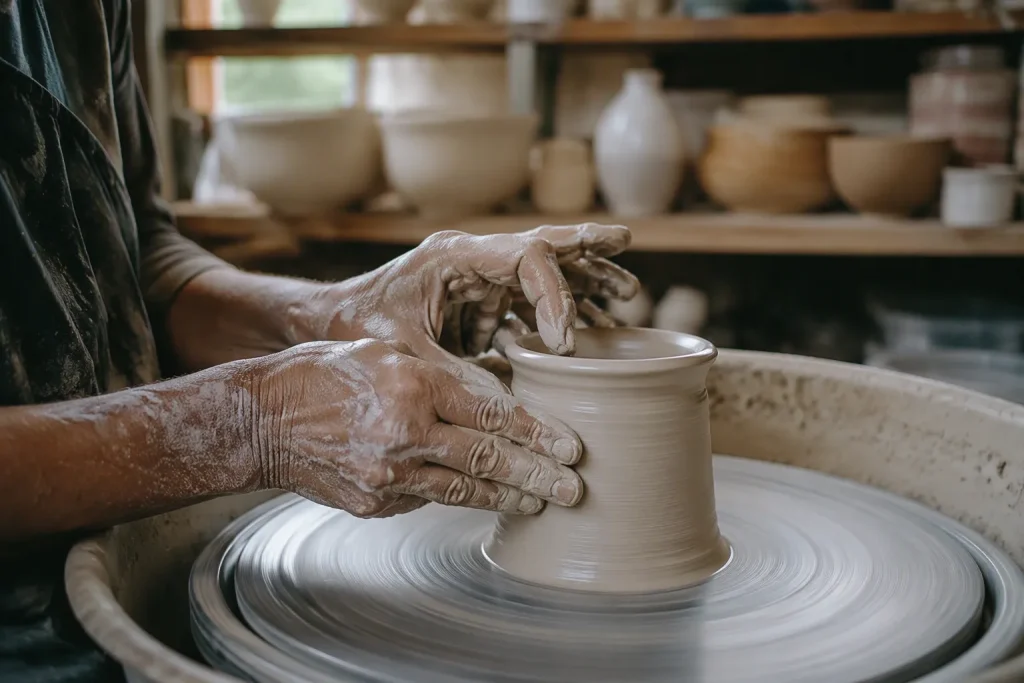
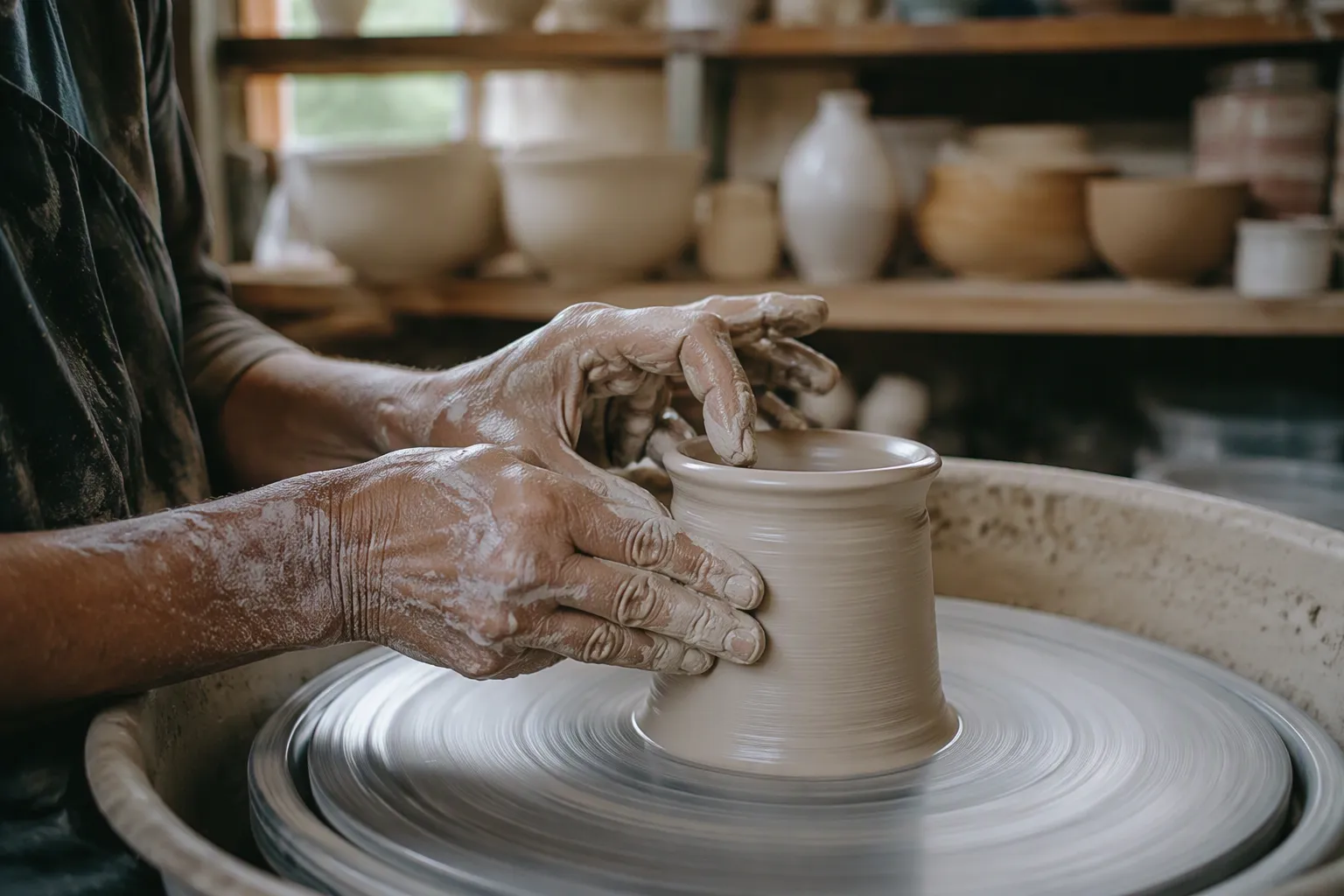
Clay from granite hills near the town is called kaolin, which means “high ridge.” That ridge later gave English the term china clay. These kaolin deposits formed in place, so kaolinite stayed mixed with quartz and feldspar. Potters did not use the material straight from the ground. Historical drawings show men washing the clay in pits and stirring it with lake water. Sieves then removed coarse grains. This water-based step, called levigation, improved purity and made the batch easier to shape. The resulting slurry settled slowly. Potters skimmed the fine upper layer and dried it into soft blocks. This extra work gave the body a smooth, even texture. It also removed grit that could ruin a thin cup.
Alone, kaolin needs about 1200°C–1400°C to mature. At those temperatures, the clay can turn brittle. The town’s potters found the answer: kaolin mixed with porcelain stone, also called petunse. The clay acted as a skeleton, and the porcelain stone provided glassiness. This blended body fired above 1300°C and vitrified into true hard-paste porcelain. The two materials worked like a team. One gave structure, the other gave melt.
Kaolin and Porcelain Stone: The High-Fire Formula
The two-material formula made true porcelain possible. Porcelain stone melted early and filled gaps, while clay held the shape during firing. The blend improved hardness, thermal stability, and firing yield. It also reduced deformation in the kiln. The alumina in the kaolin pushed the melting point upward. That extra heat tolerance let the piece stay upright while the glassy phase flowed between particles. Vitrification is the moment when glass forms between the mineral grains. At that point, the body becomes watertight and hard. The porcelain reaches that stage without slumping. The table below shows the key effect.
Material | Firing behavior |
|---|---|
Unblended kaolin | Needs about 1200°C–1400°C; pure bodies may crack |
Porcelain stone alone | Melts early but lacks structure |
Kaolin blended with porcelain stone | Vitrifies above 1300°C; dense, durable, high-fired porcelain |
This formula allowed Jingdezhen porcelain to withstand the intense heat of wood-fired kilns. It also made the finished walls translucent. Today’s high-fired kaolin porcelain follows that same recipe. The same blend creates high-fired kaolin porcelain in modern workshops. That density explains the clear ring when the cup is tapped. It also accounts for the slight glow seen against light. A dense body holds heat longer, too. High-quality kaolin remains the backbone of every true porcelain mug.
From Jingdezhen Kilns to Your Coffee Mug
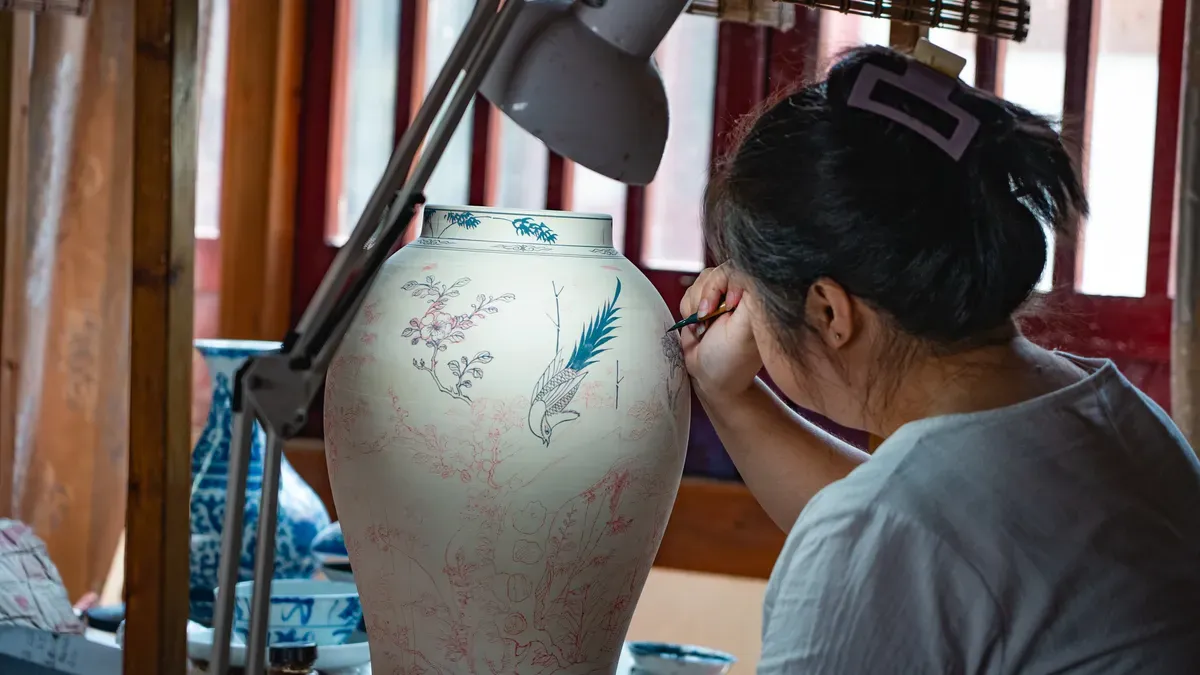
How Kaolin Porcelain Compares with Mass-Produced Mugs
Kaolin gives a clay body whiteness, workability, and strength. These traits make the finished material smooth, see-through, and non-porous. Potters fire kaolin used in porcelain at temperatures above 2,200°F. That heat causes vitrification, a glass-like change. The result is a dense, strong cup that absorbs almost no water. Mass-produced mugs are different. Most use stoneware or earthenware with less kaolin, fired near 1,800°F. Their water absorption reaches 5–10%, so they stay porous.
Production factor | Handmade porcelain mug | Mass-produced ceramic mug |
|---|---|---|
Firing temperature | 2,200°F or higher | Near 1,800°F |
Water absorption | Under 0.5% | 5–10% |
Weight (8 oz) | 320–380g | 220–260g |
Aging after daily use | Patina beyond 10 years | Fades within 1–2 years |
The difference shows in daily use. A high-fired kaolin porcelain mug has more heft and rings clearly when tapped. A mass-produced mug often weighs less but chips sooner.
clayesouk: Handmade Ceramic Cups from Jingdezhen’s Kilns
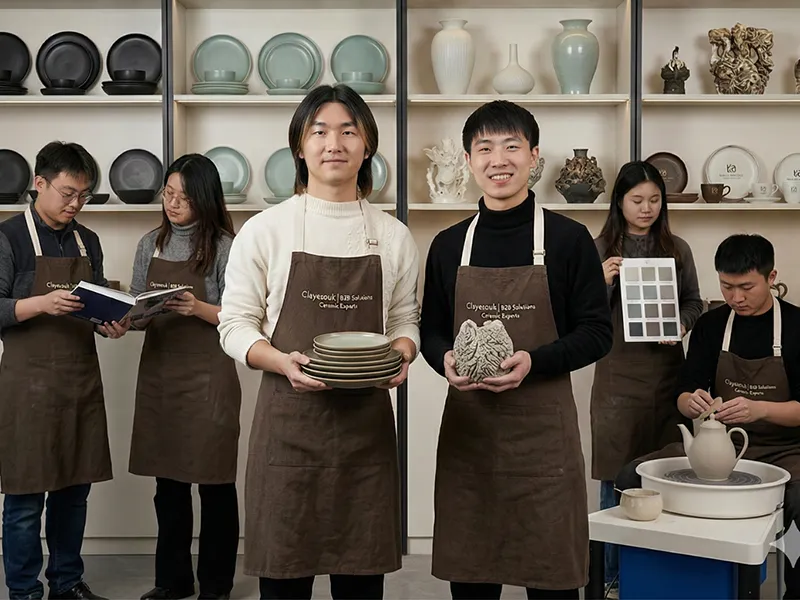
clayesouk works from Jingdezhen, China, a town with a long ceramic history. The brand carries on traditional Chinese craftsmanship with experienced artisans. Its lineup includes handmade ceramic mugs and coffee cups. Each piece uses true porcelain, shaped on a wheel and slip-joined by hand. The workshop also offers custom design services, adjusting patterns, glazes, shapes, and sizes. After-sales support covers maintenance guidance and quality solutions.
The brand is rooted in Jingdezhen’s traditional ceramic craft. This background matters for buyers who want true porcelain, not a molded copy. clayesouk keeps Jingdezhen porcelain alive in objects people use every morning.
Kaolin Beyond the Mug: Surprising Everyday Uses
Paper, Toothpaste, and Other Practical Uses
Kaolin is used for far more than cups and bowls. Paper makers use it as both a filler and a coating. As a filler, it cuts the need for costly wood pulp. As a coating, it makes paper brighter and more opaque. Its particle size and shape provide magazines, brochures, art paper, cartons, and boxes with a glossy finish and sharp print. Toothpaste depends on this mineral, too. Natural kaolin is a mild abrasive, replacing synthetic silica. It cleans enamel without causing harm. It appears even in cosmetics, paint, rubber, and stomach medicines.
Product | How kaolin helps |
|---|---|
Paper | Filler and coating add gloss, brightness, print quality |
Toothpaste | Soft natural abrasive that cleans enamel safely |
Cosmetics | Acne control, oil absorption, detox formulas |
Rubber | Protects medicines from contamination in stoppers |
Paint | Stretches pigment and improves coverage |
The skin care segment makes up a notable share of total demand, and the global market continues to grow. That growth shows how deeply modern life depends on this white clay.
Quick Ways to Spot Real Kaolin Porcelain at Home
Buyers can spot real kaolin porcelain with a few simple checks. First, hold a thin rim up to a strong light. Real kaolin porcelain glows softly and evenly. Light passes through with no cloudy spots or visible specks. Earthenware and most stoneware stay opaque even under a bright light. Second, tap the rim lightly with a fingernail. A clear, bell-like ring that lasts a moment suggests proper vitrification. A dull thud may point to a crack or internal stress. Third, check the weight. Kaolin porcelain feels lighter than dense ceramics but still feels solid. Mass-produced mugs are often lighter and sound duller. These tests work best together. Thickness, decoration, and glaze can change each result, so one check alone cannot prove authenticity.
Jingdezhen’s kaolin begins as weathered rock on a granite hill. Potters wash it, blend it with porcelain stone, and fire it above 1300°C. The clay then becomes a translucent vase or a simple coffee mug.
clayesouk carries this craft forward. Its artisans shape handmade cups in Jingdezhen, a town with a long ceramic history. Each piece holds that long story in daily use. Next time someone lifts a porcelain mug, they can remember its quiet start as special white clay from a historic Chinese kiln town.
FAQ
What exactly is kaolin?
Kaolin is a soft, white clay. Its main mineral is kaolinite, a hydrated aluminum silicate. It forms over millions of years when acidic water breaks down rocks rich in feldspar, like granite. Potters value it because it adds whiteness, strength, and heat resistance to porcelain.
Why does Jingdezhen’s kaolin matter so much?
Jingdezhen’s kaolin has a high alumina content and particles in many different sizes. These traits help potters build thin, strong walls that survive intense kiln heat. The local deposits also gave the world the name “china clay,” linking the town to porcelain forever.
How do potters turn kaolin into true porcelain?
Potters mix kaolin with porcelain stone, also called petunse. The kaolin acts as a skeleton, and the porcelain stone melts into glass. This two-material formula vitrifies above 1300°C, creating a dense, translucent, and non-porous body.
Can someone test a mug at home for real kaolin porcelain?
Yes. Hold the rim up to a strong light. Real kaolin porcelain glows softly and evenly. Tap the rim lightly. A clear, bell-like ring suggests proper vitrification. Check the weight too. Kaolin porcelain feels lighter than dense ceramics but still solid.
Does clayesouk use traditional Jingdezhen methods?
Yes. clayesouk works from Jingdezhen with experienced artisans. The brand shapes handmade ceramic mugs and coffee cups. It also offers custom design services and after-sales support.