


You can follow Jingdezhen’s fame back to a special clay called kaolin. When you mix kaolin with petuntse, you get porcelain that is very white, thin, and strong. People long ago saw that kaolin made their porcelain better than others. Before they found kaolin, makers only used porcelain stone. But it was not as good and needed hotter ovens.
Jingdezhen porcelain became famous for being pretty and lasting a long time.
Key Takeaways
Kaolin is very important for making good porcelain. It makes the porcelain strong and gives it a nice white color.
When kaolin is mixed with petuntse, the porcelain becomes see-through and tough. This makes Jingdezhen special in the world of ceramics.
Jingdezhen became famous because it has pure kaolin and lots of wood for kilns. These things help people make porcelain there.
People in Jingdezhen use careful steps to make porcelain. They clean the kaolin, shape it, and fire it. This makes sure every piece is like art.
Jingdezhen porcelain has been important for a long time. It changed trade and culture around the world. It still inspires artists and collectors today.
What Makes Kaolin Unique
Kaolin’s Properties
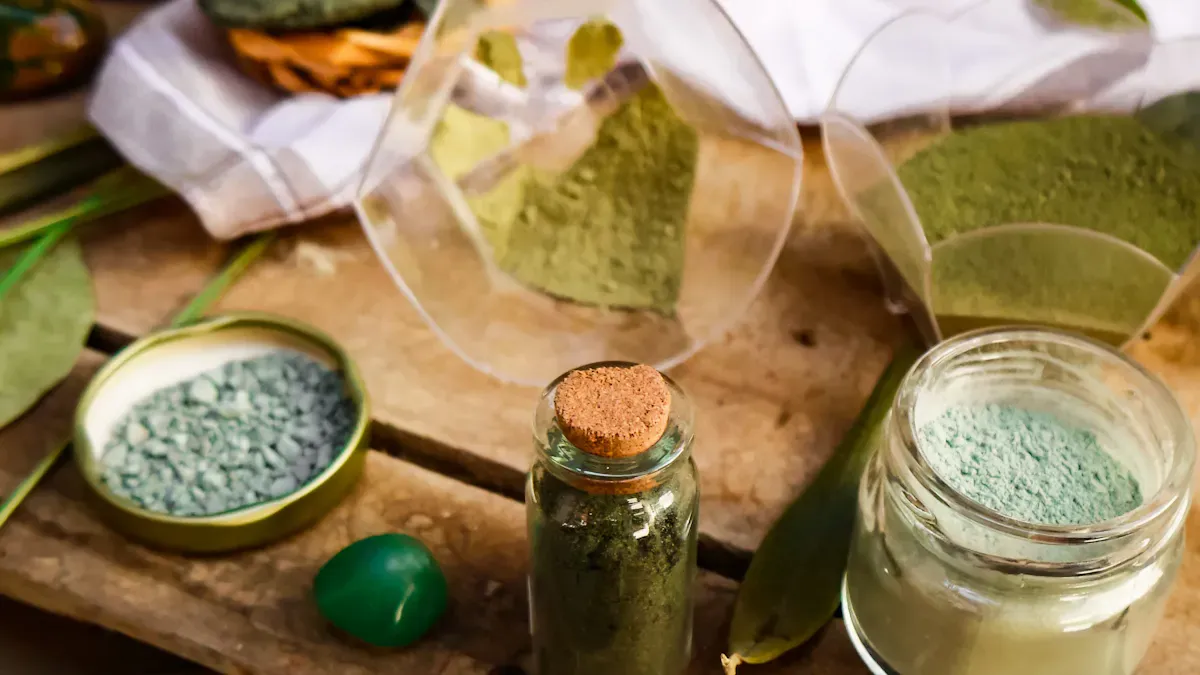
You may wonder why kaolin is so good for making porcelain. Kaolin is a kind of clay that comes from the mineral kaolinite. People find it in the ground as a soft, white powder. In Jingdezhen, people learned that kaolin has the right mix of minerals. This helps them make porcelain that is strong and pretty.
Here is a table that shows the main properties of kaolin:
Property | Description |
|---|---|
Al₂Si₂O₅(OH)₄, mostly made of kaolinite | |
Structure | Layered silicate mineral with flat sheets |
Shrink-Swell Capacity | Low, so it stays stable even when wet or dry |
Cation-Exchange Capacity | Low, which means it does not react much with other chemicals |
Color | Very white unless iron oxide is present, which can add pink or red colors |
Kaolin from Jingdezhen has mostly kaolinite. It also has small amounts of other minerals like halloysite, quartz, and feldspar. The best kaolin for porcelain has very tiny particles, smaller than 2 micrometers. This fine texture helps make porcelain smooth and bright.
You need kaolin that is very pure to make the best porcelain. In Jingdezhen, kaolin usually has over 90% kaolinite. This makes the porcelain whiter and stronger. When you heat kaolin to high temperatures, between 1260°C and 1370°C, it gets hard and glassy. This heating removes things you do not want and helps the porcelain stay strong and see-through.
People in Jingdezhen also mix kaolin with petuntse. This mix makes the porcelain very white and lets light shine through. That is why Jingdezhen porcelain is famous all over the world.
Tip: The name “kaolin” comes from “Gaoling,” a village near Jingdezhen where people first found this special clay.
Kaolin vs. Other Clays
You may wonder how kaolin is different from other clays. Not all clays can make porcelain as fine as Jingdezhen porcelain. Here is a table that shows the differences:
Clay Type | Firing Temperature (°C) | Finished Product Quality | Notes |
|---|---|---|---|
Kaolin | 1260 – 1370 | High whiteness | Needs less feldspar, gives a whiter finish |
Ball Clay | Varies | Lower whiteness | Needs additives for plasticity, less white |
Grolleg Kaolin | Less than Tile #6 | Higher whiteness | More iron, but fires whiter than other types |
Kentucky Ball Clay | Varies | Lower whiteness | Among the whitest ball clays, but still less white than kaolin |
Kaolin has more alumina and less iron than other clays. This makes it great for white porcelain. Ball clay is easier to shape but does not make porcelain as white or strong. You often need to add other things to ball clay to get the right feel.
Kaolin is not as sticky and is harder to shape than ball clay. Sometimes, you need to add bentonite to kaolin to make it easier to work with. Even though kaolin is less plastic, it gives you a much better final product.
When you use kaolin from Jingdezhen, you get porcelain that is strong, white, and lets light pass through. This is why Jingdezhen is famous for its porcelain. The special mix of kaolin and petuntse, plus the right heat, makes porcelain that lasts for hundreds of years.
Kaolin: Best for strength and whiteness.
Ball clay: Easier to shape, but not as white.
Petuntse: Adds translucency and strength when mixed with kaolin.
You can see that not all clays are the same. If you want to make the best porcelain, you need the right kaolin, just like the people in Jingdezhen.
Kaolin in Jingdezhen History
Yuan Dynasty Discovery
Jingdezhen became important during the Yuan Dynasty. People found that mixing kaolin and petuntse made great porcelain. This mix could stand very high heat. Makers could fire their work at higher temperatures. This led to blue-and-white porcelain, which became famous in that time.
This discovery changed how people made porcelain. Before this, porcelain was not strong or pretty. The new mix made porcelain tough, white, and a little see-through. Jingdezhen became well-known in China and later around the world.
Using kaolin and petuntse helped porcelain survive the hottest kilns. This let artists create new designs and styles that still exist today.
Local Resources and Geography
Jingdezhen’s land helped its success. There was a lot of kaolin near Gaoling village. Workers could easily get the best clay for their work. The Chang River was important, too. It moved clay and finished porcelain to other places. Boats carried heavy loads up and down the river every day.
Forests around Jingdezhen gave workers lots of wood for kilns. Without these forests, there would not be enough fuel for high heat. Easy access to kaolin, petuntse, water, and wood made Jingdezhen perfect for making porcelain.
Local resources helped the city grow. Lots of kaolin made Jingdezhen a center for porcelain. This brought jobs, trade, and money to the area. Over time, Jingdezhen became known as China’s porcelain capital.
Jingdezhen Porcelain Crafting Process
Refining Kaolin
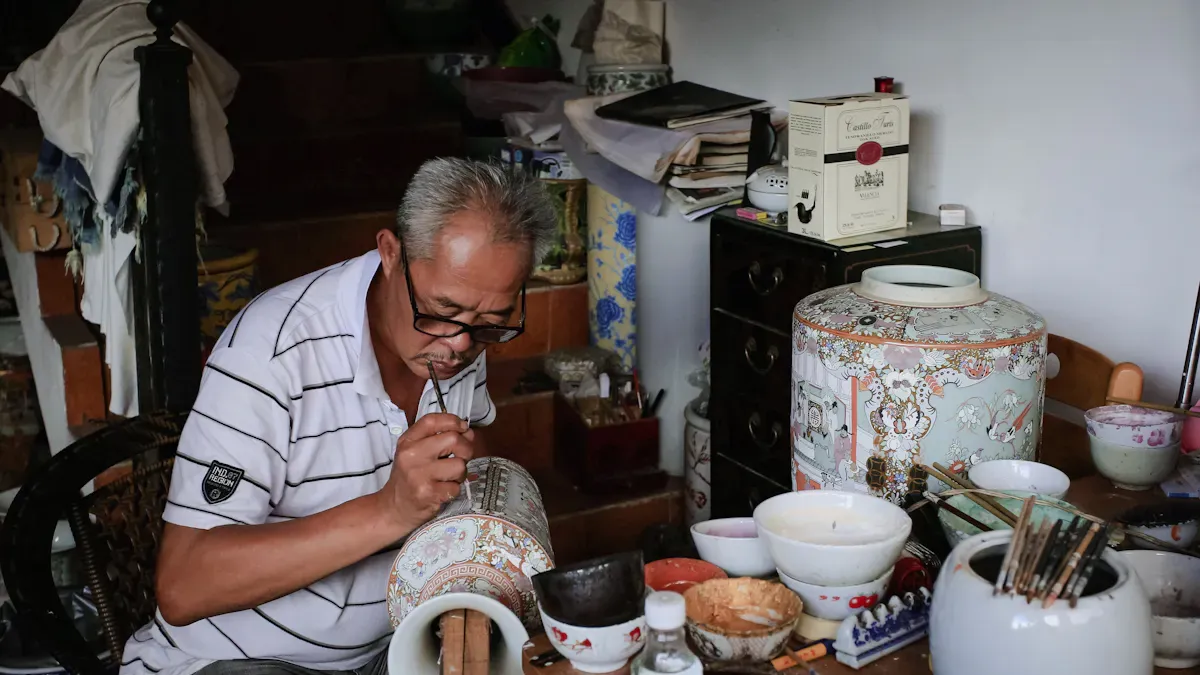
You start the porcelain-making journey with kaolin, a special clay found in the hills near Jingdezhen. Artisans use careful steps to refine this clay for porcelain production. They wash and filter the kaolin to remove sand and other impurities. This process gives you a pure, smooth clay that is perfect for porcelain-making.
Workers use water to wash the raw clay.
They let the mixture settle, then drain off the clean clay.
Artisans dry the clay and knead it until it is soft and even.
This careful refining helps you get high-quality kaolin. When you use pure kaolin, you can make porcelain that is strong and beautiful. Over time, better refining methods improved the quality of Jingdezhen porcelain. You see more durable and detailed pieces because of these advances in porcelain production.
Shaping and Firing
After you refine the kaolin, you move to the next steps in porcelain-making. You shape the clay into bowls, plates, or vases. Skilled hands use wheels, molds, or carving tools. Each piece must dry slowly to avoid cracks.
Here are the main steps in shaping and firing:
Mine and prepare the kaolin for porcelain production.
Shape the clay into the form you want.
Let the piece dry until it is firm.
Fire the piece in a kiln at about 800–900°C for the first time.
Apply glaze to the bisque-fired porcelain.
Fire the piece again at around 1300°C to finish the porcelain production.
Paint and decorate the final piece.
Kaolin helps the porcelain survive these high temperatures. The mix of kaolin and petuntse lets you fire the porcelain at up to 1400°C. This makes the finished product strong and non-porous, which is important for ceramic production.
Tip: Each step in porcelain-making needs a different artisan. Some shape, some trim, and some paint. This teamwork makes Jingdezhen porcelain special.
Achieving Translucency
You notice that Jingdezhen porcelain has a soft glow when you hold it to the light. This translucency comes from the way you fire the porcelain. When you heat kaolin, feldspar, and quartz together, they form tiny crystals called mullite. These crystals make the porcelain both strong and see-through.
The high firing temperature is key in porcelain-making. You need to reach at least 1200°C for the porcelain to become glassy and translucent. The right mix of kaolin and petuntse helps you get this effect. Because of these steps, Jingdezhen porcelain stands out in the world of porcelain production.
Note: The special glow of Jingdezhen porcelain comes from science and skill. You can thank the careful porcelain-making process for this beauty.
Global Reputation of Jingdezhen Porcelain
Quality and Artistry
Jingdezhen artisans show their skill in every porcelain piece. The city became China’s porcelain capital because workers cared about each item. When you touch Jingdezhen porcelain, it feels thin and smooth. The shine and glow come from special clay and how it is fired. Blue-and-white porcelain, called qingbaici, has detailed paintings of flowers, birds, and landscapes. The imperial porcelain factory made sure every piece was high quality. You can trust that real Jingdezhen porcelain always meets these rules. Jingdezhen’s white porcelain is known for its beauty and strength.
When you look at blue-and-white porcelain, you see the work of many skilled people. Each brushstroke tells a story from the Ming Dynasty.
Cultural and Trade Impact
Blue-and-white porcelain changed the world in many ways. Arab traders brought cobalt blue pigment to Jingdezhen. This new color made bright blue designs on white porcelain. During the Ming Dynasty, more people wanted blue-and-white porcelain. The imperial porcelain factory made many pieces for the emperor and for trade. Zheng He’s trips during the Ming period spread blue-and-white porcelain as gifts to other countries. You can find blue-and-white porcelain in the Muslim world and in Europe. Traders liked Jingdezhen porcelain because it was strong and beautiful. Jingdezhen artisans made special plates with European coats of arms and Islamic writing. White porcelain helped people from different places connect and share ideas.
Cobalt blue pigment led to famous blue-and-white porcelain.
Blue-and-white porcelain became a top export in the Ming and Qing dynasties.
Zheng He’s trips helped spread blue-and-white porcelain as gifts.
Blue-and-white porcelain was very popular in the Muslim world and Europe.
Jingdezhen porcelain played a big role in cultural exchange. The need for blue-and-white porcelain shaped trade routes and brought new ideas to China.
Lasting Legacy
You can still find real Jingdezhen porcelain in museums and homes all over the world. Jingdezhen’s white porcelain set the standard for quality. The imperial porcelain factory made sure every piece was perfect. Blue-and-white porcelain, or qingbaici, is a symbol of Chinese art. The Ming Dynasty made Jingdezhen famous, but its story continues today. People call Jingdezhen the porcelain capital of China because of its history and skill. People still want white porcelain and blue-and-white porcelain. By studying real Jingdezhen porcelain, you can learn about history, art, and science. The story of Jingdezhen’s white porcelain still inspires artists and collectors everywhere.
You can see that Jingdezhen became famous because it had pure kaolin and many natural resources. Today, artists use both old ways and new ideas to make porcelain. Schools in Jingdezhen teach how to mix tradition with new skills. Artists from many countries come to Jingdezhen to learn and create.
The city has problems because there is less kaolin now.
Makers use new machines and eco-friendly ways to keep making porcelain.
When you look at Jingdezhen porcelain, you are seeing art, science, and culture that are still alive today.
FAQ
What makes kaolin clay so important for Jingdezhen porcelain?
Kaolin clay is found in Jingdezhen. It makes porcelain very white and strong. When you mix kaolin clay with petuntse, you get ceramics that last a long time.
How does local kaolin affect the ceramic industry in Jingdezhen?
Local kaolin helps people make fine ceramics. The ceramic industry grows because workers use pure clay from the hills. This clay brings skilled artisans from many places.
Why do porcelain techniques matter in making high-quality ceramics?
Porcelain techniques help shape, fire, and decorate ceramics. Skilled workers use these steps to turn kaolin into beautiful pieces. You can see great skill in every item made in Jingdezhen.
Can you visit places in Jingdezhen to learn about fine ceramic products?
You can go to museums and workshops in Jingdezhen. These places show how workers use kaolin and old methods. You can learn about history and see fine ceramics up close.
What is the secret behind exquisite craftsmanship in Jingdezhen ceramics?
Exquisite craftsmanship comes from careful refining, shaping, and firing. Porcelain artisans use good kaolin and special skills. Their work sets a high standard for ceramics everywhere.
