
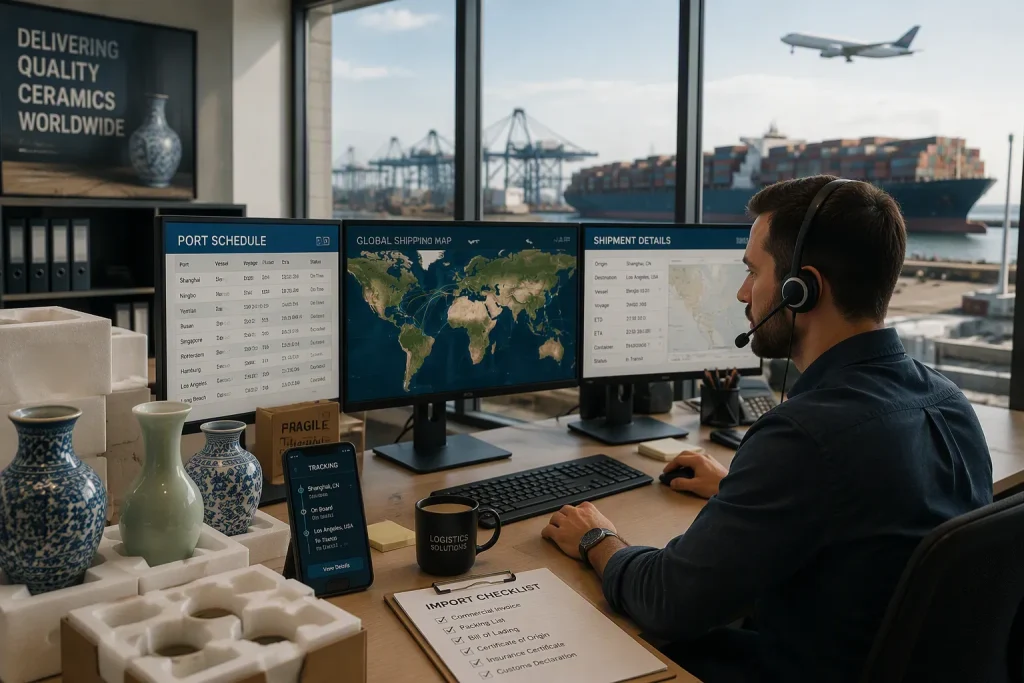
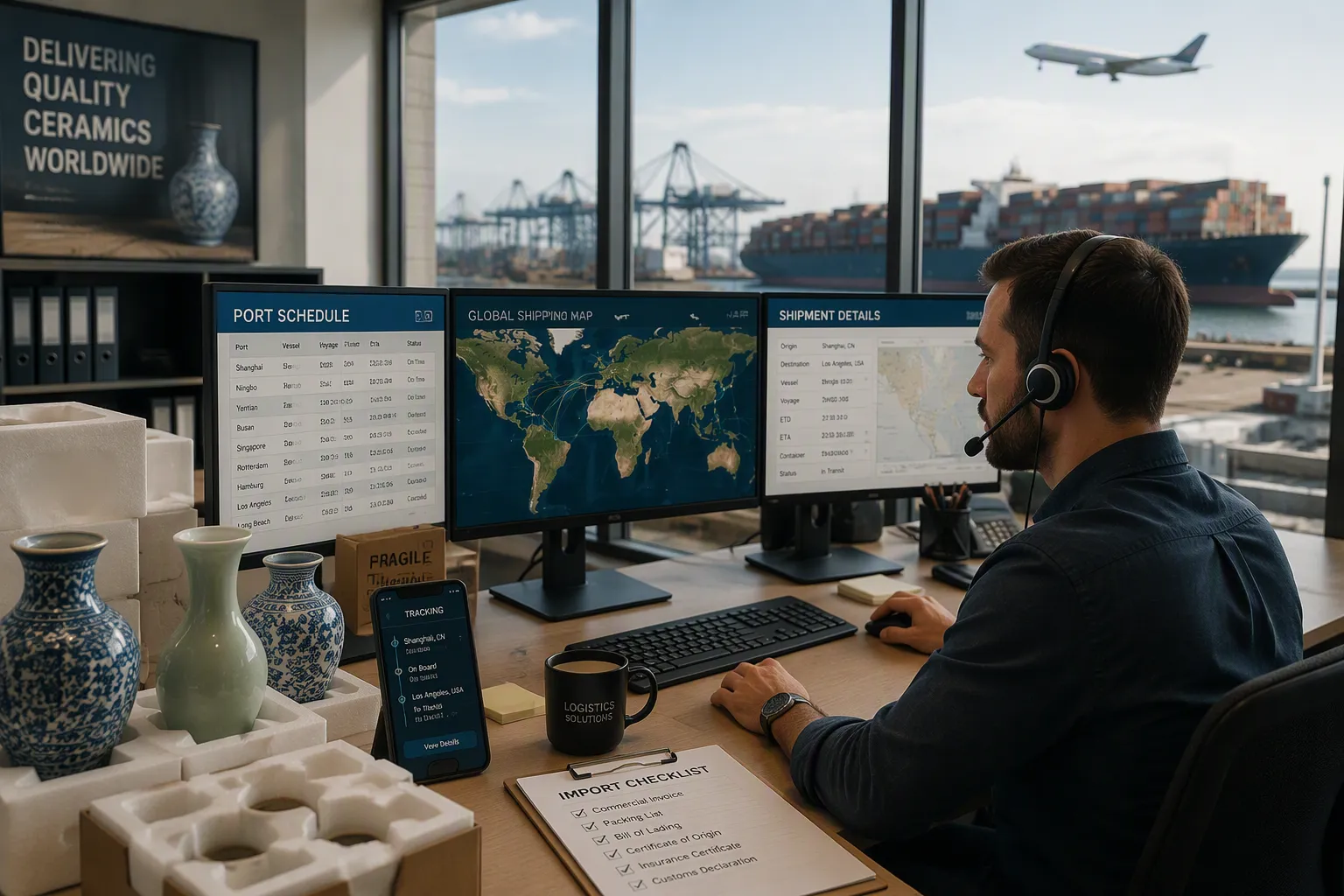
In 2026, a freight forwarder handles every part of ceramic imports. This job includes booking cargo space, making sure packing is safe, handling customs clearance, and using digital tools for real-time tracking.
Ceramics create special problems for global trade. These items break easily, weigh a lot compared to their value, and face strict customs rules. Skilled partners know these risks.
Importers often ask what they pay for when they hire a third-party logistics provider. The answer is in five main duties. Picking the right partner is important. Each duty protects cargo, speeds up freight forwarding, and lowers total logistics costs. A reliable forwarder brings ceramic-specific experience and modern tracking tools to every shipment.
Key Takeaways
A freight forwarder takes care of packing, insurance, customs, and tracking for ceramic imports.
Good packing and insurance keep fragile ceramics safe and lower money loss.
Picking the right way to ship your goods balances cost, speed, and safety.
Correct customs papers and HS codes stop delays and expensive fines.
New tools let people track shipments live and clear customs faster.
Freight Forwarder Planning Roles
Pre-shipment planning is the first job of a freight forwarder. This part covers packing rules, cargo insurance, and getting papers ready. Good logistics planning stops many common problems. Each step needs close attention for ceramic shipments.
Packaging for Fragile Ceramics
Ceramic products need special packing materials. Handmade ceramic cups need double-wall safety during travel. The outer wall guards against hits, while the inner layer cushions the ceramic surface. The result is a safe space that limits movement inside the crate.
Moisture control is just as important. Closed-cell polyethylene foam gives both cushioning and a moisture barrier. This material stops water damage on long ocean trips. Shrink film adds another protective layer. It wraps tightly around each item and keeps moisture, dust, and dirt away from the cargo.
Material | Function in Ceramic Packaging |
|---|---|
Vapor barrier bags | Sealable bags that keep outside moisture out; can be vacuum-sealed |
Desiccant bags | Soak up leftover moisture inside the packaging |
Foil bags | Create a strong moisture barrier for delicate items |
Nitrogen gas | Replaces air to make a dry, inactive environment |
Weatherproof sealing | Protects labels and seals crate seams |
The mix of vapor barriers and desiccants keeps the environment dry during long-distance shipping. The freight forwarder picks the right mix of these materials for each shipment. Custom crating adds more safety for valuable ceramics. Good packing also affects shipping insurance terms and lowers premium costs. The forwarder works with the exporter to set packing specs for materials, sizes, and weight limits. Each crate must meet carrier rules for safe handling. The goal is simple. Every piece must arrive at its destination in the same condition it left the workshop.
Insurance and Import Documents
Cargo insurance protects the value of the shipment. Handmade ceramics have high replacement costs. A service provider helps importers choose coverage levels that match the cargo value. Different insurance options exist for ceramic shipments. All-risk policies cover the widest range of possible damage. Named perils policies only cover certain risks. This step reduces money loss if damage happens during transit. The forwarder also explains the claims process before the shipment leaves. Importers should take photos of packing conditions and keep all receipts. These records help future insurance claims. The right coverage gives importers peace of mind during long trips.
Getting documents ready is also very important. Regular commercial invoices and packing lists are not enough. The forwarder ensures all customs declarations are accurate. The service provider checks these details before the shipment leaves. Early planning stops last-minute problems at the border.
A freight forwarder handles this complex paperwork. They make sure every document meets destination country rules. Talking with freight forwarders about specific product details helps avoid delays. Exporters benefit from clear discussion about their product’s special status. The service provider also gets certificates of origin, bills of lading, and customs declarations ready. Each document has a purpose. Certificates of origin show where the goods were made. Bills of lading prove who owns the cargo during transit. Customs declarations give correct value and description data for border clearance. Declared values must match product descriptions exactly. One mistake on a commercial invoice can hold up customs for days. The team reviews each document for accuracy and completeness before sending.
Without proper papers, shipments face inspection delays or rejection. A skilled partner stops these problems before they start. This logistics phase builds the base for smooth transport and compliance. Every detail matters when handling precious ceramics cargo. The value of freight forwarding is in stopping small issues from becoming big delays.
Transportation and Carrier Management
After planning comes the transport phase. A freight forwarder talks with carriers to get good prices, reserves cargo space, and picks the best route for each ceramic shipment. Every choice affects cost, speed, and safety. The forwarder matches the transport method to what each order needs. This phase turns the pre-shipment plan into cargo that is actually moving. Freight forwarding professionals know that ceramics need special care during this stage.
Choosing Sea, Air, or Rail
Different transport methods work for different types of shipments. Sea freight is best for bulk orders. Boutique hotels and premium tea suppliers order large amounts of handmade cups. These shipments fill many pallets. Ocean containers give cost-efficient transport for high-volume ceramics. The slower transit time does not matter for planned restocking orders. Import logistics teams look at volume and deadline together.
Air freight works for urgent custom orders. Some clients need custom ceramic design pieces within weeks. Air cargo moves goods in days instead of weeks. The higher cost makes sense for time-sensitive deliveries. Rail transport connects China to Europe over land. This method offers a middle ground between sea and air. Rail works for shipments that need faster delivery than ocean but cost less than air. Ceramic cargo must still meet special packing standards for rail vibration.
Transport Mode | Best Use Case for Ceramics | Transit Speed |
|---|---|---|
Sea freight | Bulk orders, planned restocking | Slow |
Air freight | Urgent custom orders, samples | Fast |
Rail freight | Mid‑speed deliveries to Europe | Medium |
The team evaluates each option. Factors include cargo volume, delivery deadline, and budget limits. The right choice protects the cargo and meets the buyer’s timeline.
Carrier Negotiation and Routing
A freight forwarder uses specific strategies to negotiate better rates for less-than-container-load (LCL) ceramic shipments. Ceramics are dense goods. Once cargo goes over about 1,200 kg per CBM, carriers charge by weight instead of volume. A quoted $100 per CBM rate can become $133 per CBM or more. The forwarder accounts for this shift when comparing quotes.
Negotiation Lever | Threshold / Timing | Expected Impact |
|---|---|---|
Annual LCL volume commitment | 8+ LCL shipments per year on same lane | 5–10% rate reduction |
Single‑forwarder consolidation | Consolidate all volume with one forwarder | Better service and priority consolidation |
Peak season avoidance | Ship June–July (before Aug–Oct peak) or Nov–Dec (after peak) | Avoid LCL peak surcharges of +$20–$40 per CBM (25–45% increase) |
Pre‑booking space | Reserve allocation 60–90 days before peak with annual contracts | Secures space and rate stability |
Complete and precise shipment details help when requesting LCL quotes. The forwarder provides origin and destination ports, HS code, total CBM and weight, packing type, and required arrival date. Vague requests invite padded rates with hidden buffers.
Annual contracts with a consolidator unlock bigger savings. Committing 50+ CBM per year on the same route can reduce rates by 10–20%. These contracts lock in rates for 6–12 months to avoid seasonal spikes.
A forwarder also chooses a consolidator with high shipment frequency on the route. Forwarders moving 50+ weekly shipments typically secure 10–20% better carrier rates. Weekly LCL consolidation services often offer 5–15% discounts versus standard rates. Routing optimization considers port congestion, carrier reliability, and inland transport links. The forwarder plans each step to ensure smooth delivery from factory to final destination.
Ceramic Import Logistics Compliance
A freight forwarder makes sure paperwork is correct and shipping routes work well for global trade. This job covers customs laws and import document rules for each market. Ceramic imports face some of the strictest border rules of any product type. A skilled forwarder keeps shipments moving and stops costly delays.
HS Codes and Tariff Duties
The Harmonized System code decides how customs officers group each ceramic item. The forwarder checks product details and picks the right code before the shipment leaves the factory. A wrong code leads to audits, fines, or forced reclassification at the border.
The products meet international quality standards. This compliance makes the classification process easier. The forwarder can show clear documents that support the declared HS code. Importers should know how anti-dumping duties affect ceramic tableware from China. The European Union applies special measures to these goods.
Under Implementing Regulation (EU) 2026/274, a general definitive anti-dumping duty of 79.0% applies to ceramic tableware and kitchenware originating from China. The measure entered into force on 7 February 2026 and is enforced by EU customs authorities. This duty is applied in addition to standard customs duties.
The duty rate depends on the supplier’s cooperation status. The forwarder must find the correct TARIC additional code for each exporter.
Supplier Classification | Anti-Dumping Duty Rate |
|---|---|
Cooperating Companies (with TARIC additional codes) | 17.9% to 22.9% (average) |
Non-Cooperating Companies / All Other Companies | 36.1% (maximum punitive rate) |
Standard third-country duty under the EU Combined Nomenclature usually falls between 5% and 12% based on material classification. The forwarder works out the total landed cost before the importer agrees to a purchase order.
Regulatory and Border Documents
Customs rules differ by country, and ceramic imports need a full document package. The forwarder prepares and checks every form before the shipment arrives. European Union clearance usually requires the following items.
Commercial invoice
Packing list
Bill of lading or air waybill
Product-specific certificates (where applicable)
TARIC additional code on the customs declaration to identify the correct anti-dumping duty rate
Import VAT paid at clearance (recoverable for VAT-registered businesses)
Entry Summary Declaration (ENS) filed before vessel arrival under ICS2 Release 3
The forwarder files the Entry Summary Declaration before the vessel arrives. This step gives customs authorities early notice of the cargo. Filing early lowers the risk of holds at the port. The forwarder also makes sure exporters give accurate product descriptions and values. Mismatched values on the commercial invoice can cause inspections and delays. Each shipment must show both commercial and compliance rules. This double check protects the shipment from rejection and keeps the supply chain moving.
Risk Mitigation for Ceramic Cargo
A freight forwarder lowers damage risk by using strict handling rules, smart stowage plans, and clear carrier liability terms. Ceramic cargo is in constant danger during transit. Ships move in six ways: heave, sway, surge, roll, pitch, and yaw. These motions create strong forces inside containers. Items can slide, fall, or crack even when packed well. Poor stowage causes nearly 20% of all container damage claims. A skilled forwarder builds protection into every step of the trip.
Breakage Prevention and Stowage
Custom crating fixes the problem of items moving inside. A crate built to the exact size of its contents leaves no room to shift. Blocking and bracing add foam or wood supports that soak up shock and vibration. Anti-slip rubber mats increase grip between pallets and the load surface. Dunnage bags fill horizontal gaps when tight packing is not possible. Void fillers protect individual cartons from vibration impact. Load stability planning controls movement from the base up. Gaps from mixed sizes or odd-shaped cartons raise freight damage risk.
Hand-painted ceramic tea cups show why custom controls matter. Each cup has delicate brushwork and a high replacement value. The forwarder plans edge protection around rims and contact points. Corner protectors and shrink-wrap guard weak edges. Proper lashing uses bracing and strapping techniques that minimize movement without excessive pressure. The team checks carton condition, product positioning, and pallet stability before loading. Full container loads reduce handling points. Less-than-container loads need an experienced forwarder for safe consolidation.
Claims and Carrier Liability
Carrier liability terms set the base for any claim. Most carriers limit liability by weight, not by the full value of the goods. Marine insurance fills that gap for high-value fragile cargo. The forwarder explains coverage options before the shipment leaves. If damage occurs, the importer files a claim with photos, packing records, and the bill of lading. The carrier inspects the cargo and reviews the stowage plan. The forwarder supports the process with loading records and delivery notes. Outcomes depend on the evidence and the policy terms. Clear records give the claim the best chance of review.
Freight Forwarding Technology in 2026
Technology changes how a freight forwarder protects ceramic cargo. Digital tools provide real-time visibility and faster customs clearance. These tools turn guesswork into clear data. Every shipment becomes a connected, trackable event.
AI and IoT Visibility
AI and IoT systems allow real-time condition monitoring, helping to detect issues early. Logistics teams watch cargo conditions continuously and respond fast to disruptions. Importers expect live tracking and clear documentation.
Blockchain and Digital Customs
Blockchain creates secure records for customs documents, speeding up clearance. Digital customs systems connect directly with blockchain ledgers. Paperwork moves faster and with fewer errors.
A forwarder uses these platforms to share certificates of origin, bills of lading, and customs declarations. Customs rules differ by country, and blockchain keeps every version consistent. Importers see the same data that border agents see. This shared view builds trust and cuts delays. The result is faster clearance and fewer surprises at the border.
A freight forwarder does five main tasks to deliver safe, timely, and affordable ceramic imports in 2026. Planning protects fragile pieces through smart packing and insurance. Transportation management gets the best routes and rates. Compliance work clears customs without delays. Risk reduction stops breakage during shipping. Technology gives live tracking and quicker clearance.
Fragility, strict compliance rules, and digital tools make a skilled forwarder vital. Importers should ask freight forwarders for ceramic-specific experience before hiring. Ask about damage rates, customs skills, and live tracking tools. A partner who knows ceramics well protects your cargo and money.
FAQ
What does a freight forwarder actually do for ceramic imports?
A forwarder plans the packing, buys cargo insurance, gets customs papers ready, books carrier space, and tracks the shipment. They also take care of stowage rules and help with claims. Each task keeps fragile cargo safe and makes sure delivery stays on schedule.
How does a forwarder protect handmade ceramic cups during ocean transit?
The forwarder sets rules for double-wall packing, moisture barriers, and custom crates. They plan stowage to stop items from moving inside the container. Vibration and shock sensors watch for rough handling. These steps lower the chance of breakage on long routes.
Why do handmade ceramics need different HS codes than factory-made tableware?
HS codes categorize ceramic items. A forwarder selects the correct code based on product details. The forwarder checks product details and picks the correct code before shipment. A wrong code leads to audits or fines.
Can a forwarder help with anti-dumping duties on Chinese ceramic tableware?
Yes. The forwarder finds the correct TARIC additional code for each exporter. This code sets the right duty rate at EU customs. They also work out total landed cost before the importer places a purchase order.
What should importers look for when choosing a ceramic freight forwarder?
Importers should ask about ceramic-specific experience, damage rates, and customs skills. They should also check live tracking tools and customs documentation handling. A partner who knows ceramics well protects cargo and money.
