
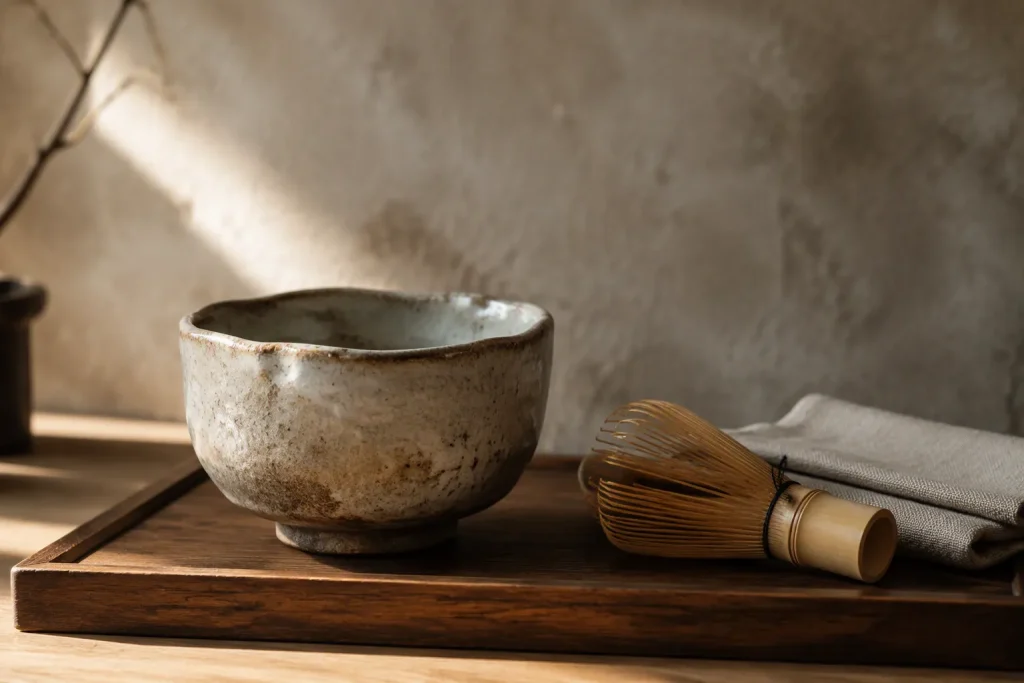
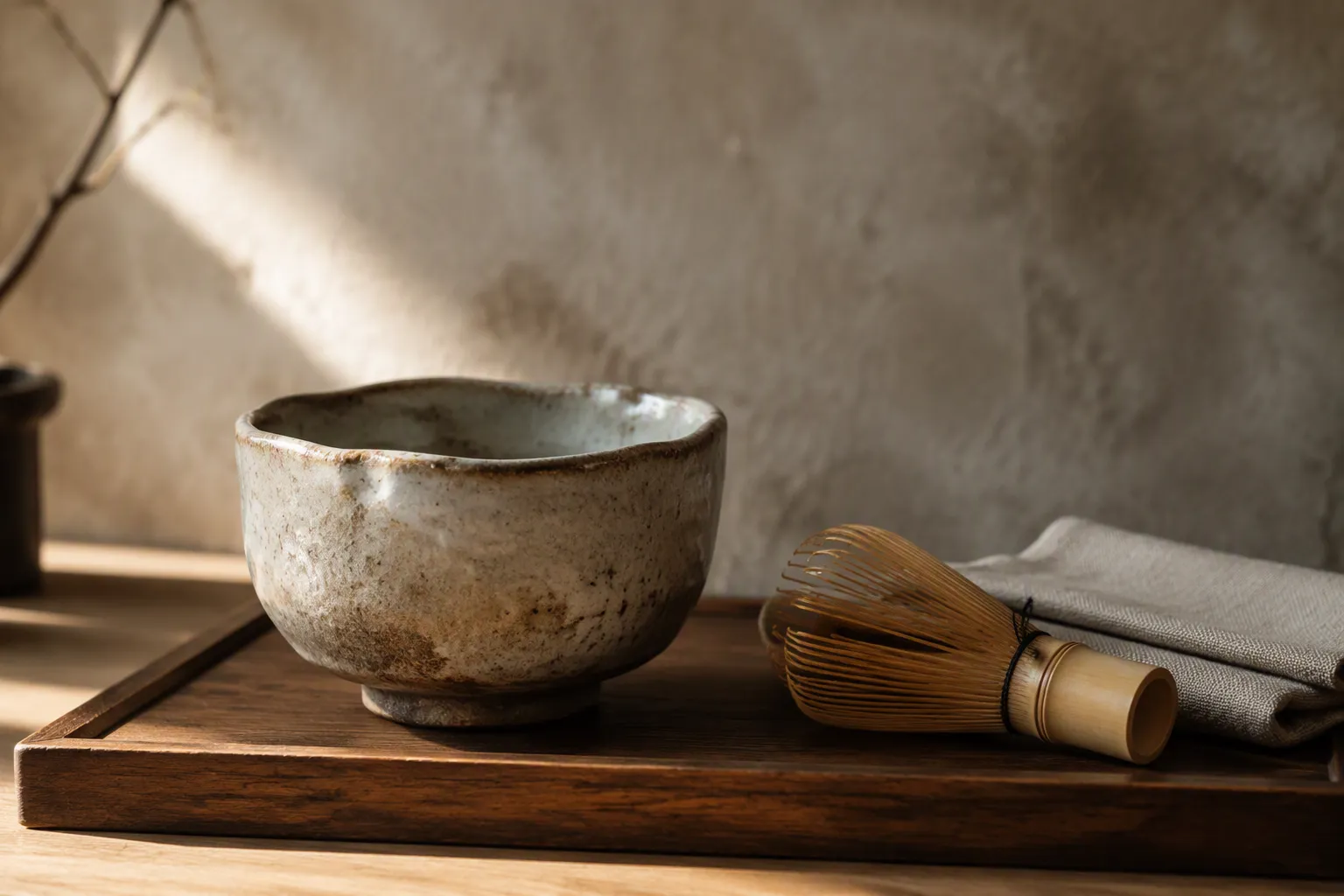
You might wonder why Japanese Wabi-Cha Embraced Imperfect Chinese Ceramics. Wabi-cha is a tea ceremony that values simplicity and intentional imperfection. Yet early masters did not make their own cups. They looked for Chinese bowls considered technically defective. Why? Because these flaws perfectly showed Zen Buddhist impermanence and the wabi-sabi idea of finding beauty in simplicity. This radical choice transformed Japanese tea culture. It also inspired later methods like raku, where potters celebrate imperfections. A simple, uneven bowl holds deep beauty.
Key Takeaways
Wabi-cha tea masters saw beauty in Chinese ceramics that had flaws.
These flawed bowls led to the making of raku ware.
The wabi-sabi way of thinking finds beauty in things that are not perfect and in how they change.
Raku pottery celebrates cracks and uneven shapes.
Modern brands like CLAYE continue this tradition.
Defining Wabi-Cha: The Tea of Simplicity
Simplicity and Rusticity at Core
Wabi-cha is a type of tea ceremony that started in Japan in the 1500s. It says no to fancy things and yes to simple, humble, and spiritual ways. Before this change, Japanese nobles held big tea-tasting parties called tocha. They tried to guess different tea types and showed off wealth with fancy Chinese items. These early events loved perfectly balanced, decorated ceramics. Wabi-cha is the complete opposite of that old way.
Sen no Rikyu built the base of the modern ceremony. He focused on four rules: harmony, respect, purity, and calm. With his help, tea rooms became small grass-hut buildings. The Tai-an Tea Room at Myoki’an Temple, made around 1582, is the only tea house linked to Rikyu that still stands. This small two-mat space shows wabi-cha ideas. Its walls are rough with straw bits. The wooden pillars have flaws on purpose. Rikyu reportedly built tea huts only about 2 meters wide. Even top officials came in plain clothes and left their swords at the door.
The Zen Roots of Wabi-Cha Values
Zen Buddhist monks improved tea making in the 1300s and 1400s. They made simple, daily actions part of spiritual practice. This link turned tea into a mindful process. The phrase ichigo ichie means “one time, one meeting.” Each gathering is special and will never happen the same way again. This knowing requires full attention. It turns drinking tea into a path to mindfulness.
The Kokoro no fumi, or “Letter From the Heart,” is the only writing credited to Shuko. In it, he said beauty is not just in perfect Chinese items but also in Japanese simplicity. He liked wood and bamboo for tea scoops as much as Chinese ivory or bronze. Shuko also pushed for soft, earth-colored tea items instead of bright colors. He made a small four-and-a-half-mat room called soan cha, or thatched hut tea. This written view of simple beauty became key to wabi-cha. The tea of wabi grew from Zen roots that value change and humble materials over show.
Why Japanese Wabi-Cha Embraced Imperfect Chinese Ceramics
Flawed Glazes, Asymmetry, and Rejected Bowls
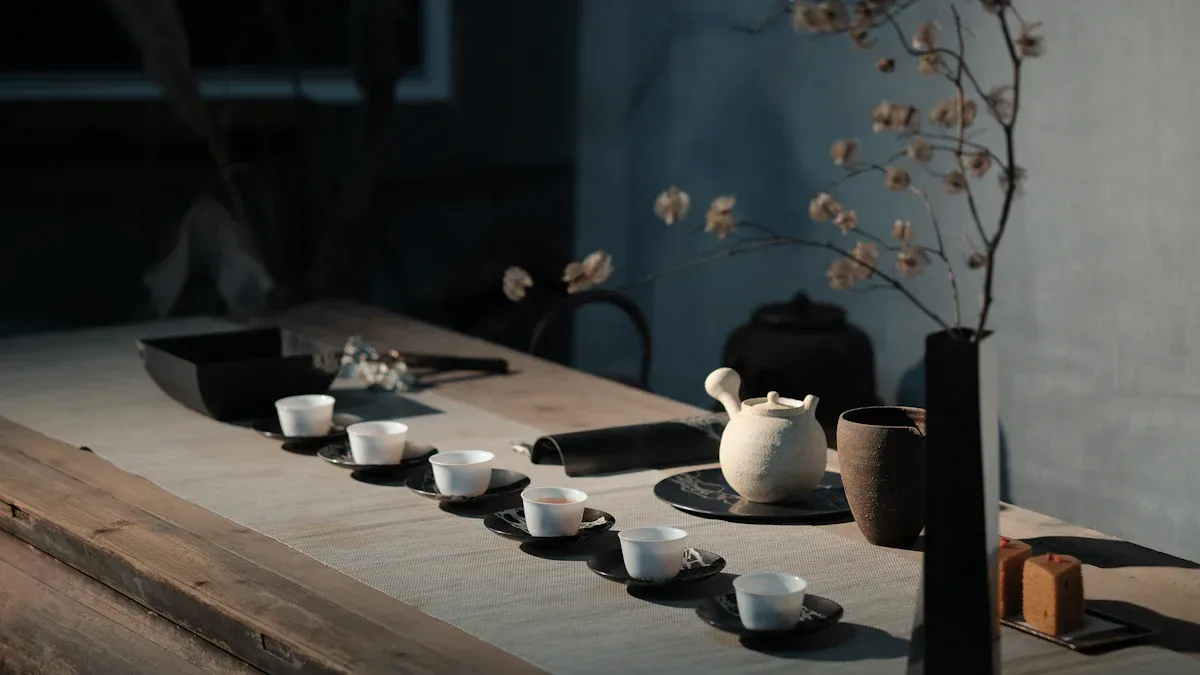
The story of how Japanese wabi-cha embraced imperfect Chinese ceramics begins at the kilns of the Southern Song dynasty. Workers in Jian and Jizhou made thousands of ceramic tea bowls. These bowls came out with uneven shapes, dripped glazes, and small cracks. Many had wild colors instead of clean, even tones. The potters did not plan these effects. Heat and iron oxide created them.
Glaze Pattern | Visual Characteristics | Unintentional Formation Mechanism |
|---|---|---|
Oil Spot (You Di) | Iridescent, silvery spots that resemble oil droplets on a dark background. | Formed unintentionally when iron oxide crystallizes during high-temperature firing, creating unpredictable patterns. |
Hare’s Fur (Tu Hao) | Fine, streaky lines similar to rabbit fur, running from the rim to the foot of the cup. | Results from the flowing and crystallization of iron oxide crystals during the firing process, which is naturally occurring and not deliberately controlled. |
Chinese merchants saw these bowls as low-quality goods. A lopsided rim or blotchy surface meant a failed batch. Chinese buyers wanted smooth, symmetrical, perfectly glazed pieces. The flawed bowls sat in piles of rejects. Some ended up as shards. Others went to cheap markets.
How Tea Masters Found Treasure in Defects
Japanese tea masters looked at the same bowls and saw something else. Sen no Rikyū and his followers wanted objects that felt honest and alive. A perfect bowl showed human control. A flawed bowl showed nature’s hand. That difference mattered to wabi-cha. The tea ceremony needed tools that pointed to deeper truths.
The historical record supports this trade.
The Jian’ou County Chronicles (《建瓯县志》, 1929) records that antique dealers frequently hired local villagers to illegally excavate the ancient Jian kiln sites, smuggling their finds to Shanghai and Japan. Additionally, defective pieces and shards discarded during original production were frequently traded in antique markets.
So the bowls that China threw away became treasures in Japan. Tea masters prized the kiln cracks and uneven glazes. Each flaw made the bowl unique. You could not find a second one exactly like it. That quality matched the wabi-sabi idea of beauty in imperfection.
This embrace changed ceramics forever. Potters in Japan began to chase the same effects on purpose. They built raku kilns and pulled raku ware from the fire while still hot. Raku ware showed cracks, smoke marks, and soft glazes. Raku potters did not fight these results. They welcomed them. Raku became a key part of the tea ceremony. Raku bowls carried the same spirit as the old Chinese rejects. Raku artists still follow this path today. Raku ware stands as proof that Japanese wabi-cha embraced imperfect Chinese ceramics and turned a defect into a virtue.
The Philosophy of Wabi-Sabi: Finding Beauty in Imperfection
Impermanence and the Charm of Irregularity
Wabi-sabi explains why Japanese wabi-cha loved imperfect Chinese ceramics. This way of seeing values change, flaws, and unfinished things. The monk Murata Shuko first brought wabi-sabi into Zen Buddhism. Zen says holding onto temporary things brings pain. Wabi-sabi changes that lesson into something good. You welcome time passing as a beautiful thing to enjoy.
The beauty of unevenness shows up all over nature. Cherry blossoms are beautiful because they fall so fast. Their short life reminds you of both happiness and sadness. Scattered leaves on a path are more beautiful than a perfectly raked garden. A famous story about Sen no Rikyu shows this idea. His son trimmed trees, raked paths, and cleaned up all leaves from the garden. Rikyu thought the result was wrong. He shook a branch to drop a few leaves gently on the path. For Rikyu, the garden was perfect only with those few fallen leaves. This story shows how natural unevenness and change are key to wabi-sabi.
Unevenness in wabi-sabi admits a simple fact. You can never be perfect in a changing world. So you accept flaws instead. This is the heart of peaceful reflection. A crooked tea bowl feels true. It does not pretend to be something else. Seeing beauty in simple things means accepting reality. Simplicity brings calm into the tea room. Awareness grows from this acceptance of what is real.
From Wabi-Cha to the Birth of Raku and Raku Ware
Sen no Rikyū wanted tea bowls that fit his wabi-cha idea. He wanted bowls that seemed hand-shaped from mud. The shiny Chinese ceramics with perfect shapes did not match his goal. So Rikyū asked a ceramic tile maker named Chōjirō for help. Records show Chōjirō worked for Rikyū and made tea bowls for the ceremony. These bowls were known for their simple, clean beauty.
Raku ware started in the 1500s during the Momoyama period. Chōjirō made the first raku bowls with Rikyū’s support. The different materials of raku and Chinese ceramic clearly showed wabi-cha values. Raku was shaped by hand, not on a potter’s wheel. It used clay baked at low heat. The finish was simple black or red. This was very different from shiny, imported Chinese bowls. Rikyū was improving wabi-cha, which values inner spirit over fancy tools. He wanted a very simple tea bowl with no flashy decorations. Raku ware made that dream come true.
Repaired Bowl Example | Description | Wabi-Sabi Relevance |
|---|---|---|
A 1200s Chinese celadon bowl owned by a shogun; repaired with metal staples | Metal staples were seen as Zen-like and inspiring, showing early love for broken things | |
Iga-yaki water jar that cracked during firing; repaired with plain lacquer by Furuta Oribe | Plain repair accepts kiln flaws as part of the object’s story | |
Jūmonji chawan | Ō-ido tea bowl purposely broken into four pieces by Oribe, ground smaller, then reassembled with lacquer | Embraces distortion and flaw as a creative act beyond simple wabi |
This love for the unrefined also shows up in kintsugi, the art of fixing broken ceramics with gold. You value things that are worn. You see beauty in cracks. Raku ware and kintsugi both come from the same idea. They celebrate flaws as a sign of truth. Raku potters today still follow this way. Each raku bowl comes from the kiln with its own cracks and marks. No two raku pieces match exactly. Raku ware is a living tradition. Raku shows the wabi-sabi philosophy. Raku keeps the legacy alive. Raku turns a flaw into a good thing. Raku helps you appreciate the unrefined. Raku shows value in worn things. Raku brings awareness into the tea room. Raku invites calm. Raku makes philosophy real. Raku holds the spirit of quiet reflection.
The Enduring Influence on Modern Ceramics
How the Legacy Shaped Japanese Pottery
The wabi-cha love for flawed Chinese bowls changed Japanese pottery forever. Potters stopped trying to make everything perfectly balanced. Instead, they began to celebrate whatever the kiln produced. Several major schools grew from this change.
School | Connection to Wabi-Cha Ideals |
|---|---|
Developed alongside the tea ceremony; complements the philosophy of wabi-sabi | |
Hagi | Closely associated with the Japanese tea ceremony; appreciated for its simplicity |
Bizen | Simplicity complemented the wabi-sabi aesthetics in chanoyu |
Karatsu | Restrained decoration; popular among tea ceremony enthusiasts |
You can still see this legacy in raku ware today. Raku potters shape each bowl by hand instead of using a wheel. They pull raku ware from the kiln while it is still glowing hot. This process creates cracks, smoke marks, and soft glazes. Raku artists welcome these results. Raku ware carries the same spirit as those old Chinese rejects. The ranking “First Raku, second Hagi, third Karatsu” shows how deeply raku shaped tea culture. Raku remains a living tradition. Raku ware keeps the wabi-cha spirit alive. Raku turns a flaw into a feature. Raku invites you to see imperfection as a mark of truth. Raku ware holds the quiet beauty of things made by hand.
CLAYE: Handcrafted Imperfect Beauty from Jingdezhen
The story comes full circle with CLAYE, a well-known brand from Jingdezhen. This city is the historic source of those early ceramics. CLAYE carries on the tradition today. The brand makes handmade cups that celebrate natural unevenness and the human touch. Each CLAYE piece captures the wabi-sabi spirit. The artisans honor imperfection as a sign of skill and authenticity. You get a practical beauty that feels honest and alive. Every cup carries the warmth of human hands. This experience connects you to centuries of ceramic heritage. CLAYE proves that the wabi-cha love for imperfect Chinese ceramics still shapes how we drink tea today.
Japanese wabi-cha embraced imperfect Chinese ceramics as a radical redefinition of beauty. Wabi-cha masters actively chose imperfection. That choice shapes ceramics today. Raku ware grew from this philosophy. Raku potters shape each bowl by hand. Raku allows cracks and smoke marks. Raku celebrates natural kiln effects. Raku rejects false perfection. Raku embodies wabi-sabi fully and brings tranquility to ceremonies. Raku creates moments of stillness. Raku teaches mindfulness through making. Raku ware stays central to Japan’s tradition. Raku ware connects past and present. Brands like CLAYE in Jingdezhen continue this legacy. They craft cups that celebrate irregular marks. Imagine a simple, lopsided tea bowl. It traveled through centuries. It holds matcha today. That bowl symbolizes beauty in Japanese culture.
FAQ
What makes raku different from other ceramics?
Raku is shaped by hand rather than on a wheel. It gets fired at low temperatures. You take raku ware out of the kiln while it is still glowing. This creates cracks and special effects. Every raku piece comes out with its own personality.
How does raku connect to wabi-cha?
Raku bowls show wabi-cha values of simplicity. Tea masters such as Sen no Rikyū picked raku for the ceremony. Raku ware naturally celebrates imperfection. The raku process accepts whatever the kiln gives. This fits wabi-cha philosophy just right.
Why do raku bowls look cracked or uneven?
Thermal shock during raku firing makes cracks on purpose. Hand-shaping leads to asymmetry. Raku artists are happy with these results. Raku ware displays natural beauty. No two raku pieces are ever exactly alike.
Where does raku pottery originate in Japan?
Raku started in Japan in the 1500s. A ceramic tile maker named Chōjirō made the first raku ware. The Raku family still carries on this tradition today. Raku stays at the heart of Japanese tea culture.
