
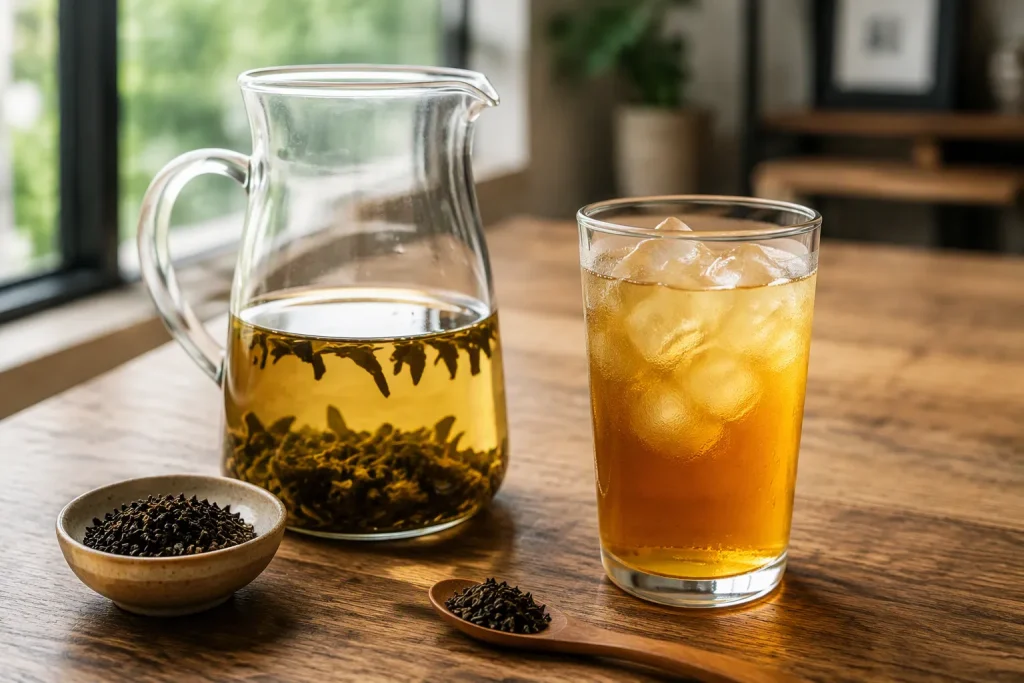
Imagine a glass of iced tea with no sharp edge — just a soft, naturally sweet sip that never turns bitter. That is cold-brewed tea at its best. Cold brew tea simply means steeping tea leaves in cold or room-temperature water for several hours. You get three rewards: smoother flavor, less bitterness, and effortless make-ahead preparation. Curious about how to cold brew tea at home? This guide answers what cold brew is, why it is worth trying, and how to master cold brewing with a simple, repeatable method. Anyone can do it. You just need a little patience and one good tea.
Key Takeaways
Cold brew tea gives you a smoother, sweeter taste with less bitterness than hot tea.
You only need a jar, a strainer, and cold water to make cold brew tea at home.
Steep tea leaves in the fridge for 5 to 12 hours, depending on the tea type.
Cold brew tea is forgiving and easy to make ahead for busy days.
Start with a tea you love and adjust the leaf amount and steep time to your taste.
Why Cold Brew Tea Works
Smoother Flavor, Less Bitterness
Cold water works slowly, and that is the whole secret. Hot water pulls out tannins and bitter compounds fast. Cold water takes its time. Over several hours, it gently draws out the softer, naturally sweeter notes locked inside the leaf. The result is a cup with a round, mellow body and almost no sharp edge. This slow flavor extraction also protects delicate aromas. Fragrant varieties keep their perfume instead of losing it to heat. You taste the flower, the fruit, the honey note — not the burn.
Caffeine behaves the same way. Cold water extracts it more slowly than hot water. A short steep stays mild. A long one closes the gap, so cold-brewed tea is never caffeine-free. With the same leaf and water, you get roughly half the caffeine of a hot brew. Most recipes use more leaf to make up for that, so the final drink lands close to hot tea. Some studies put the difference at 40–70% less. Either way, you get a gentle lift, not a jolt.
Simple And Make-Ahead Friendly
Here is the best part: this cold brew method forgives almost everything. Forget your jar on the counter for an extra hour? No harm. Use a little more leaf? You just get a stronger cup. You cannot scorch the leaves, and you cannot over-steep them into bitterness the way hot water can. That makes cold steeping tea a stress-free habit, even on busy weeks.
You also make it ahead. Combine leaves and cold water before bed, then strain in the morning. A batch keeps for days in the fridge. Pour a glass whenever you want one. Cold brewing tea fits a slow morning and a rushed one alike. Start with one tea you love, and let the cold brew do the work.
How To Cold Brew Tea Step By Step
Gear, Tea, And Water Ratios
You need three things: a pitcher or jar with a lid, a strainer or filter, and cold filtered water. That is it. No kettle, no thermometer, no fuss.
Now for the ratios. A good starting point is 6 teaspoons of loose leaf per liter of water, or 1–1.5 tablespoons per cup. Cold water extracts flavor more slowly than hot water, so you use a bit more leaf than you would for a hot cup. Here is a simple reference table to guide you:
Tea Type | Amount per 8 oz | Fridge Steep Time |
|---|---|---|
Green | 1 tbsp | |
White | 1.5 tbsp | 4–8 hours |
Oolong | 1 tbsp | 8–12 hours |
Black | 1 tbsp | 8–12 hours |
Herbal | 1.5 tbsp | 12+ hours |
These are starting points. Add more leaf or more time for a stronger cup. Use less for a lighter one. If you prefer tea bags, use 2 per 8 ounces.
Steeping And Straining
Here is how to make cold brew tea. Combine your leaves and water in the jar. Cover it and steep in the fridge for at least 5 hours. About 8 hours is ideal — that is your overnight batch. Want deeper flavor? Try a 24-hour steep. The method is forgiving, so you cannot really ruin it.
Prefer the countertop? You can cold steep tea at room temperature too. Black teas need 4–6 hours. Herbals take 3–5 hours. This option works well when fridge space is tight.
Straining comes next. Pour the brew through your strainer or filter into a clean pitcher. Use whole-leaf tea and avoid shaking the jar during steeping. That keeps the brew clear and smooth. Cold brewing avoids cloudiness almost entirely because it pulls out far fewer tannins from the start.
Now you know how to cold brew, how to cold steep tea, and how to make cold brew tea concentrate — just use less water for a stronger base, then dilute to taste. Serve your cold-brewed tea in a clayesouk handmade ceramic cup from Jingdezhen. The glaze catches the light, and the cup feels cool and smooth in your hand. It turns a simple pour into a small ritual.
Best Teas To Cold Steep Tea
Green, White, And Oolong
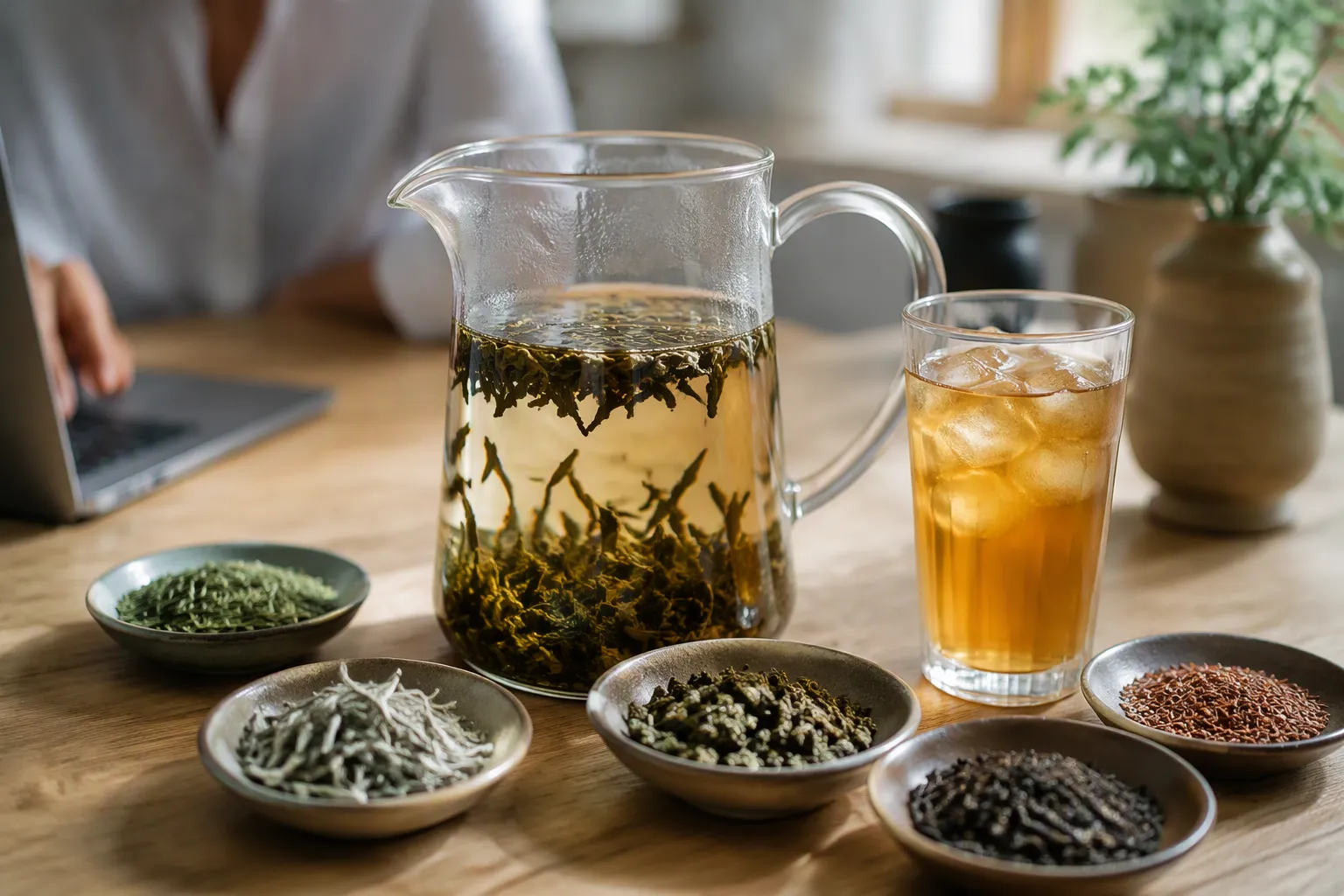
Green, white, and oolong teas reward you the most from this slow method. Their delicate aromas survive cold water beautifully. Green tea stays grassy and fresh. White tea keeps its soft honeyed sweetness. Oolong shows off its floral and fruity layers.
Oolong deserves special attention. Cold water creates a slower, gentler extraction. Volatile aromatic compounds, carbohydrates, and amino acids make up most of the extracted solids in your finished glass. Larger molecules that create bitterness and astringency come out at a lesser rate. That leaves the tea tasting sweeter and smoother than a hot-brewed version. Light oolongs like Tie Guan Yin need shorter steep times. Darker Wuyi rock and Dan Cong oolongs benefit from longer refrigeration. An 8-hour steep gives moderate flavor. A 12-hour infusion reveals deeper floral or roasted notes. Use about 1 tbsp per 8 oz for lighter floral oolongs.
Here is your tea type and steep time guide for this group: green and white need roughly 4–8 hours in the fridge, while oolong wants 8–12 hours. Fragrant varieties shine here. Jasmine green, silver needle, and milk oolong all keep their perfume instead of losing it to heat.
Black, Herbal, And Blends
Black tea handles cold steeping tea with ease. Earl Grey, Darjeeling, and Assam all adapt well. They yield a smoother taste, bring out natural flavors, and reduce bitterness. Some varieties stand out even more:
Black Tea Variety | Flavor Profile When Cold Brewed |
|---|---|
Nilgiri Gold | Fresh cranberry and creamy vanilla notes; doesn’t cloud over as it cools |
Kumaon Black | Smooth and balanced with sweet cherry notes |
Nepali Golden Black | Naturally silky over ice; no mouth-drying finish |
Herbals love this treatment too. A peer-reviewed study on rooibos confirms it works as both a hot and cold brew. Cold-brewed rooibos tastes fresher, sweeter, and lighter-bodied. It is popular in hot, humid months because it is so easy to prepare. Chamomile, peppermint, and honeybush blends follow the same logic. Chamomile mint cold brew packs even sell as 2-quart pitcher packs, so the market clearly agrees. Give herbals 12 or more hours.
Blends sit somewhere in between. A fruity black blend or a minty herbal mix gives you a friendly starting point. If you are learning how to cold steep tea, start with one blend you already love. Then branch out.
Cold brewing suits every category. The cold brew method simply asks for patience, not skill. Try a cold brew tea concentrate with a bold black base, then dilute it over ice for a quick glass. Whether you choose green, oolong, black, or herbal, cold-brewed tea delivers a smooth, sweet cup. Brewing iced tea this way beats the kettle every summer. Cold steeping tea is that simple.
Tips For Cold Brew Tea Concentrate At Home
Adjusting Strength And Sweetness
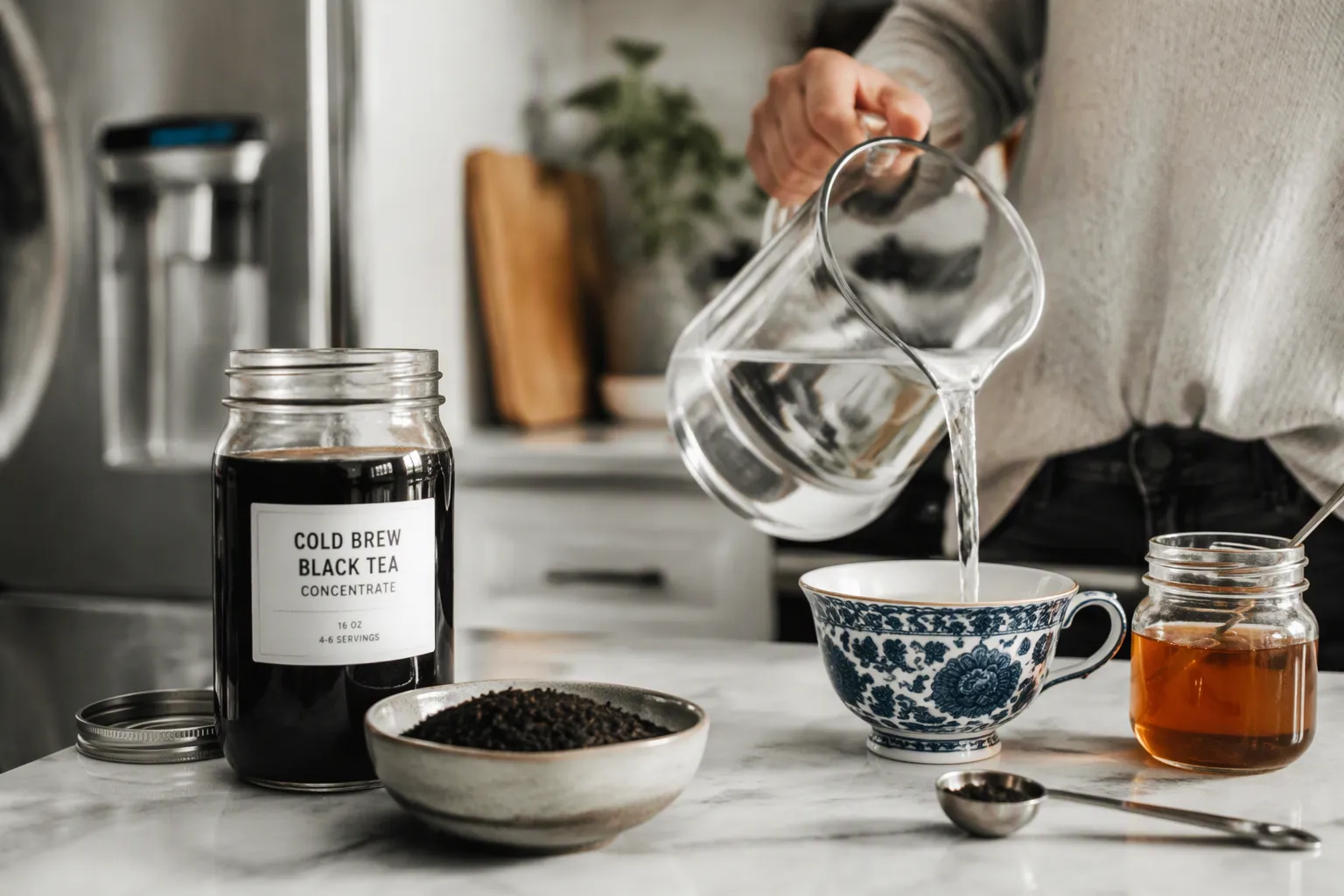
A concentrate gives you control. Use less water for a stronger base, then dilute to taste. The best ratio for cold brew tea concentrate depends on your tea. For a balanced base, try 1:8 — about 2 tablespoons of loose leaf per 8 ounces of cold water. Dilute it 1:1 with water or milk. For a stronger pour-over-ice version, go 1:6, around 2.5 tablespoons per 8 ounces. Delicate teas like jasmine and white prefer 1:10. Robust teas like English breakfast and masala chai handle 1:6 well.
Purpose | Ratio | Notes |
|---|---|---|
Balanced concentrate | 1:8 | Dilute 1:1 with water or milk |
Stronger, over ice | 1:6 | Melting ice dilutes it further |
Delicate teas | 1:10 | Protects volatile aromatics |
Robust teas | 1:6 | Handles higher loading |
Steep time matters too. Green and white teas need 6–8 hours in the fridge. Black tea shines at 10–12 hours. Herbal and rooibos stay forgiving at 12–14 hours. A room-temperature cold steep tea takes 4–6 hours, but off-flavors creep in if you leave it too long.
Sweeten lightly. Start with about 1 tablespoon of honey or agave per pitcher. Lighter honeys like acacia and clover complement most iced teas. Dissolve honey in a little warm water first. For sugar, start with 15–20 g per liter. Good leaf brings its own sweetness, so you need far less than bottled tea uses.
Storing And Serving
Store your cold brew tea concentrate in a sealed glass container in the fridge. It keeps for up to 5 days, though flavor peaks in the first 2–3 days. Herbal and rooibos concentrates last longer than green or white ones. After a few days, some teas taste slightly flat.
Serve it in clayesouk’s Hand-Painted Blue and White Porcelain Tea Cups. The brushwork and glaze turn a simple glass into something worth slowing down for. Learning how to cold brew tea concentrate at home is easy. Mastering cold brew tea concentrate at home is just repetition. Once you nail cold brew tea concentrate at home, homemade cold brew tea becomes a weekly habit. This cold brewing method rewards patience, and every batch of cold-brewed tea teaches you something new.
You now hold a slow, simple path to smooth flavor. Cold brewing tea asks for patience, not skill. Drop leaves in water, wait, and strain. That is the whole craft.
Start with one tea you already love. Try a cold steep tea overnight, then adjust the leaf and the hours until the cup tastes right. Your perfect glass is a few batches away.
Claye believes in patience and craft, and cold-brewing fits that spirit. Make cold brew tea a weekly ritual. Pour a cold brew tea concentrate over ice, or enjoy cold brewed tea straight from the fridge. Cold brew rewards you every time.
FAQ
How long should you cold brew tea?
Plan on at least 5 hours in the fridge. Eight hours is the sweet spot for an overnight batch. Want more depth? Let it sit for 24 hours. Green and white teas finish sooner, while black and herbal leaves need the longer end of that range.
What ratio should you use?
Start with 6 teaspoons of loose leaf per liter of cold water. That works out to about 1–1.5 tablespoons per cup. Use more leaf for a stronger glass, or less for a lighter one. You can always adjust the next batch.
Can you cold steep tea on the counter?
Yes. Skip the fridge and leave your jar at room temperature. Black teas need 4–6 hours this way. Herbals take 3–5 hours. This option works well when fridge space runs short, though the fridge gives you a cleaner, more consistent cup.
How long does cold brew tea concentrate keep?
Seal your cold brew tea concentrate in a glass jar and store it in the fridge. It stays good for up to 5 days. Flavor peaks in the first 2–3 days, so drink it fresh. Herbal bases hold up longer than green or white ones.
Do you need special equipment?
No. A lidded jar, a strainer or filter, and cold filtered water cover it. That is the whole setup. Once you learn how to cold brew tea, you will see how little gear this cold brew method really needs. A good tea and a little patience do the rest.
