


Imagine you enter a fancy European dining room in the 1700s. Shiny porcelain cups from Jingdezhen are shown off with pride. They are a sign of wealth and good taste. Western collectors loved these fragile pieces for their great skill and special beauty from China. Porcelain amazed many people. The Dutch sent over 18 million vessels to Europe in that century. Today, brands like clayesouk help keep this history alive. They share the art and tradition of handmade Jingdezhen porcelain with everyone.
Evidence Type | Description |
|---|---|
Archaeological Findings | Study of kinrande porcelain pieces from Portugal shows they were in rich homes. |
Key Takeaways
Jingdezhen porcelain is called ‘white gold’ because it looks nice and is made well. This makes it very valuable to collectors.
Jingdezhen artisans use special glazes and colors. These make every piece look like art.
Having Jingdezhen porcelain shows you are rich and have good taste. It also links collectors to a long history.
Modern brands like clayesouk keep making Jingdezhen porcelain. They mix old ways with new designs.
People all over the world still want Jingdezhen porcelain. Collectors like its culture and how it is made.
Jingdezhen Porcelain Craftsmanship
Quality and Artistry
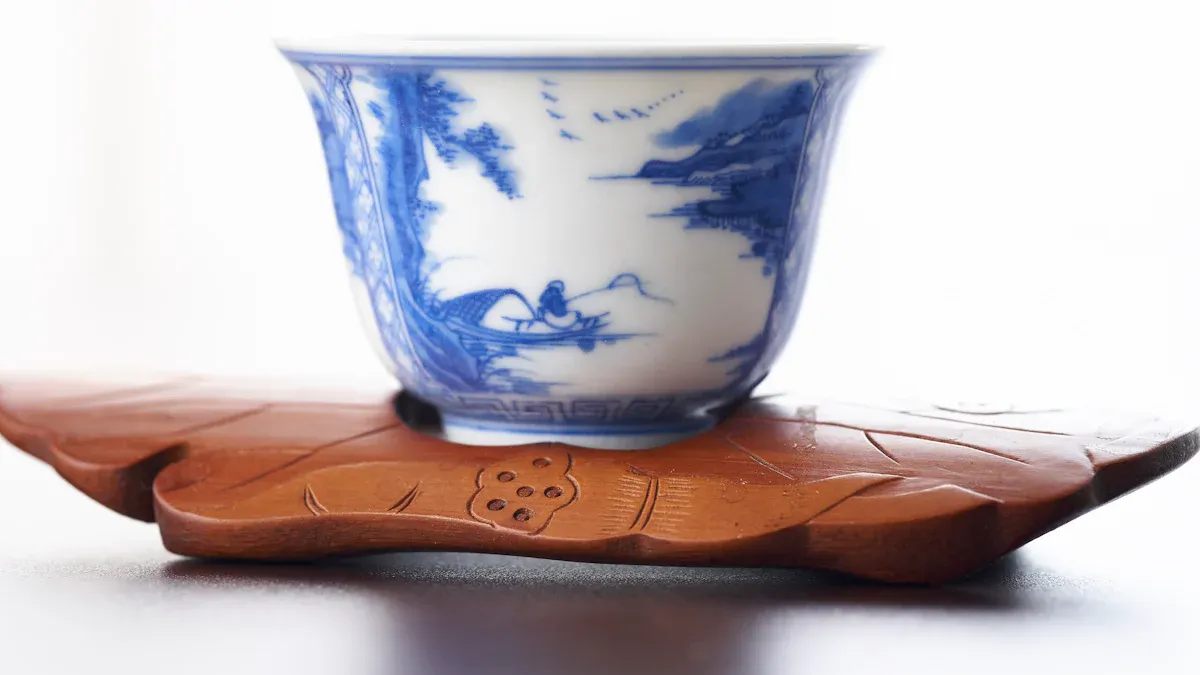
Collectors think Jingdezhen porcelain is the best in the world. The city is famous for its skill and pretty designs. People in Jingdezhen used special materials and smart ways to make their porcelain different from other ceramics. If you hold a cup from Jingdezhen, you might see these things.
Artisans made new colors for overglaze enamels, like famille verte and famille rose. These colors made each piece bright and fun.
They made special glazes for single-color pieces, with spots and cool effects.
You can find new ideas like the sang de boeuf glaze and peachbloom glaze, which used copper oxide for deep colors.
Craftsmen found a way to put gold on porcelain by firing it, not using mercury gilding. This made the gold safer and last longer.
Jingdezhen porcelain got called “white gold” because it is smooth, pure, and shiny. The city’s kilns were known for checking quality very carefully. In the Qing dynasty, leaders like Tang Ying watched over how porcelain was made. He used science and good plans in the kilns. You can read about his work in court records. Tang Ying made sure every piece was top quality. The Qianlong-era Tao Ye Tu shows how careful the work was, with Tang Ying’s notes for each step.
Today, you can still see this care in handmade ceramics. Brands like clayesouk keep the tradition going. Their workers use old skills to shape and glaze each cup. When you hold a clayesouk cup, you feel the history and hard work from Jingdezhen long ago.
Imperial Court Influence
The imperial court helped shape Jingdezhen porcelain. Emperors wanted the best things for their palaces. They made strict rules for style and quality. You can see this in how imperial porcelain looks and feels.
Falangcai, or enamel-painted porcelain, started in the Qing court. Workers made plain white porcelain in Jingdezhen. Then, they sent it to the palace for artists to paint by hand. This shows how the court chose the style and the way to make Jingdezhen porcelain.
In the Ming dynasty, the colorful wucai style became liked by many.
The Kangxi Emperor in the Qing dynasty started enamel decoration, but only for royals.
Official kilns in Jingdezhen made porcelain just for the court, following strict rules.
The Hongwu Emperor made rules for making porcelain, stopping free trade.
Jingdezhen became a proud place for the court, making fine and royal wares.
The Qing dynasty fixed the kilns after the Taiping Rebellion, showing Jingdezhen was important to the empire.
You can still see the court’s influence in the high standards today. Modern brands like clayesouk follow these old ways. Their handmade cups show the same care and detail. The story of Jingdezhen shows how a local craft became famous everywhere. When you pick a piece from clayesouk, you join a long line of collectors who love beauty, skill, and tradition.
Exotic Appeal of Chinese Porcelain
Rarity and Mystique
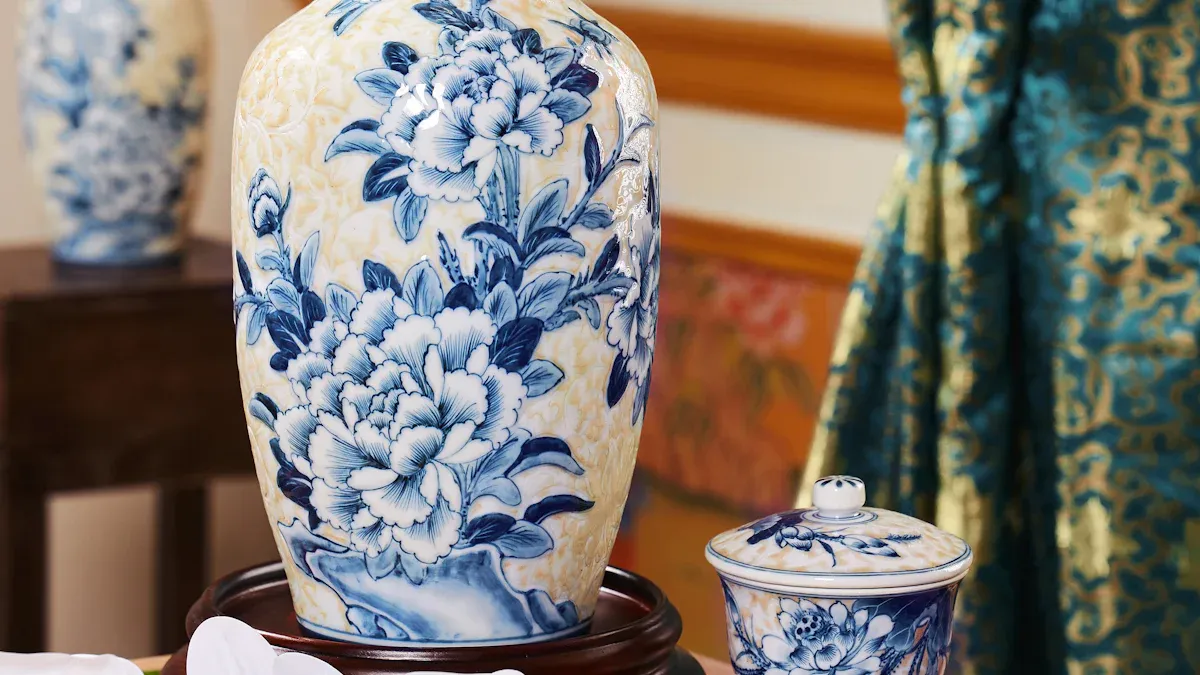
When you see Jingdezhen porcelain, it is more than a dish. Long ago, people in Europe thought these items were rare and special. Collectors liked the mystery and beauty of porcelain from China. Writers such as Shakespeare and Ben Jonson wrote about chinaware’s magic. They made others think Chinese porcelain had special powers. Travelers like Marco Polo told stories that made these objects seem even more amazing.
When Chinese porcelain came to Britain, it started to change. People in England saw it as a sign of being rich and important. The old meaning from China was not as strong anymore, but the wonder stayed. You can still feel this excitement when you hold Jingdezhen porcelain today. Its special look and faraway origin make it stand out in any group of treasures.
Blue and White Designs
Blue and white is a famous style in Jingdezhen porcelain. You can see this look in many museums and collections. The story of blue and white porcelain began in China during the Tang dynasty. Artisans used cobalt from Persia to make bright blue designs on white porcelain. This style became very popular in the Yuan dynasty and even more loved in the Ming dynasty.
Here is a table that shows how blue and white designs grew and spread to the West:
Period | Significance | Trade Impact |
|---|---|---|
Tang Dynasty | Start of blue and white designs (618–907 CE) | Porcelain skills began in China |
Yuan Dynasty | Blue and white porcelain reached its best (1279–1368 CE) | More pieces sent to the West, changing world ceramics |
Ming Dynasty | Showed royal luxury (1368–1644 CE) | 185 million pieces sent to Europe, changed for Western buyers |
16th-17th Centuries | Called “white gold” in Europe, showing it was rare and valuable | Dutch and British East India Companies brought many pieces |
You can find the same style in today’s hand-painted blue and white tea cups from clayesouk. These cups are made with old Jingdezhen methods. The designs show flowers, waves, or clouds, inspired by Chinese and Islamic art. This craft has lasted for hundreds of years, linking the past to now. When you pick a blue and white cup from clayesouk, you join a long tradition that connects China with the world.
Jingdezhen artisans still use cobalt pigment and high heat.
Blue and white designs show how cultures and trade mixed.
The blue and white porcelain tradition is still alive today.
Social Prestige Among Western Collectors
Status Symbol
Western collectors saw Jingdezhen porcelain as a sign of wealth. If you owned porcelain from China, you were part of the elite. These objects showed you had good taste and could buy rare things. Many people put porcelain in their homes to impress visitors. Jingdezhen porcelain became a symbol of purity and being better than others. Collectors often connected porcelain to their own identity and status. The history of porcelain in Europe links to ideas about race and colonialism. Only rich people could have these items, making them even more wanted.
Today, brands like clayesouk attract people who want special gifts and collectables. The brand sells handmade cups with deep cultural meaning. You can pick a cup that shows you care about art and tradition. Clayesouk’s products are for those who value quality and history. Their thin, painted cups are known for great skill. Collectors and gift buyers want these cups because they are more than just dishes—they show years of skill and culture.
Porcelain was seen as a fancy material, showing elite taste and status.
Selling porcelain was tied to big ideas about race, identity, and colonialism.
Porcelain was thought to be exotic and only for rich people, making it seem pure and special.
Display and Collection Trends
Western collectors found new ways to show their Jingdezhen porcelain. Display styles changed over time. Museums and homes put porcelain in important spots. Collectors arranged their pieces to show off their beauty and rarity. This tradition still goes on, with young artists mixing old and new styles.
Period | Trend in Display and Collection |
|---|---|
16th Century | Chinese porcelain became popular in Europe, especially blue-white porcelain. |
Ming Dynasty | Imperial designs and styles were sent to Western markets. |
Qing Dynasty | Styles like famille rose came back, but Western factories started to compete. |
Modern Era | Young artists bring back Jingdezhen’s history, mixing old and new styles in collections. |
Collectors want porcelain with a rich story and great skill. That is why clayesouk is liked by modern collectors. The brand offers pieces with cultural meaning, making them wanted by people who love tradition. Museums and stores still show Jingdezhen porcelain, keeping its story alive.
Evidence Type | Description |
|---|---|
Historical Significance | Jingdezhen porcelain has a long history that makes it valuable. |
Craftsmanship | The thin, painted cups are famous for their great skill. |
Cultural Depth | Shows deep cultural meaning, making it wanted by collectors. |
When you collect Jingdezhen porcelain, you join a long tradition. Western collectors have always loved these pieces for their beauty, history, and prestige.
Influence on Western Art and Design
European Porcelain Makers
Jingdezhen porcelain changed art in Europe. When it came from China, artists wanted to copy its beauty. Many European makers tried to learn how to make porcelain. They looked at the shapes, colors, and patterns from Jingdezhen. Delft potters in the Netherlands became well-known for blue-and-white earthenware. Their pieces looked a lot like Chinese porcelain. In Bavaria, Electress Maria Amalia used Delft-style tiles in her kitchen. These tiles showed how much people liked Chinese porcelain.
Factories like Meissen in Germany and Sèvres in France tried to make their own porcelain. They used new ways but kept the Jingdezhen style. You can find blue-and-white plates, cups, and vases in many old European homes. These items showed good taste and love for art.
Decorative Arts Inspiration
Jingdezhen porcelain did more than change dishes. It also changed art and design. The Trianon de Porcelaine at Versailles is a good example. It was built in 1670 and used blue-and-white jars and tiles. This made a royal garden look special. The style, called chinoiserie, became very popular. Artists used Chinese patterns in furniture, wallpaper, and clothes.
Today, you can see old and new styles in brands like clayesouk. Jingdezhen artisans are bringing back old glazing skills, like the blue and white style. They also add modern ideas. Some artists use simple shapes and care about how the cup feels. This mix of old and new keeps porcelain art alive. When you pick a piece from clayesouk, you join a long story of art and change.
Jingdezhen artisans use old skills and try new designs.
Modern brands mix history with new ideas to make porcelain for today.
Market Demand and Collecting Practices
Trade Routes
The porcelain trade changed the world in big ways. In the 1700s, people wanted Jingdezhen porcelain more and more. Western countries loved these pretty items from China. Porcelain traveled on many routes to get to Europe. Ships took porcelain down the Chang River to Poyang Lake. After that, traders used three main paths:
One path went to Fuzhou for shipping.
Another path went to Ningbo port.
The last path led to Guangzhou port.
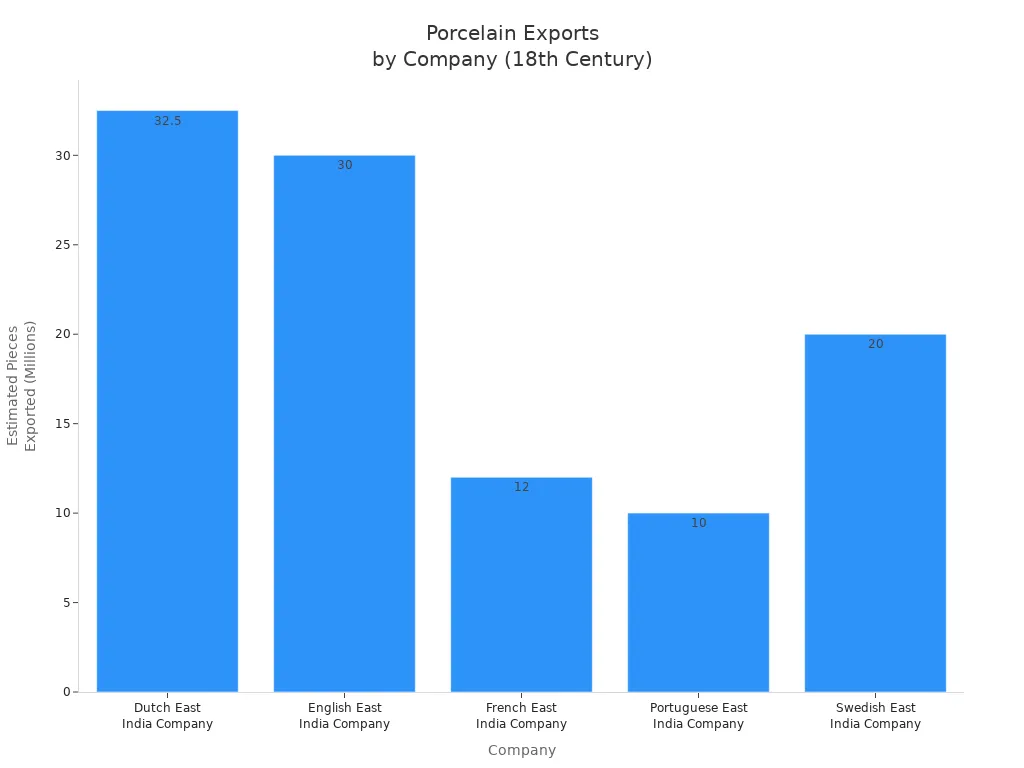
These ports sent porcelain to Europe, where people wanted even more. The porcelain trade made China a lot of money. Over 100 million pieces left Jingdezhen in the 1700s. Selling porcelain helped start a global silver trade. You can see how big the market was by looking at the numbers.
Company | Estimated Pieces Exported | Time Period |
|---|---|---|
Dutch East India Company | 30 – 35 million | 1602 – 1682 |
English East India Company | 30 million | 1766 – 1786 |
French East India Company | 12 million | 1766 – 1786 |
Portuguese East India Company | 10 million | 1766 – 1786 |
Swedish East India Company | 20 million | 1766 – 1786 |
Blue and white porcelain was called “white gold” because it was rare and valuable. People wanted these pieces so much that the porcelain trade became a big part of history.
Auction and Boutique Trends
Today, you can see people still want Jingdezhen porcelain. Auctions and boutiques sell many pieces. Collectors look for items with clear history and great skill. Pieces with good records and certificates can cost 25-40% more. Old and new porcelain both have buyers. Pieces made by famous masters are very wanted. Blue-and-white wares are always popular, but famille rose pieces change in price.
Younger collectors like studio pottery made by known artists. These pieces have gone up in value by 15-20% each year. When big auctions happen, prices go up by 10-15%. The porcelain market keeps changing, but people still want it.
Brands like clayesouk help meet this demand. The brand sells to people all over the world who want special porcelain. Clayesouk lets you pick your own patterns, glazes, and shapes. This mix of old tradition and new style makes the Jingdezhen porcelain market busy and worldwide.
You can understand why Western collectors loved Jingdezhen porcelain. The makers showed great skill. The porcelain was rare and beautiful from China. Owning these pieces made people feel important. Museums and collectors still think these works are special today. Modern brands like clayesouk help keep this history alive. They work with local artisans and mix old and new styles.
Samuel P. Avery made a big Asian ceramics collection. This showed that Americans were getting more interested.
Augustus the Strong thought Jingdezhen porcelain was better than other fancy things.
The ceramic cup market is growing by 4.6% every year.
Criterion | Explanation |
|---|---|
(ii) | Jingdezhen shows how ceramic art moved between cultures. |
(iv) | The city stands for the best porcelain-making in China. |
If you pick a handmade piece, you join a tradition. This connects people from the past to people today.
FAQ
What makes Jingdezhen porcelain special?
You find Jingdezhen porcelain unique because of its fine clay, bright glazes, and skilled handwork. Artisans use old methods to create each piece. The porcelain feels smooth and looks beautiful.
How do you care for handmade porcelain cups?
You should wash your porcelain cups by hand with mild soap. Avoid using harsh scrubbers. Do not put them in the microwave or dishwasher. This keeps the colors and glaze looking new.
Why do collectors value blue and white porcelain?
Collectors love blue and white porcelain for its history and beauty. The designs tell stories from China’s past. You see these patterns in many museums and private collections.
Can you customize a porcelain cup from clayesouk?
Yes! You can choose your own patterns, glazes, and shapes. Clayesouk offers custom design services. This lets you create a cup that matches your style or makes a special gift.
