


Are you thinking about starting a handmade ceramic cup collection? You can start with one cup that you really like. It does not matter if you like old mugs or new shapes. You can go to local studios to look for cups. You can also shop online or visit clayesouk for special pottery. Every handmade cup is like a small work of art. These cups make your daily life feel warmer. Collecting pottery is fun and helps you share stories with friends.
Tip: Pick cups that fit your style and make you happy!
Key Takeaways
Begin your collection with a cup you really like. Pick cups that show your style and make you happy.
Make clear goals for your collection. Think about what is most important to you. Maybe you like special designs or want to help local artists.
Look at different styles and prices. Handmade cups have many shapes and costs. Find what matches your taste and money.
Learn about how ceramic cups are made. Knowing types, methods, and signs of good quality helps you choose well.
Meet other collectors and artists. Sharing stories and experiences makes collecting more fun and builds friendships.
Set Your Collection Goals
Why Start a Handmade Ceramic Cup Collection
Before you dive in, think about why you want to collect handmade ceramic cups. Your reason can help you pick the right pieces and enjoy the journey. Many people love these cups for more than just their looks. Here are some reasons you might want to start:
Handmade ceramic cups last a long time because they use strong materials.
They keep your drinks warm longer, which makes every sip better.
The feel and taste of your drink can improve with a good ceramic cup.
You support skilled artists and help the planet by choosing eco-friendly items.
Each cup is unique. You can find designs that match your style or even ask for custom pieces.
These cups often hold special memories or stories.
Businesses sometimes use custom mugs to share their brand.
Tip: Think about what matters most to you. Do you want a cup that tells a story, or do you care about supporting local artists?
Choosing Styles and Budgets
Now, let’s talk about style and budget. You do not have to spend a lot to start. Handmade cups come in many shapes and looks. Some collectors like simple tumblers, while others want big mugs or classic soup cups. Here are some popular styles you might see:
Rustic white plates and cups
Minimalist pottery tumblers
Classic soup mugs
Extra large mugs for a big drink
Set a budget that feels right for you. Brands like clayesouk offer a wide range of handmade cups, so you can find something special no matter your price range. Collecting is about finding pieces that make you happy, not about spending the most money.
Note: Start small and add to your collection over time. Your taste may change as you learn more about handmade ceramics.
Learn Ceramic Basics
Types and Techniques
You may ask what makes a ceramic cup special. The answer depends on the type of ceramic and how artists make it. Here is a simple table about the main types:
Type of Ceramic | Durability | Appearance |
|---|---|---|
Stoneware | Strong, keeps drinks hot, does not stain easily | Feels nice, good for every day |
Porcelain | Stays strong even when thin, bright for shiny glazes | Looks smooth and fancy |
Ceramic cups are made in different ways. You can tell them apart if you know what to look for:
Molding: Artists shape each cup by hand. This makes every cup a little different.
Detailing: Carving and sgraffito give each mug special designs.
Firing: This step makes the clay hard and keeps the details safe.
Glazing: Glaze covers the cup and makes it pretty and strong.
Decoration: Painting and decals turn cups into art.
Jingdezhen is a famous city for ceramics. Artists there use old famille rose and color enamel methods. These ways of making cups inspire new artists, like the ones at clayesouk. You get a cup that mixes old skills with new ideas.
Key Terms Explained
If you are new to collecting ceramic cups, you will see some words a lot. Here is what they mean:
Limited collection: Only a few cups are made, so they are rare.
Personalization: Names or letters on cups make them special.
Hand-built: The cup is shaped by hand, not by a machine.
Glaze: The shiny or dull layer that protects and colors the cup.
Firing: Heating the cup to make it strong.
Making ceramic mugs is not easy. Handles can bend, and it takes a lot of skill. That is why handmade cups can cost more. When you buy from clayesouk, you help artists keep old traditions alive. You also get a cup that shows someone cared when they made it.
Tip: Learn these words so you can find good cups and know what makes them special.
Where to Find Handmade Ceramic Cups
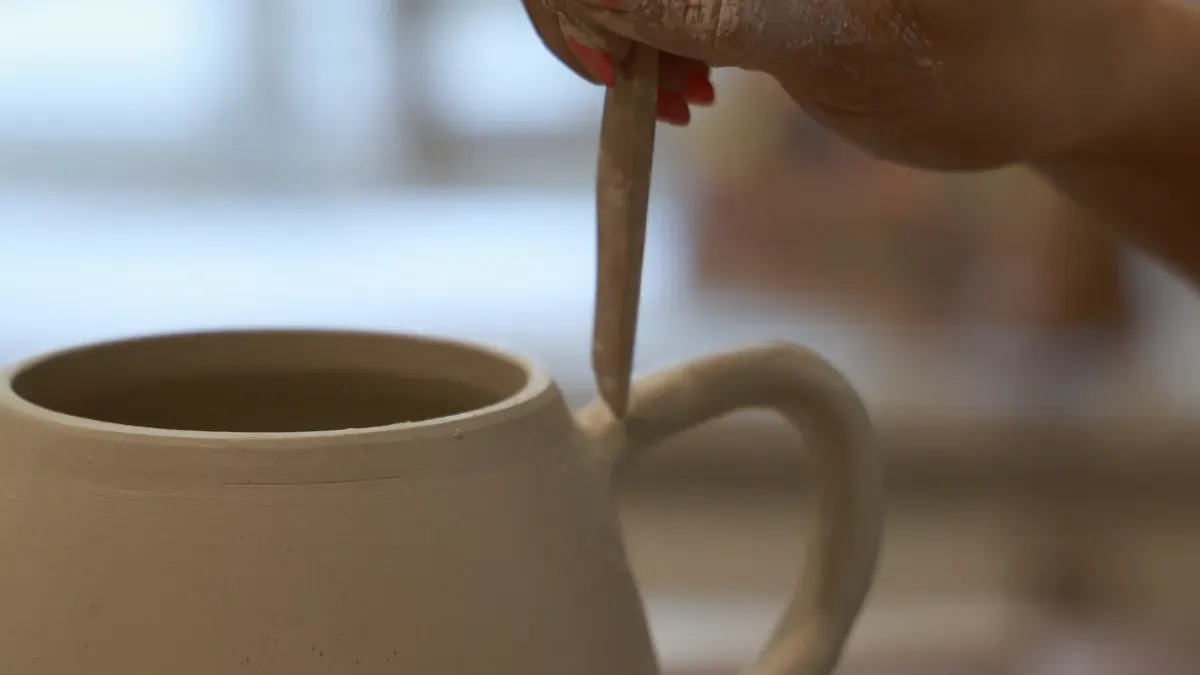
To start your collection, you need to know where to look. Handmade ceramic cups are in many places. Some places have old vintage mugs. Other places have new pottery made by skilled people. Let’s see where you can find them.
Local Studios and Markets
It feels special to hold a handmade ceramic cup from a local studio. Many cities have busy markets and pottery studios. You can see handmade ceramic mugs up close at these places. You can touch the glaze and feel how heavy the cup is. You can also meet the artists who make them. Here are some good places to visit:
Powerhouse Arts in Brooklyn has a Community Ceramics Studio. You can find handmade mugs and pottery made by local artists.
Loveramics in Los Angeles sells many handmade ceramic mugs and vintage mugs. Their shop has cool designs and classic shapes.
Local art fairs and farmer’s markets have booths with handmade ceramic cups. You might find vintage mugs or pottery that fits your style.
Pottery studios sometimes have open days. You can watch artists make handmade ceramic mugs. You can even try making your own mug.
When you go to these places, you help local artists. You help keep old ceramic skills alive. You can also find special vintage mugs and handmade ceramic cups with stories.
Tip: Ask artists how they make their cups. You might learn about glaze patterns or how they hand-build vintage mugs.
Online Shops and clayesouk
You do not have to travel to find handmade ceramic mugs. Many online shops sell lots of handmade ceramic cups and vintage mugs. You can shop from home and find cool pieces from around the world. Here is why these shops are good:
They show clear photos of each handmade ceramic cup. You can see the glaze, shape, and details.
They tell you about the artists. You learn about the people who make the cups and their traditions.
They have safe payment and ship worldwide. You can buy handmade mugs from anywhere.
They give good descriptions. You know the size, weight, and material of each handmade ceramic mug.
Customer support helps if you have questions about vintage mugs or pottery.
Thành Thị Pottery in Hội An, Vietnam, is one example. Local artists make handmade ceramic mugs and vintage mugs with care. Their shop shows real skill and good quality.
If you want a trusted place for handmade ceramic cups, try clayesouk. The brand is from Jingdezhen, a famous city for porcelain. Clayesouk’s artists use old ways to make handmade ceramic mugs, vintage mugs, and pottery. Each cup mixes history with new style. You can find cool designs, hand-painted patterns, and custom choices. Clayesouk gives after-sales help and tips to keep your handmade ceramic mugs nice for years. Visit their website at clayesouk.com to see their collection.
Note: When you shop online, look for maker’s marks or artist signatures under the cup. Ask for clear photos and information about the cup’s history. This helps you know the cup is real and find special handmade ceramic mugs.
You can help both local and global artists. Your collection will have vintage mugs, handmade ceramic cups, and pottery from many places. Each piece makes your daily life more special.
Where to Find | What You Get | Why It’s Special |
|---|---|---|
Local Studios | Handmade ceramic mugs, vintage mugs | Meet artists, see process |
Artisan Markets | Unique handmade ceramic cups, artisanal pottery | Support local makers |
Online Shops | Wide selection, vintage mugs, handmade ceramic mugs | Easy shopping, global styles |
clayesouk | Authentic handmade ceramic cups, custom designs | Traditional craftsmanship, after-sales support |
Callout: Collecting handmade ceramic mugs is not just shopping. You connect with artists and learn the stories behind each cup.
How to Choose Quality Cups

Evaluating Craftsmanship
When you start collecting, you want each cup to feel special in your hands. You might wonder what to look for when picking out a handmade cup. A great handcrafted mug stands out because of its details. Here are some signs that show you have found a quality piece:
Indicator | What It Means for You |
|---|---|
Smooth Handle | Feels good to hold and does not hurt your hand. |
Even Walls | Keeps your drink warm and feels sturdy. |
Quality Materials | Looks bright and feels solid. |
Consistent Color | No weird spots or uneven colors. |
Transparency | Shows the maker’s skill and care. |
Glaze Smoothness | Feels nice on your lips and looks shiny. |
Safety Standards | Safe for you—look for “lead-free” or safety marks. |
Firing Quality | Lasts longer and does not chip easily. |
Weight | Feels just right—not too heavy or too light. |
Sound Test | Tap the rim. A clear ring means good quality. |
Pick up the cup. Does it feel balanced? Run your finger along the rim. Is it smooth? Look at the glaze. Is it even and bright? These small checks help you find unique drinkware that will last.
Tip: Try the “sound test.” Tap the rim gently. If you hear a clear ring, you have a well-made cup. A dull sound can mean cracks or weak spots.
A handcrafted mug often has tiny marks or a signature from the artist. These details make your cup one-of-a-kind. You can show off your unique drinkware to friends and tell them about the artist who made it.
Questions for Sellers
You might see many beautiful cups, but you want to make sure you pick the best. Ask questions before you buy. Sellers and brands like clayesouk love to share their process. Here are some smart questions you can ask:
What materials do you use? Are they lead-free and food safe?
How do you make your cups? Do you use hand-building or wheel-throwing?
What kind of glaze do you use? Is it safe for hot drinks?
How do you fire your cups? High-temperature firing makes them stronger.
Can I put this cup in the microwave or dishwasher?
Do you offer after-sales support or care tips?
Is this a limited edition or a custom design?
Who is the artist? Can I see their signature or maker’s mark?
If you shop at clayesouk, you can ask about their traditional techniques from Jingdezhen. They will tell you about their artisans and how each handcrafted mug gets made. You can also ask for custom designs if you want something truly special.
Note: Good sellers will answer your questions and help you learn more about your cup. This makes collecting more fun and helps you trust what you buy.
What Affects Price?
Handmade ceramic cups come in many price ranges. You might see some cups for $20 and others for $100 or more. Many things affect the price:
The time it takes to make each cup.
The cost of materials like clay and glaze.
The skill of the artist.
Firing costs and studio rent.
Testing glazes and making sure they are safe.
Packing, shipping, and listing fees.
Taxes and other business costs.
A cup made by a skilled artist with rare glazes will cost more. Custom or limited-edition cups also have higher prices. When you buy from a trusted brand like clayesouk, you pay for quality, tradition, and after-sales support.
Callout: You do not need to buy the most expensive cup. Pick a cup that feels right for you and fits your budget. The best part of collecting is finding pieces that make you happy.
Curate and Care for Your Collection
Organizing and Displaying
You want your collection to look great and stay safe. Try these easy ways to organize and show off your cups:
Place your favorite cups on open kitchen shelves or inside a glass display cabinet. This lets you see their shapes and colors every day.
Use small saucers between cups that do not stack well. This keeps them from bumping into each other.
Add risers or shelf organizers to make more space and show off cups at different heights.
Tip: Change your display sometimes. Move cups around to keep things fresh and fun!
Cleaning and Maintenance
Taking care of your collection helps it last for years. Here are some simple cleaning tips:
Wash your cups with mild soap and warm water. This keeps the glaze shiny and smooth.
Stay away from rough sponges or scrubbers. They can scratch the surface.
For tough stains, soak the cup in warm soapy water. If stains stick, try a mix of white vinegar and water, then wash gently.
Most handmade cups can go in the dishwasher or microwave. If your cup has a cork bottom, wash it by hand and do not soak it for long.
If you ever have questions about cleaning or fixing your cups, brands like clayesouk offer after-sales support and helpful guides.
Note: Good care means your handmade cups will look beautiful for a long time.
Connecting with Collectors
You can learn a lot from other collectors. Here’s how you can join the community:
Meet other collectors at local art fairs or pottery workshops. You can share stories and get new ideas.
Join hands-on workshops or studio tours. You will see how artists make their work and maybe try making a cup yourself.
Talk with artists and collectors online. You can ask questions, swap tips, and make friends who love ceramics too.
Callout: Sharing your passion with others helps you grow as a collector and makes your journey more fun!
You can begin your handmade ceramic cup collection by choosing special cups. Set goals for your collection and learn about how cups are made. Try different ways to show your cups at home. Have fun as you collect more. Each cup shows what you like and how creative you are. Show your collection to others and keep learning from places like Studio Potter or Ceramics Arts Network. Collecting is your own adventure. Your story gets bigger with every new cup.
Tip: Show your favorite cups and tell stories to friends. You could help someone start their own collection!
FAQ
How do I start a handmade ceramic cup collection?
You can begin with one cup that you love. Visit local studios or browse online shops like clayesouk. Pick a style that fits your taste. Add more cups as you discover new favorites.
What makes a ceramic cup “handmade”?
A handmade cup is shaped, glazed, and fired by an artist. You can see small marks or signatures. Each cup looks a little different. Machine-made cups look the same and lack unique details.
How do I clean and care for my cups?
Wash your cups with mild soap and warm water. Avoid rough scrubbers. If you need help, check clayesouk’s care guides or ask for after-sales support.
Tip: Always dry your cups before storing them.
Where can I find authentic handmade ceramic cups?
You can find authentic cups at local studios, artisan markets, and trusted online shops. Clayesouk offers handmade cups from Jingdezhen. Look for artist signatures or maker’s marks.
What You Get | |
|---|---|
Local Studios | Unique, handmade cups |
clayesouk | |
Artisan Markets | Special finds |
