


You might wonder what you should look for when you choose your first tea set. Anyone can start a tea journey with the right guidance. You only need to focus on the basics. Tea brings comfort and tradition. You can find joy in every tea session. Tea helps you relax and connect with others. Your first tea set makes each cup special.
Key Takeaways
Begin your tea journey with four main items. You need a brewing vessel, fairness pitcher, strainer, and two tasting cups. Good quality is more important than having many pieces.
Pick a porcelain tea set because it lasts long. It is easy to clean. It shows the real taste and color of tea. This type is great for beginners.
Think about the size and shape of your tea set. A small teapot or gaiwan works well for one person. Bigger ones are better for groups.
How to Choose Your First Tea Set
Essential Pieces for Beginners
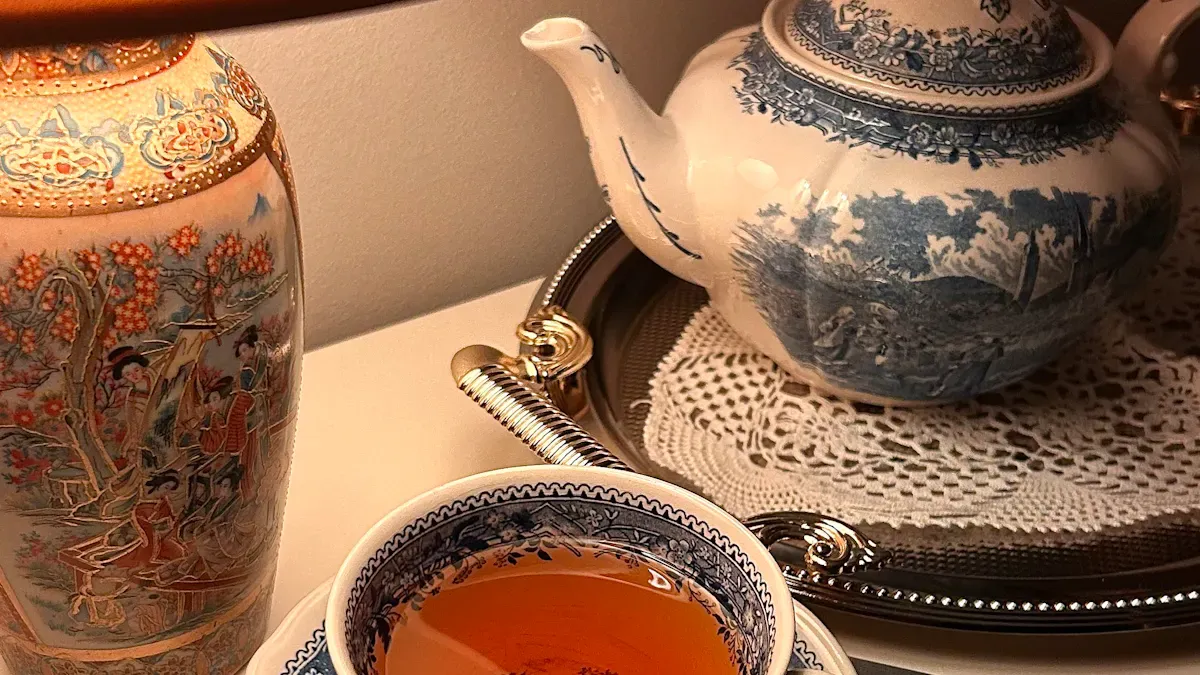
You want to choose your first tea set, but you might not know where to start. Let’s break it down. When you begin your tea journey, you need only a few key items. These pieces help you brew tea, taste it, and enjoy the process. You don’t need a huge collection right away. Focus on the basics.
Fairness pitcher (Cha Hai)
Tasting cups
Optional: tea tray and simple tools
A gaiwan works well for Chinese tea ceremony. You can use a teapot for black tea or oolong. The fairness pitcher lets you pour tea evenly for everyone. Tasting cups help you enjoy the flavor and aroma. If you want to try Chinese tea ceremony, a gaiwan is a great start. You can add a tea tray for easy cleanup. These pieces make your first tea set simple and practical.
Tip: Start with the “essential four”—a brewing vessel, fairness cup, strainer, and two tasting cups. You don’t need a massive set. Choose quality over quantity.
Factors to Consider: Size, Durability, and Style
When you choose your first tea set, think about the size, durability, and style. The size of teapot or gaiwan matters. If you brew tea for yourself or a small group, pick a vessel between 100ml and 150ml. This size helps you control the pour and saves tea leaves. The shape of teapot or gaiwan affects how you hold and pour. Some shapes feel comfortable in your hand. Others make pouring easier.
Here’s a quick look at recommended sizes:
Tea Set Type | Recommended Size | Material | Advantages |
|---|---|---|---|
Gaiwan | 100-120ml | White porcelain | Easy to control pouring speed; cool to touch; ideal for testing different teas |
The size of teapot changes how much tea you brew. Smaller teapot sizes work well for Chinese tea ceremony. Larger teapot sizes suit black tea or group sessions. The shape of teapot can be round, tall, or flat. Each shape of teapot gives a different feel and look.
Durability matters too. You want your first tea set to last. Porcelain is versatile and strong. Clay enhances flavor but needs careful handling. Cast iron keeps tea hot and lasts with proper care.
Material | Durability Impact |
|---|---|
Clay | Enhances flavor but may require careful handling. |
Porcelain | Versatile and durable, ideal for various teas. |
Cast Iron | Retains heat well and is durable with proper care. |
Style adds personality to your tea set. Japanese tea sets have artistic designs. The kyusu teapot comes in many shapes. Yunomi cups are great for daily tea. Chawan bowls are perfect for matcha. You can choose a style that fits your taste and needs.
Kyusu: Main teapot, many styles
Yunomi: Cylindrical cups for daily tea
Chawan: Bowls for tea ceremonies
You can match the tea type to the set. Use larger pots for black tea. Use smaller vessels for green tea or oolong. Think about maintenance. Porcelain is easy to clean. Glass lets you see the tea color. Metal is tough and lasts long. Make sure your tea set fits your space and is easy to store.
Why Porcelain is a Good Start
Porcelain is a smart choice when you choose your first tea set. It gives you a neutral surface, so the tea flavor stays true. You can see the color and clarity of the tea. Porcelain is easy to clean, which makes it perfect for beginners. You don’t have to worry about flavors sticking to the surface.
Advantage | Description |
|---|---|
Porcelain tea sets show tea liquor color and clarity with great precision. | |
Neutral surface | The neutral, glazed surface does not impart flavors to the tea. |
Ease of cleaning | Porcelain is easy to clean, making it convenient for beginners. |
If you want to try Chinese tea ceremony, a porcelain gaiwan is ideal. You can use it for oolong, green tea, or white tea. The size of teapot or gaiwan helps you control the brew. Porcelain teapot shapes are classic and elegant. You can find many teapot shapes in Jingdezhen porcelain. The size of teapot fits solo or group brewing.
When you choose your first tea set, look for mechanical precision. The lid should fit snugly. The pour should be smooth. These details show good craftsmanship. You can invest in a tea set with history and soul. Handmade porcelain from Jingdezhen gives you both beauty and quality.
Note: Porcelain tea sets from clayesouk combine tradition and modern style. You get a piece of art and a practical tool for your tea journey.
You can choose your first tea set with confidence. Focus on the essentials. Pick the right size. Enjoy the style and durability. Porcelain makes your tea experience easy and enjoyable.
Comparing Types and Materials with clayesouk
Gaiwan vs. Teapot: Pros and Cons
When you start your tea journey, you might wonder if you should use a gaiwan or a teapot. Both have unique features, and each one changes how you brew and enjoy tea. Let’s look at how they compare, especially for beginners.
Feature | Gaiwan | Teapot |
|---|---|---|
Handling | No handle, can be tricky for beginners, risk of burns | Has a handle, easier to hold for beginners |
Design | Bowl, lid, and saucer; many materials, often porcelain | Many designs, usually with a spout and handle |
Brewing Technique | Needs skill to pour without spilling leaves, no built-in filter | Easier to use with built-in filter and spout for pouring |
Suitability for Tea | Great for many types of tea, but not for small leaves | Can be made for specific teas, often more versatile |
Learning Curve | Steeper learning curve due to handling and pouring | More beginner-friendly due to design and usability |
A gaiwan gives you a close connection to the tea. You feel the warmth and see the leaves open. The shape of the gaiwan lets you control the pour, but it takes practice. You need to hold the bowl, lid, and saucer together. This can be hard at first, and you might worry about burns. The size of the gaiwan is usually small, which is perfect for Chinese tea ceremony or Chinese tea ceremony. You can use it for oolong, green, or white tea.
A teapot feels more familiar. The handle makes it easy to hold, and the spout helps you pour without spilling. Many teapots have built-in filters, so you don’t need extra tools. The size of the teapot can change how much tea you brew. You can find a teapot in many shapes, from round to tall. This gives you options for different tea styles. If you want a simple start, a teapot is a great choice.
Tip: If you want to try Chinese tea ceremony, start with a small gaiwan. If you want easy brewing, pick a teapot with a comfortable handle and a good spout.
Porcelain, Clay, and Glass: What’s Best for You?
Choosing the right material for your tea set makes a big difference. Each material changes the flavor, look, and feel of your tea session. Let’s break down the main options: porcelain, clay, and glass.
Characteristic | Porcelain | Pottery (Clay) | Glass |
|---|---|---|---|
Flavor Preservation | Keeps the original flavor of tea, no chemical reaction | Absorbs tea aromas, enhances flavor over time | Keeps the original flavor, no effect |
Heat Retention | Moderate | Excellent, keeps tea warm longer | Poor, tea cools down fast |
Appearance | Elegant, classic, fits many occasions | Rustic, natural, full of cultural meaning | Transparent, lets you watch the tea leaves and color |
Fragility | Fragile, sensitive to temperature changes | More absorbent, can be fragile | Most fragile, breaks easily |
Cleaning | Easy to clean | Needs careful cleaning, absorbs flavors | Very easy to clean |
Cost | High-quality porcelain can be expensive | Varies, handmade clay can be costly | Usually affordable |
Porcelain stands out for beginners. It keeps the flavor pure and shows the true color of the tea. The shape of porcelain cups and teapots feels smooth and elegant. You can use porcelain for many types of tea, and it is easy to clean. The size of porcelain teapots or gaiwans fits well for solo or group brewing. If you want to try Chinese tea ceremony or Chinese tea ceremony, porcelain works perfectly.
Clay teapots bring a rustic charm. The texture feels natural, and the shape often reflects traditional styles. Clay holds heat well, so your tea stays warm. Over time, clay absorbs the aroma of tea, making each brew richer. You need to care for clay, as it can absorb flavors and is more fragile than porcelain. The size of clay teapots is often small, which suits Chinese tea ceremony.
Glass tea sets let you see the tea leaves dance. The shape is usually simple, and the size can vary. Glass does not change the flavor, but it loses heat quickly. If you love watching the color of your tea, glass is a fun choice. It is easy to clean but breaks easily.
Note: For beginners, porcelain is the best mix of beauty, durability, and ease of use. It helps you focus on the tea, not the tools.
The clayesouk Difference: Handmade Ceramic Artistry
When you choose your first tea set, you want something special. clayesouk brings you handmade porcelain and ceramic pieces from Jingdezhen, the heart of porcelain artistry. Each cup and teapot is crafted by skilled artisans who blend tradition with modern style. You get more than a tool—you get a piece of art.
clayesouk’s porcelain tea sets show off elegant shapes and perfect size for daily use or Chinese tea ceremony. The smooth surface keeps the flavor pure, and the classic designs fit any tea session. You can feel the history in every piece. The size of each teapot or gaiwan is just right for beginners. The shape fits your hand, making pouring easy and comfortable.
Aesthetics matter. You want a tea set that looks beautiful and feels good to use. Durability is key, too. clayesouk’s porcelain stands up to daily brewing and keeps its shine. Ease of use makes your tea experience smooth. The handle feels right, the spout pours clean, and the size matches your needs.
Choosing clayesouk means you start your tea journey with confidence. You get a tea set that blends art, tradition, and function. Every cup becomes a moment to enjoy.
If you want to explore Chinese tea ceremony or just enjoy a quiet cup, clayesouk offers the perfect balance. The handmade touch, the careful choice of size and shape, and the focus on quality make every tea session special. You don’t just drink tea—you celebrate it.
Beginner Setup and Accessories
Must-Have Accessories
When you set up your first tea session, you want to keep things simple. You do not need every tool on the market. Focus on the basics that help you brew and enjoy tea. Here is a quick table to show what you really need:
Teaware / Tools | Priority level |
|---|---|
Gaiwan; Fairness Pitcher (Cha Hai); Tasting Cup | Must-have |
Teapot; Host Cup; Tea Tray; Brewing Kettle | Nice-to-have |
Digital Scale; Tea Strainer; Tea Towel | Situational |
Tea Spoon; Tea Needle; Tea Canister | Optional |
A gaiwan or teapot lets you brew oolong, black tea, or green tea. The fairness pitcher helps you pour tea evenly. Tasting cups let you enjoy the aroma and flavor. If you want to try different styles, you can add a tea tray or a brewing kettle. Accessories like a stainless-steel infuser or a heatproof glass teapot make the process easier and more fun.
Tip: An airtight tin keeps your tea fresh and full of flavor.
Simple Setup Tips
You can start your tea journey with just a few steps. Here are some easy ways to brew tea:
Use a teapot or gaiwan. Add one tablespoon of loose leaf tea for every 8 ounces of water.
Pour hot water over the tea. Let it steep for the right time, depending on the type—oolong, black tea, or green tea.
Remove the leaves or strainer. Pour the tea into tasting cups.
Try not to use a teapot that is too large for your session. The right size helps you control the flavor and makes pouring easier.
Always use good water. The taste of your tea depends on it.
Note: The size of your brewing vessel should match your serving cups. This makes pouring smooth and simple.
Quick Checklist for Your First Purchase
Before you buy your first tea set, check this list. It will help you feel confident and ready.
Item | Description |
|---|---|
Teapot or Gaiwan | For brewing tea. Choose the right size for your needs. |
Tea cups and saucers | Usually 2-4 cups. Perfect for sharing tea. |
Fairness pitcher | Helps you pour tea evenly. |
Tea tray | Keeps your space tidy and organized. |
Airtight tin | Stores your tea and keeps it fresh. |
Look for a teapot or gaiwan with a comfortable handle and a spout that pours cleanly.
Pick cups that fit your hand and feel good to use.
Make sure the size of each piece matches your daily tea habits.
Choose a set that fits your style and the shape you like.
A checklist helps you focus on what matters—function, style, and the joy of tea. You will feel ready to start your tea journey.
Choosing your first tea set can feel simple when you focus on what matters. Start with basic pieces. You gain clarity and avoid common mistakes. Enjoy each tea moment. Remember, tea brings comfort and meaning. As Osho said, even a cup of tea can have sacred significance.
FAQ
What is the best way to clean my first tea set?
You can rinse your tea set with warm water after each use. Avoid soap for clay pieces. Dry everything with a soft towel to keep your tea set looking new.
How do I choose the right tea for my new set?
Try different types of tea. Start with green, black, or oolong. Notice which flavor you enjoy most. Your tea set works well with any tea you pick.
Can I use one tea set for all types of tea?
Tea Type | Suitable for One Set? |
|---|---|
Yes | |
Black | Yes |
Oolong |
You can use one tea set for every tea. Just rinse between uses.
