Gongfu tea lets you try tea in a new way. Many beginners appreciate this method because it emphasizes careful brewing. You can easily build a Gongfu tea setup using simple tools and straightforward steps. In every session, you will discover gentle flavors that enhance your experience. The ritual focuses on the aroma, taste, and visual appeal of the tea. As you brew and taste, you practice mindfulness and gain insights into tea culture. Each gongfu moment becomes a sensory journey, helping you feel more connected to the world of tea.
Key Takeaways
Gongfu tea is a careful way to make tea. It helps you enjoy tea more by paying close attention. Start your Gongfu tea setup with important tools. You need a gaiwan, small cups, and a tea tray. These tools help you make a special space for tea. Practice measuring tea and water the right way. This helps you get the best taste from your tea every time. Make your Gongfu tea time calm by picking a quiet place. Put your tools where you can reach them easily. Try different kinds of tea and ways to brew them. This lets you make your Gongfu tea time your own and find new tastes.
What Is Gongfu Tea?
Gongfu tea is a ceremonial way of making tea that comes from Chinese tea culture. You use small teapots or cups and focus on every step. This method asks you to pay attention to details, like the amount of tea leaves and the water temperature. In China, people see gongfu tea as a mindful practice. You slow down, enjoy the moment, and create a space for relaxation. The process is not just about drinking tea. It is about being present and sharing time with others.
Gongfu tea is a part of daily life in China. It stands for peace and socialization.
The gongfu tea set shows tradition, culture, and craftsmanship.
Each step, from choosing leaves to pouring water, is done with care and intention.
The process helps you practice mindfulness and meditation.
Gongfu Tea vs. Western Brewing
You might wonder how gongfu tea is different from the way you usually make tea. Here is a table to help you compare:
Aspect | Western Tea Brewing | Gongfu Tea Brewing |
|---|---|---|
Vessel Size | Larger vessels (mugs, teapots) | Smaller, pre-heated vessels |
Tea to Water Ratio | Small amount of leaves, more water | More leaves, less water |
Steeping Time | Longer (2-5 minutes) | Very short (5-10 seconds) |
Rinsing | Not usually rinsed | Leaves are rinsed before brewing |
Brewing Philosophy | Structured and precise | Intuitive and instinctive |
Western tea brewing often uses big cups and longer steeping times. Gong-fu uses small cups and quick infusions. You use more leaves and less water. The process feels more natural and less strict. Gong-fu becomes part of your daily routine, not just a hobby.
Why Try Gongfu Tea?
When you try gongfu tea, you enter a ceremonial way of making tea that engages all your senses. You listen to the water, watch the color change, and smell the aroma. You taste each sip and notice how the flavor changes with every pour. You can invite friends or family to join, making it a social event.
Set aside a special space for your gong-fu session.
Use your eyes, nose, ears, and mouth to enjoy the tea.
Share tea with others to build connection and conversation.
Gongfu tea helps you slow down and focus. You use small cups, which means you sip slowly and stay present. This practice can help you relax and feel more mindful. Many people find that gong-fu brings peace and joy to their day.
Essential Equipment to Build a Gongfu Tea Setup
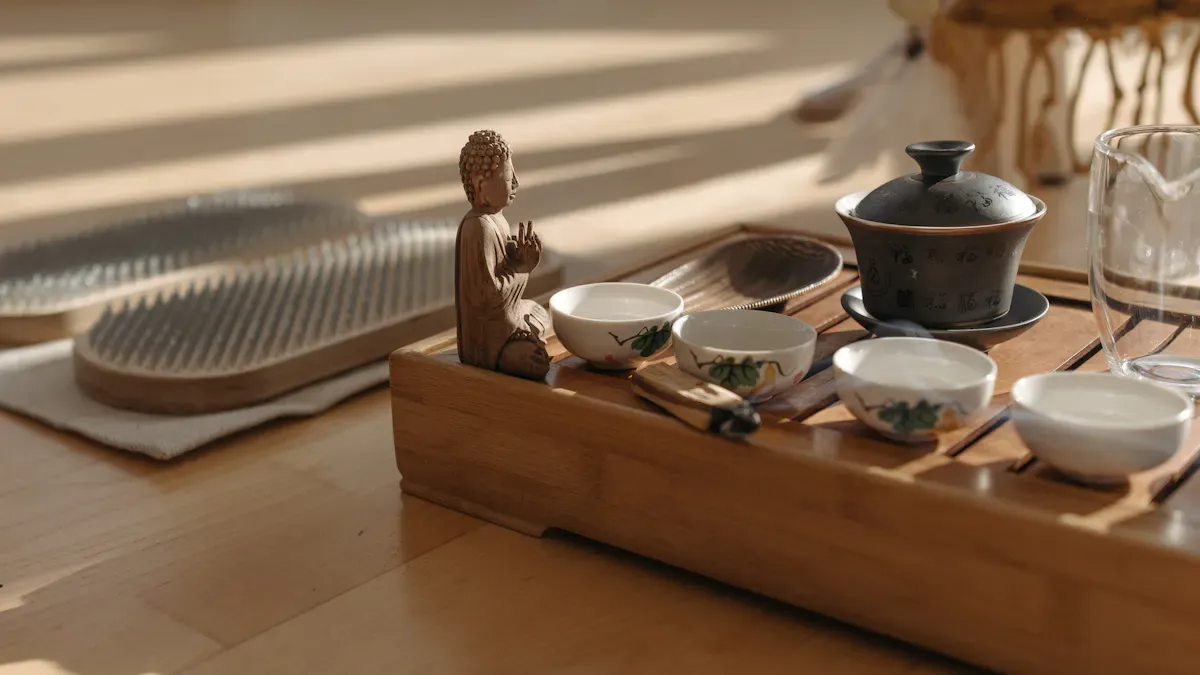
When you build a gongfu tea setup, you create a space for focus and enjoyment. You do not need to buy everything at once. You can start with a few basic items and add more as you learn. The right tools help you control every step and bring out the best in your tea.
Here are the main items you need to build a gongfu tea setup:
A tea table or tea tray to hold your equipment and catch spills.
A gaiwan or teapot for brewing.
A serving pitcher for sharing tea.
Small cups for tasting.
A kettle for heating water.
Optional accessories like tongs, a tea towel, or a digital scale.
Choosing a Gaiwan or Teapot
You can use a gaiwan or teapot as your main brewing vessel. Each one has its own benefits. A gaiwan is a lidded bowl made of glazed ceramic. It does not absorb flavors, so you can brew many types of tea in it. A teapot can be made from different materials. Yixing teapots, made from unglazed clay, absorb flavors over time. This process seasons the teapot and makes the taste richer if you use it for the same tea. If you want a neutral taste, choose a gaiwan. If you want to explore deeper flavors, try a Yixing teapot.
The material of your gaiwan and teapot affects the heat and taste. Thicker walls keep the tea hot longer. Some materials, like clay, can change the flavor by trapping or releasing certain molecules. The brewing technique and vessel thickness also play a role in the final taste. You can start with a simple ceramic gaiwan or teapot and upgrade as you learn more about gongfu.
The choice of material for a tea vessel is a technical decision that determines the transparency of the flavor profile. Jingdezhen porcelain is crafted from pure kaolin clay and fired at high temperatures, resulting in a non-porous material that does not absorb odors or influence the chemical composition of the tea liquor. In contrast, Yixing Zisha clay is porous and interacts with the tea, reducing bitterness and enhancing flavor complexity.
Cups and Pitcher Selection
Small cups let you taste the tea in tiny sips. This helps you notice changes in flavor with each pour. A serving pitcher, also called a gongdaobei, lets you mix the tea before pouring it into cups. This makes sure everyone gets the same taste. When you choose cups, look for handmade ceramic ones. Clayesouk handmade ceramic cups offer deep glaze textures that highlight the color of the tea. They keep the temperature steady, so each pour tastes the same. Their unique look adds beauty to your tea session and makes the ritual special.
Handmade ceramic cups enhance the sensory experience.
The glaze shows off the tea’s color.
Good cups keep the tea warm and stable.
Unique designs make your session feel personal.
The Role of the Tea Tray
A tea tray is a key part of your gongfu tea setup. It organizes your teaware and keeps your space tidy. The tray catches spills and extra water during brewing. This makes cleanup easy and keeps your table dry. A tea tray also adds to the ceremony and helps you focus on the process. You can find trays made from bamboo, wood, or ceramic. Choose one that fits your style and space.
The tea tray holds all your tools.
It catches water and tea spills.
It makes the session look and feel organized.
A gongfu tea tray can become the centerpiece of your setup.
Kettle and Water Tools
A good kettle is important for gongfu tea. You need to control the water temperature for the best flavor. Look for a kettle with precise temperature control. A gooseneck spout gives you better control when pouring. The ideal size is between 600 ml and 1200 ml. You can choose from stainless steel, glass, or clay kettles. Each material holds heat differently. Some kettles have a keep-warm function, which helps during long sessions. Safety features like auto shut-off and boil-dry protection are helpful. Pick a kettle that matches your style and fits your tea table.
Precise temperature control is key for flavor.
Gooseneck spouts help with gentle pouring.
The right size gives you flexibility.
Materials affect how long the water stays hot.
Safety and style both matter.
Optional Accessories
You can add extra tools to make your gongfu tea setup even better. These items are not required, but they can help you enjoy the process more.
Accessory | Description | Use Case | Priority |
|---|---|---|---|
Digital Scale | A portable tool for measuring tea leaf weight, ensuring proper tea-to-water ratio. | Tea evaluation and consistent results. | ♥♥♥ Situational |
Tea Boat | A tray that holds a teapot or gaiwan, catching drips and enhancing aesthetics. | Used in dry brewing setups. | ♥♥♥♥ Nice-to-have |
Tea Strainer | Filters fine leaf bits from tea liquor, available in metal or ceramic. | Essential for brewing teas with particles. | ♥♥♥ Situational |
Tea Towel | A cleaning cloth for the tea table, absorbent and often decorative. | For maintaining cleanliness during brewing. | ♥♥♥ Nice-to-have |
You can start with just the basics and add these as you go. Many people build a gongfu tea setup over time, choosing new pieces that match their needs and style.
Tip: You can start your first gongfu tea setup for as little as $20. If you want a more elaborate setup, you might spend up to $100. With careful choices, you can enjoy gong-fu without spending much.
When you build a gongfu tea setup, focus on quality. The right teaware lets you control the process and enjoy every detail. Clayesouk handmade ceramic cups bring tradition and beauty to your table. You can find authentic equipment from trusted studio shops and specialty dealers. Start simple, enjoy the journey, and upgrade your setup as you learn more about gong-fu.
Setting Up Your Gongfu Tea Space
Arranging Your Equipment
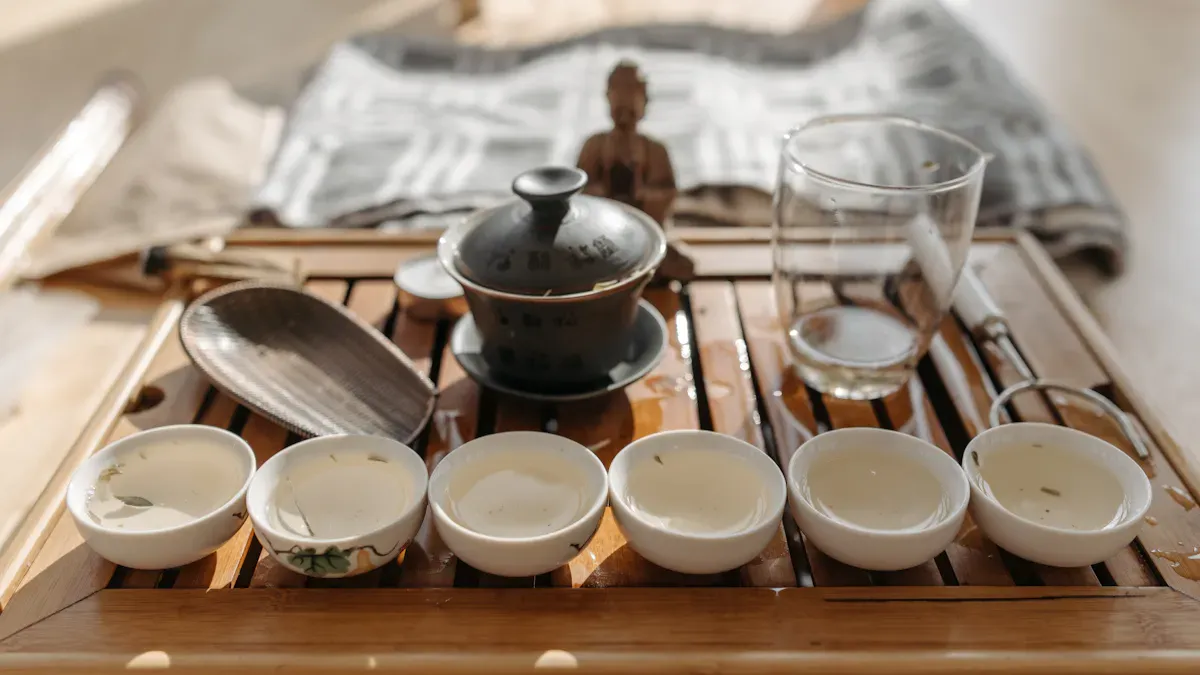
You can create a functional and relaxing gongfu tea space by organizing your tools with care. Place your gaiwan, fairness pitcher, and small cups in a way that makes each step easy. The gaiwan sits at the center, ready for hot water. The fairness pitcher stands nearby, waiting to receive the brewed tea. Small cups line up beside the pitcher, ready for serving. Each item has a role that helps you control the brewing process. The gaiwan lets you pour quickly and keeps the water hot. The fairness pitcher mixes the tea so everyone enjoys the same taste. Small cups help you focus on each sip and notice how the flavor changes with every infusion.
Handmade ceramics from clayesouk add beauty and meaning to your setup. The glaze patterns on each cup catch the light and show off the color of the tea. The feel of the ceramic in your hand connects you to the ritual. The weight and balance of the cups encourage you to handle them with care. This makes every gong-fu session special.
Creating a Calming Environment
You can turn your gongfu tea space into a place for relaxation with a few simple steps:
Choose a spot away from your daily routine. This helps you focus on the tea and the moment.
Prepare your tea leaves and place them in the gaiwan or teapot. Pour hot water over the leaves and watch the steam rise.
Take three deep breaths before you start pouring. This centers your mind and body.
Pour the tea into the fairness pitcher, then into the cups. Notice the warmth and aroma as you serve.
Repeat the process for more infusions. Each round brings new flavors and sensations.
You can set up your space to avoid distractions. Keep your tools close and your water ready. Try different arrangements to see what feels best for you. Use handmade ceramics to add a personal touch. The unique look and feel of each piece support a mindful gong-fu experience. The visual richness of the glaze invites you to pause and reflect during your tea session.
Tip: Streamline your tea preparation by keeping everything you need within reach. This makes it easier to enjoy gongfu tea every day.
Gong-Fu Technique and Brewing Session Basics
A gongfu tea session is a journey of taste and mindfulness. You will learn to measure, warm, steep, pour, and savor. Each step in gongfu style brewing helps you unlock the full flavor of your loose-leaf tea. Practice and attention to technique will improve your results over time.
Measuring Tea and Water
Start your gong-fu session by measuring the right amount of tea leaves and water. The ratio of tea to water is important for flavor. Use a small scale or spoon to measure your loose-leaf tea. The amount depends on the type of tea and the size of your gaiwan or teapot.
Here is a table to help you choose the best ratio for your gongfu tea:
Type of Tea | Leaf-to-Water Ratio (g/ml) | How Much to Fill Vessel |
|---|---|---|
Tightly Rolled Teas | 1/5 to 1/4 full | Fill 20-25% |
Compressed Teas | 1/4 to 1/3 full | Fill 25-33% |
Loosely Rolled Teas | 1/3 to 1/2 full | Fill 33-50% |
General Ratio | 3-8g per 100ml (mostly 5g) | Use 5g as a start |
A good starting point for gongfu style brewing is a 1:15 ratio. For every 1 gram of tea, use 15 milliliters of water. Most sessions use 3 to 6 grams of tea per 100 milliliters. This ratio gives you a strong taste and lets you enjoy many short steepings. Adjust the ratio to match your taste and the type of tea you use.
Warming and Rinsing
Before you brew, warm your teaware. Pour hot water into your gaiwan, pitcher, and cups. Swirl the water and pour it out. This step brings your teaware to the right temperature for gongfu tea. Warm cups and vessels help the tea steep evenly.
Next, rinse your loose-leaf tea. Add the measured leaves to your gaiwan. Pour hot water over the leaves, then quickly pour it out. This rinse wakes up the tea and removes dust or small bits. You will notice the leaves start to open and release their aroma. Warming and rinsing are key parts of the gongfu tea technique.
Warming teaware helps reach the ideal temperature for brewing.
Rinsing the tea wakes up the leaves and removes impurities.
Steeping and Pouring
Now you are ready to steep your tea. Pour hot water over the leaves in your gaiwan. Use water just below boiling for most teas. The first steep is short, usually 5 to 10 seconds. Pour the tea into a sharing pitcher, then into cups. This step ensures everyone gets the same taste.
Gongfu style brewing uses many short steepings. Each steep brings out new flavors. You can adjust the steep time and ratio to match your taste. The pouring technique matters. Practice pouring from your gaiwan with a steady hand. This technique controls the flow and extracts the best flavors. Use a sharing pitcher to mix the tea and keep the taste even.
Pouring from a gaiwan takes practice and skill.
The sharing pitcher gives everyone the same steep.
Gongfu style brewing lets you taste the changing flavors with each steep.
The leaf to water ratio and steep time shape the flavor. Gongfu style brewing lets you explore the full taste spectrum. Each infusion brings out different notes. You can taste fruit, wood, or minerals. The brewing process is both art and science.
Tasting and Savoring
Tasting is the heart of a gong-fu session. Use your senses to enjoy each cup. Look at the color of the tea. Smell the aroma from the empty cup and the underside of the gaiwan lid. This scent is called the “Scent of the Clouds” and shows the tea’s quality.
Take a small sip and let the tea cover your tongue. Notice the tingling feeling and the long finish. Feel the texture in your mouth. Good gongfu tea leaves a sweet taste that returns after you swallow. This is called “Hui Gan” or returning sweetness.
Taste: Look for a tingling tongue and a lasting finish.
Aroma: Smell the empty cup and the gaiwan lid.
Texture: Notice how the tea feels in your mouth.
Experience: Reflect on how you feel after each steep.
Each steep in gongfu style brewing brings new sensations. Later infusions may taste richer or sweeter. Pay attention to these changes. Practice helps you notice more details and enjoy your session even more.
Tip: Take your time with each step. The more you practice gongfu tea technique, the more you will enjoy each session. Every steep is a chance to learn and improve.
Personalizing Your Gongfu Tea Session
You can make every gongfu tea session unique. When you adjust your setup and style, you create a ritual that fits your taste and mood. Experiment with different tools, tea types, and ceramics. This helps you discover what makes each gong-fu session special for you.
Adjusting for Tea Types
Each type of tea needs a different approach in a gong-fu session. You should change the amount of leaves, water temperature, and steeping time based on the tea you use. The table below shows how you can adjust your gongfu tea session for green, oolong, pu-erh, and white teas.
Tea Type | Ratio | Temperature | First Steep | Rounds |
|---|---|---|---|---|
Green Tea | 1:20-25 | 175-185°F | 20-30 seconds | 4-6 |
Oolong | 1:15-18 | 195-205°F | 30-45 seconds | 8-12+ |
Pu-erh | 1:15-18 | 205-212°F | 30-45 seconds | 10+ |
White Tea | 1:18-22 | 185-195°F | 30-45 seconds |
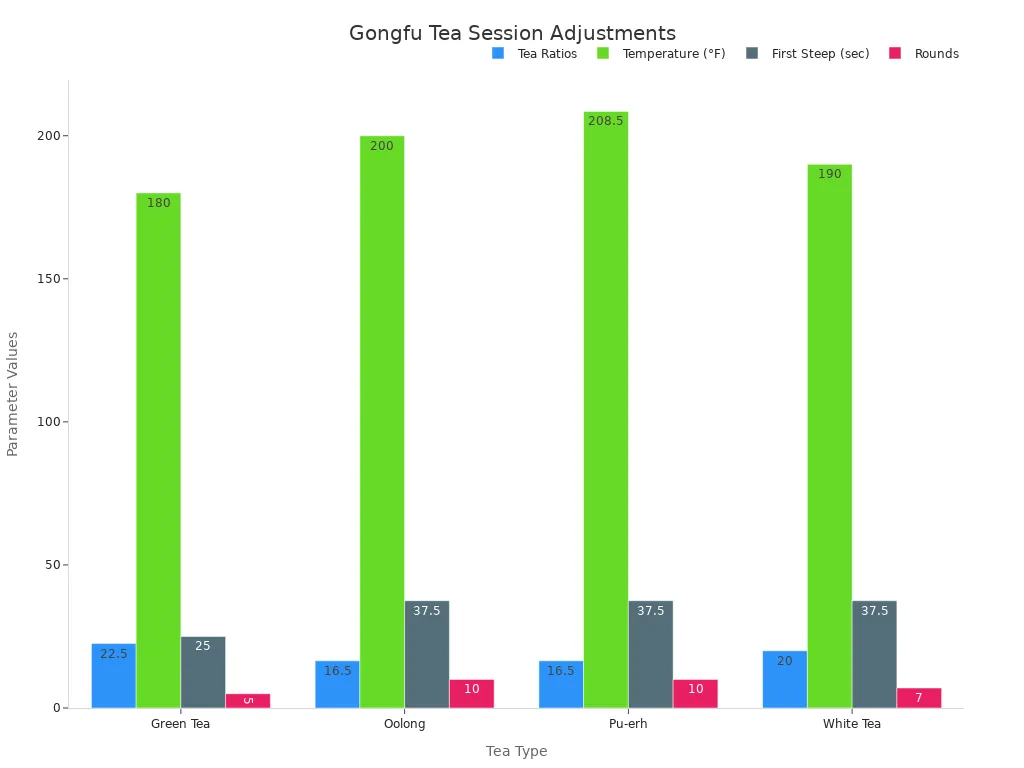
You can use this guide to get the best flavor from your tea. Try changing one variable at a time during your gongfu session. Notice how the taste changes with each adjustment.
Making It Your Own
You can add your own style to every gong-fu session. Choose a special spot for your tea table. Pick a favorite gaiwan or teapot. Select handmade cups that feel good in your hand. Unique ceramics from clayesouk let you show your personality. Each piece has its own color, glaze, and shape. This makes your gongfu tea session feel like a work of art.
Characteristics | Contribution to Tea Experience | |
|---|---|---|
ZiSha (Yixing clay) | Porous, rich in minerals | Mutates unwanted notes, enhances desirable flavors |
Porcelain | Neutral brewing environment | Allows true essence of tea leaves to shine through |
You can mix and match different ceramics. Try a porcelain gaiwan for green tea and a Yixing teapot for pu-erh. The right cup can change how you taste and enjoy your tea. Let your gongfu tea session reflect your mood and style.
Tip: Rotate your teaware and try new combinations. This keeps each session fresh and exciting.
Common Mistakes to Avoid
Many beginners make the same mistakes when they start gongfu tea. You can avoid these and improve your session.
Mistake | Explanation |
|---|---|
Not measuring tea | Skipping this step can lead to weak or strong brews. Always measure your leaves for each session. |
Using flavored tea blends | Gong-fu works best with pure tea leaves. Flavored blends can mask the true taste of the tea. |
Not using appropriate teaware | The wrong gaiwan or cup can affect the brewing and the taste. Choose teaware that fits the tea type. |
You can learn from each session. Take notes on what works and what does not. Over time, you will brew better tea and enjoy each gongfu moment even more.
Note: Every gongfu tea session is a chance to learn and grow as a tea lover.
You can start your gongfu tea journey with simple tools and a curious mind. Each session gives you a chance to learn new skills and discover fresh flavors. As you practice, you will find joy in every gong-fu session. Personalize your setup and let each session reflect your style. The world of tea offers endless opportunities for growth and enjoyment.
FAQ
What makes gongfu tea different from regular tea brewing?
You use more leaves and less water in gongfu tea. This method lets you taste many flavors in each steep. You also use smaller cups and shorter brewing times. The process helps you enjoy the tea’s aroma and taste.
How do I choose between a gaiwan and a teapot?
You can pick a gaiwan if you want to brew many types of tea. It gives you control over steeping. A teapot works well for one kind of tea. Both tools help you enjoy the brewing process.
Can I use any water for gong-fu tea sessions?
You should use clean, filtered water. Good water brings out the best taste in your tea. Avoid water with strong odors or flavors. The right water helps you notice the tea’s natural notes.
How do I clean my gongfu setup after a session?
You should rinse your cups, gaiwan, and pitcher with warm water. Let them air dry. Do not use soap on clay teapots. This keeps your teaware ready for the next session.
What is the best way to start learning about gongfu?
You can start with a simple setup and a few tools. Try different teas and practice your technique. Take notes on what you like. Each session helps you learn more about gongfu and tea culture.