
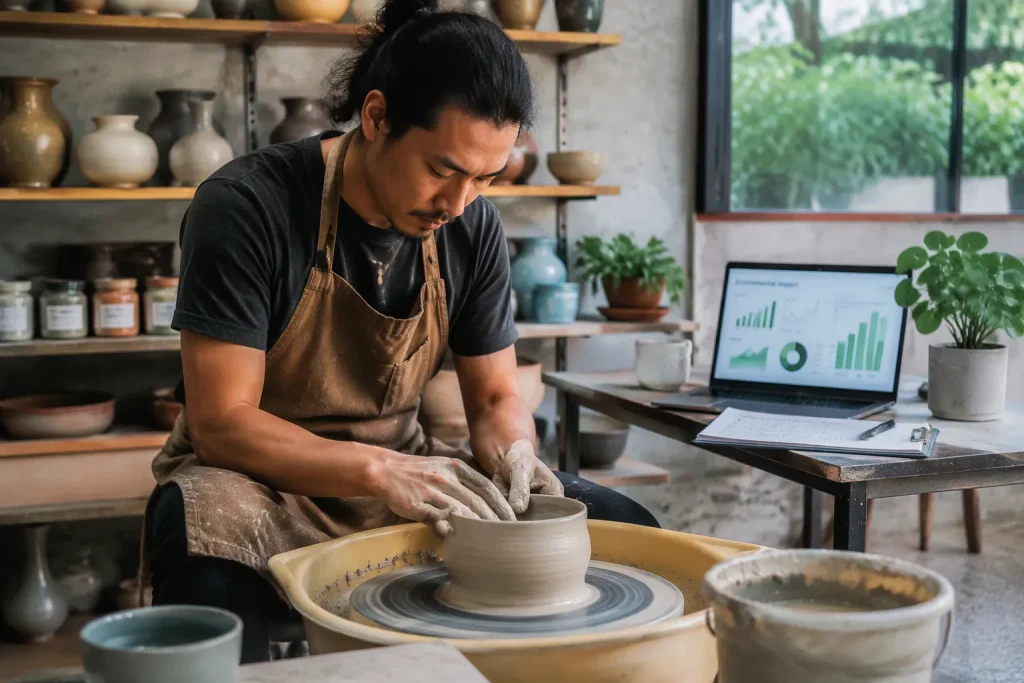
Are ceramics good or bad for the environment? The honest answer depends on three things: how a maker makes the piece, which energy source fires the kiln, and how long the item lasts. Readers should weigh two sides. On one side are real resource and energy costs. On the other side are durability and recyclability, which can make up for those costs over time. Eco kilns and smart sourcing can move ceramics toward the greener end of the spectrum. This breakdown stays balanced and factual. It looks at the environmental impact of ceramics without rushing to a verdict.
Key Takeaways
Ceramics have good and bad effects on the environment. Mining and firing use up resources, but strong ceramics last for years and cut down on waste.
Firing kilns uses the most energy and makes the most emissions. Electric kilns and efficiency upgrades can lower pollution and costs.
Recycling ceramics is hard, so reusing and repairing them is better. Pick high-fired ceramics like stoneware and porcelain so they last longer.
Buy local and from makers who share where their materials come from. Local production cuts down on shipping emissions and supports sustainable practices.
Choose ceramics that are lead-free and safe for food. Stay away from items marked “decorative use only.” Using them with care and fixing them when possible keeps ceramics out of landfills.
What Ceramics Are Made Of
Raw Materials And Sourcing
Ceramics start with clay, a natural material that people shape, glaze, and fire at high temperatures. Clay bodies often mix several ingredients. Kaolin, a pure white clay, gives strength and whiteness. Silica from sand or quartz adds structure. Feldspar supplies alumina, silica, and alkalis that help the body melt and bind. Glazes add silica, feldspar, alumina, and fluxes such as boron or sodium, plus metal oxides like cobalt or copper for color. Water turns these dry powders into a workable paste.
These materials come from all over the world in a purified and refined state. That global reach matters for the overall environmental impact of a finished piece. Each ingredient travels from mine to studio to kiln.
Ceramic raw materials come to us from all over the world in a purified and refined state. Understanding fluxes, feldspars, clays, opacifiers, and colorants will help you develop more successful clay bodies and glazes.
Core Environmental Traits
Durability shapes how ceramics perform over time. Fired clay resists wear and holds its shape for years. Ceramic products can last for decades or centuries, so they rarely need replacing. Fewer replacements mean less waste sent for disposal. Long service life also reduces the need to extract and consume natural resources for new products.
Life cycle studies back this up. Over a 75-year cradle-to-grave assessment, ceramic tile showed the lowest global warming potential of all flooring types. Vinyl tile was roughly twice as high and rigid core board roughly three times as high. Ceramic also had the lowest fossil fuel resource depletion of the group. These gains depend on quality and care. Low-quality ceramics with shorter lifespans increase waste and erase the durability advantage.
Understanding Ceramic Environmental Impact
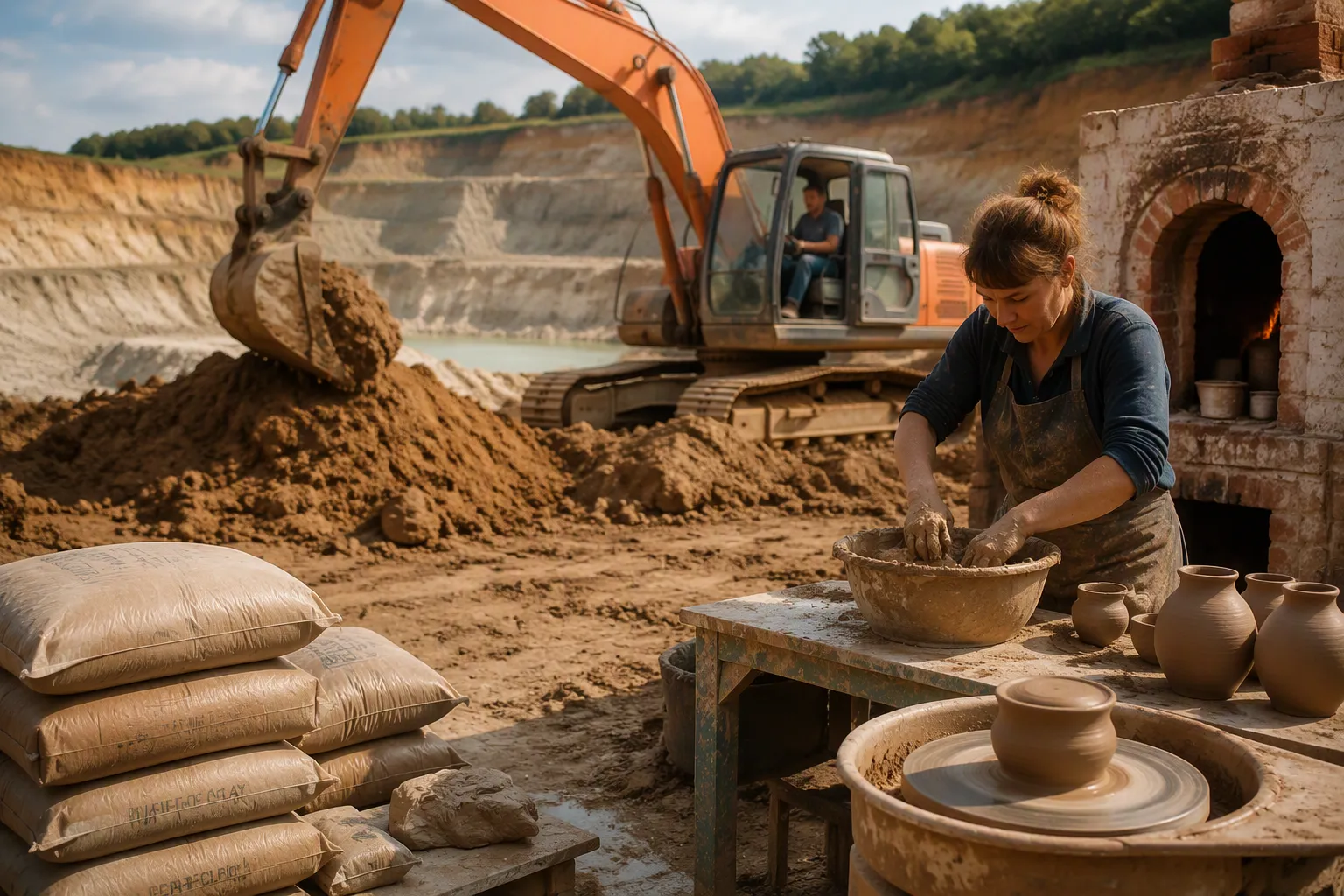
To really understand how ceramics affect the environment, you have to start with the ground. Clay has to be dug out of the earth before any studio can shape it. After that, factories and kilns use power and water to turn the clay into a finished piece. Both steps matter. Neither one by itself tells the full story. Digging up the materials and the factory inputs together show the real cost of a simple cup or tile.
Mining And Clay Extraction
Clay extraction starts with open pits and quarries. Machines remove the topsoil and dig out the raw material. This process disturbs the land and changes what the local area looks like. Dust and runoff can affect nearby soil and water. How big these effects are varies a lot by site and by regulation. Some operations restore the land after extraction. Others leave visible scars for years. The type of clay matters too. Ball clay, fire clay, and kaolin each need different digging methods and different levels of processing. Heavy machines burn fuel while digging and hauling. That fuel use adds another layer to the footprint of the raw material.
Making pottery and ceramics also depends on materials that travel long distances. Kaolin, feldspar, and silica often cross borders before they reach a kiln. Transport adds to the overall environmental impacts of a single piece. Getting clay close to the studio reduces this burden. Recycled clay bodies offer another path. Many studios now reclaim trimmed scraps and misfired pieces instead of sending them to landfill. This habit cuts the need for fresh material and lowers waste at the same time.
Energy And Water Use
Firing uses the most energy in ceramics. Kilns must reach high temperatures and hold them for hours. This high energy consumption makes firing the largest single demand in most studios. Drying greenware and powering mixers add more load. Water use matters too. Preparing clay, mixing glaze, and cleaning equipment all use water. A studio that recirculates wash water can cut its use a lot. Electric kilns draw from the grid, so the local power mix shapes their real impact. A grid fed by renewables lowers the carbon cost of every firing.
The production of ceramics varies by region. A study of tile manufacturing shows clear differences in energy and water consumption across countries. The table below summarizes the findings.
Country | Energy consumption (kWh/m²) | Water usage (Liters/m²) |
|---|---|---|
Spain | 24.0 | 2.3 |
China | 39.5 | 3.8 |
Iran | 36.0 | 3.2 |
Germany | 20.5 | 1.7 |
USA | 21.0 | 1.9 |
Italy | 26.0 | 2.6 |
Brazil | 28.3 | 2.1 |
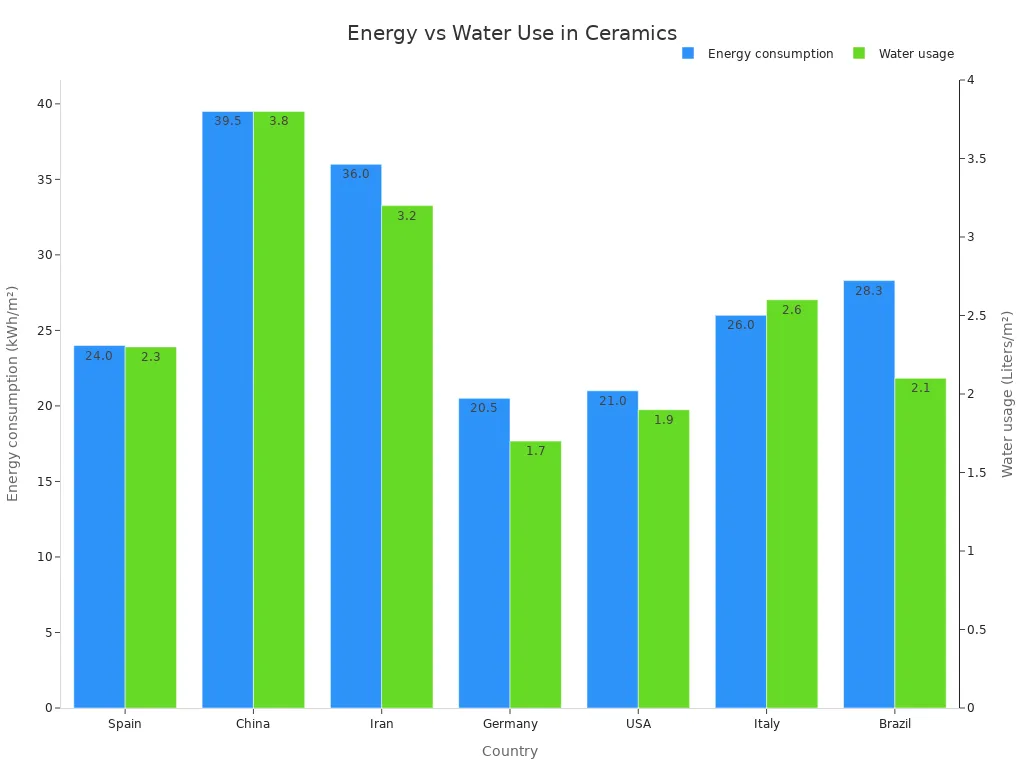
The spread is notable. Germany reports the lowest energy consumption at 20.5 kWh/m². China reports the highest at 39.5 kWh/m². Water usage follows a similar pattern. Germany uses 1.7 liters/m² while China uses 3.8 liters/m². These gaps reflect kiln technology, fuel choice, and plant efficiency. They also show that energy and resource usage is not fixed. Better equipment and cleaner fuels can shrink the environmental footprint of ceramics. Buyers and makers both benefit from understanding this range. Efficient kilns and careful water management move the numbers in the right direction. Small choices at the studio level add up across a whole industry.
Why Ceramics Can Be Good or Bad for the Environment
Kiln Emissions And Air Quality
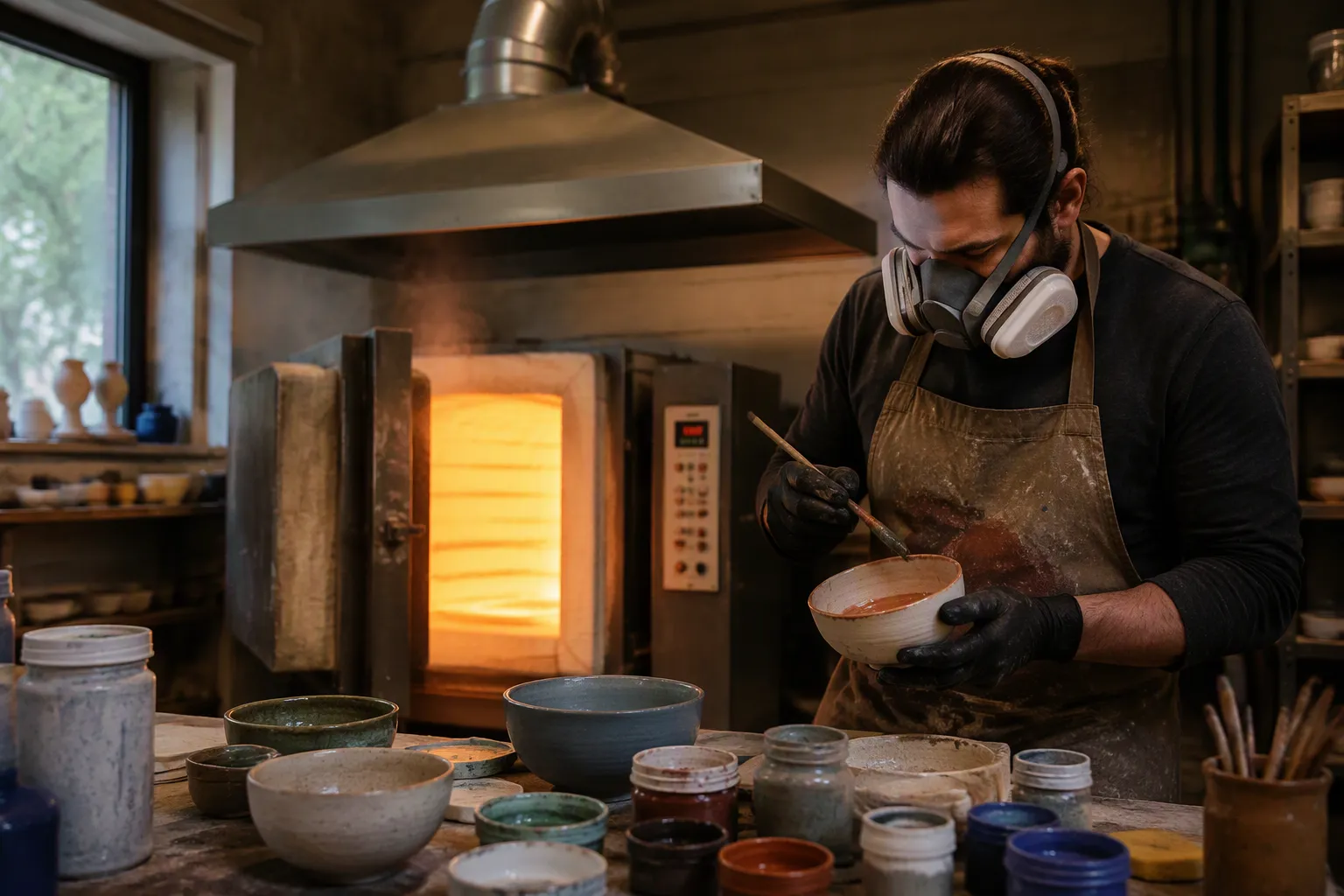
Firing is at the center of the debate about whether ceramics help or hurt the environment. Kilns give off a large amount of CO2 no matter which fuel they burn. That makes firing the main source of direct CO2 emissions in ceramic production. The heating and firing process also releases particulate matter, nitrogen oxides, sulfur dioxide, and volatile organic compounds. These pollutants affect local air quality near production sites.
Glaze ingredients add another concern. Metal oxides and colorants can turn into vapor during kiln firing. They may then settle on studio surfaces or drift into nearby air. The table below lists common heavy metal contaminants and their known health impacts.
Heavy Metal Contaminant | Health Impacts |
|---|---|
Lead compounds | High inhalation toxicity; damages the gastrointestinal system, red blood cells, and neuromuscular system; may cause liver and kidney damage |
Cadmium compounds | Fumes cause severe lung reaction; kidney cell damage; carcinogen |
Antimony compounds | High inhalation toxicity; skin lesions; liver and kidney damage; may vaporize during firing |
Manganese compounds | Chronic inhalation may cause manganese poisoning resembling Parkinson’s disease |
Nickel | One of the most powerful known carcinogens; skin allergies |
Arsenic compounds | Kidney damage; anemia; lung cancer |
Good ventilation, closed kiln systems, and safer glaze formulas lower these risks. Makers who switch to lead-free glazes and efficient electric kilns cut both carbon emissions and worker exposure.
Waste And Recycling Limits
Fired ceramics are hard to recycle. Ceramic waste does not break down naturally. Most US cities do not accept ceramic or porcelain in recycling bins. A single ceramic piece that slips into the glass stream can damage equipment and shut down a whole batch of molten glass. Incompatible chemical structures also weaken recycled products. Crushing and grinding offer a path forward, yet the initial investment and energy consumption run high. Some recycling plants do make money, which shows the model can work.
The positive side deserves equal weight. Ceramics can replace disposable plastic containers in daily life. A durable mug or bowl lasts for decades, so it keeps waste out of landfills. Clay comes from abundant natural materials, while plastic depends on a limited petroleum supply. Ceramic production also creates fewer greenhouse gas emissions than plastic production in many cases. One potter offers a fair caution, though. Ceramics cannot fully replace plastic packaging, and firing twice at or above 1000°C uses real energy. The honest takeaway is that ceramics help most when they replace single-use items and stay in service for years.
Firing, Shipping, and the Carbon Footprint of Production
A carbon footprint is the total amount of carbon released into the air by an activity or product. It is a main standard for measuring air quality and greenhouse gas impacts. For ceramics, the carbon footprint of production goes from the kiln to the doorstep. Shipping adds weight, and breakage adds waste. Both shape the final environmental footprint of every piece.
Transport And Breakage
Ceramics are heavy and break easily in moving, rough environments. They need careful handling and strong storage during transit. A bio-based alternative material has a smaller carbon footprint than glass and ceramics, which suggests ceramics sit on the higher side. Packaging and returns cause most of the emissions in online sales. The table below shows the breakdown.
Emission source | Share of ecommerce emissions |
|---|---|
Packaging | 45% |
Returns (transport-related) | 25% |
Transport-level emissions | 13% |
Returns + transport combined | 38% |
The least sustainable outcome is a ceramic piece breaking during transit, since it must then be remade and reshipped — doubling material and transport emissions. Choosing packaging with less plastic, more recycled content, recyclability, and biodegradability lowers the carbon footprint, but making sure it arrives safely is the top priority to avoid the breakage-and-remake cycle.
End-Of-Life Challenges
Disposal is a real test for the carbon footprint of ceramics. Fired pieces resist recycling, and most curbside programs reject them. Life cycle assessment methods track energy consumption, resource use, and waste across a product’s full life. For materials that cannot be recycled, makers develop sustainable disposal routes. These include specialized landfill procedures, encapsulation, and conversion into benign forms.
Reuse offers a brighter path. Ceramic waste from construction and demolition is non-hazardous and can return to new building projects. Italian Decree No. 152 of 27 September 2022 sets reclamation methods to support the circular economy. Materials used in new construction account for 30–50% of total environmental impact, so recycling construction and demolition waste cuts the carbon footprint of studio ceramics and larger production alike. Non-hazardous inert waste such as tiles and bricks is recoverable and poses no risk to the environment or health. Reclaimed material can serve as road sub-bases, foundation layers, and drainage layers. When reuse fails, inert waste goes to suitable landfills under manufacturer responsibility.
Eco Kilns And Sustainable Practices
How Eco Kilns Cut Emissions
Many potters say electric kilns are better for the environment than kilns that burn fuel. Electric kilns make no direct smoke in the studio, and their impact depends on the local power grid. A grid powered by renewables makes every firing cleaner. Efficiency upgrades bring clear gains. Better ceramic kilns, including low-cost zig-zag upgrades, cut CO2 and PM2.5 emissions by over 20% compared with old coal-fired kilns. Stanford studies found that 65% of brick kilns took up these changes. The same upgrades also raised high-quality brick output by nearly 20%, which gives producers a money reason to adopt them. The chance to do more is huge. Old coal-fired kilns in Bangladesh cause 11% of yearly PM2.5 emissions and 17% of yearly CO2 emissions. Cleaner energy options and better insulation lower energy use per firing. Together they cut greenhouse gas emissions and help the environment last.
Local Production And Sourcing
Local sourcing is a key sustainable ceramic practice. It shortens the trip between mine, studio, and buyer. The table below shows why this matters.
Evidence Point | Key Detail | Relevance |
|---|---|---|
Local raw material sourcing | Polish pottery’s clay comes from the Boleslawiec region, keeping most raw materials within the country | Local sourcing lowers transport-related carbon emissions compared with ceramics whose materials ship from abroad |
Shipping impact | Shipping causes about 20.2% of global CO2 emissions and is the second-largest source of global carbon pollution | Moving ceramic materials long distances raises fuel use and emissions, so local production avoids this impact |
Making your ceramics practice greener starts with small choices. Buy clay close to home. Reclaim scraps. Fire full loads. Over time, these habits lower the impact of electric kilns on the environment. Claye, based in Jingdezhen with over 1,700 years of ceramic heritage, pairs traditional craft with ongoing glaze innovation. The brand is known as a national-level ICH productive protection demonstration base. Its artisans show how kiln firing and careful sourcing can move ceramics toward a greener path.
Comparing Environmental Impacts Across Materials
Performance, Fit, And Cost
Each material has its own strengths that make it useful. Ceramics keep their stretchiness at high heat, so they work well in hot places. Their stiffness is very high, which makes ceramic fibers helpful for strengthening composites. Metals have balanced pulling and pushing strength. Glass and plastics work well as insulators and light parts. Advanced ceramics like alumina, zirconia, and silicon carbide perform better and are worth more money than common glass, metals, and plastics in tough jobs.
Property | Ceramics | Metals |
|---|---|---|
Fracture toughness (KIC) | Low: typically 2–4 MPa·m^1/2 | Higher than ceramics |
Tensile vs. compressive strength | Tensile resistance much lower than compressive; max allowable compressive stress ~15× tensile | Compressive and tensile max allowable stress are equal |
Elasticity at high temperature | Remains nearly constant | — |
Specific stiffness | Very high | — |
Cost depends on how well a material fits the job. A ceramic part often costs more at first than a plastic one, but it may last through several replacements. Buyers weigh that trade-off against the environmental footprint of remaking and reshipping goods.
Although polymers, rubber, and glass can be excellent electrical insulators, they do not exhibit the same mechanical, thermal, and chemical properties of technical ceramics, making ceramics ideal for high strength, high heat, or highly corrosive electronic environments.
Durability And Compliance
Durability is what sets the options apart. Ceramics resist wear and chemical attack for many years. Glass lasts just as long but breaks more easily when hit. Metals dent and rust over time. Plastics break down under heat and sunlight. Each material fits a different job, and no single material wins everywhere.
Rules shape what can be sold. RoHS 2 and 3 limit ten substances in electrical products, with cadmium kept below 100 ppm and other listed substances below 1000 ppm. REACH requires suppliers to confirm SVHC compliance against the ECHA candidate list. ISO 17841:2015 sets thermal fatigue testing for fine ceramic substrates, and ISO 21814:2019 covers chemical analysis of aluminum nitride powders. These rules apply to ceramics in electronics and advanced uses, so compliance work adds cost. The payoff is reliable quality and steady market access. Buyers who compare environmental impact across materials should factor in this compliance burden alongside performance and price.
Choosing Eco-Friendly Ceramics
What To Look For
Shoppers can find greener pieces by doing a few easy checks. High-fired ceramics like stoneware and porcelain last longer and soak up less water. Buyers should look for labels that say lead-free, food-safe, and dishwasher-safe. Local or small-batch makers usually share where their clay comes from and how they glaze. Classic designs also help, because a timeless shape stays in use for years instead of getting replaced. Packaging that is plastic-free and made from recycled paper or cardboard gives a product another plus.
Some warning words deserve a closer look. The table below matches common labels with safer choices.
Avoid (warning terms) | Why | Seek instead |
|---|---|---|
‘Antimicrobial’ | May rely on chemical additives like triclosan | Lead-free, food-safe labels |
‘Stain-resistant’ / ‘non-stick’ | May indicate synthetic coatings that degrade and release toxins | FDA-approved food-safe labels |
‘Decorative use only’ | Glazes or paints unsuitable for food or drink | Prop 65 compliance (lead/cadmium safety) |
‘Low-fired’ ceramics | Porous, less durable, prone to bacteria and breakage | High-fired ceramics (stoneware, porcelain); ISO 14001 certification |
One good example among many choices is clayesouk. The brand sells handmade ceramic cups and mugs, and it offers custom ceramic design services that adjust patterns, glazes, shapes, and sizes. Its products meet international quality standards.
Lower-Impact Use Tips
Owners can make a piece last longer with small habits. Hand washing delicate glazes protects the surface. Stacking items carefully prevents chips and cracks. Fixing a small handle or rim is better than replacing the whole item. These sustainable tips for firing, materials, and waste work for studios too: fire full loads, reclaim scraps, and buy clay close to home.
Buyers who want sustainable and eco-friendly ceramics should think about lifespan, not just price. A durable mug used every day for years has a smaller footprint than a cheap set replaced each season. These ceramics reward that long view, and careful use keeps them in service.
Ceramics do come with real costs. Mining, firing, and shipping all leave a mark on the planet. But durability and better eco kilns can make up for much of that burden. How a mug affects the environment depends less on what it is made of and more on how a maker produces it and how long it lasts.
Buyers have real power here. They can follow the advice above: buy local, choose efficient kilns and durable glazes, and repair instead of replace. That approach shrinks the carbon footprint of ceramics over time. Readers should weigh these trade-offs against their own needs and pick pieces built to last.
FAQ
Are ceramics bad for the environment?
Not always. Ceramics do have real costs from mining, kiln firing, and shipping. But a well-made piece can last for many years. That long life often makes up for the upfront burden. How a piece is made and how long it lasts matter more than the material label alone.
Why are kilns the biggest concern?
Firing needs high heat held for hours. Kilns give off carbon dioxide no matter which fuel they burn. Cleaner electric kilns and efficiency upgrades cut both emissions and running costs over time.
Can people recycle broken ceramic items?
Do eco kilns really make a difference?
Yes. Upgraded kilns cut carbon dioxide and particulate emissions by over 20% compared with old coal-fired models. Electric kilns make no direct smoke in the studio. Their real impact depends on the local power grid, so renewable energy makes each firing cleaner.
How can buyers pick greener ceramics?
Look for high-fired stoneware and porcelain, which last longer and soak up less water. Choose lead-free, food-safe glazes and local makers who share where their materials come from. Durable designs and careful daily use keep ceramics in service for years.
