
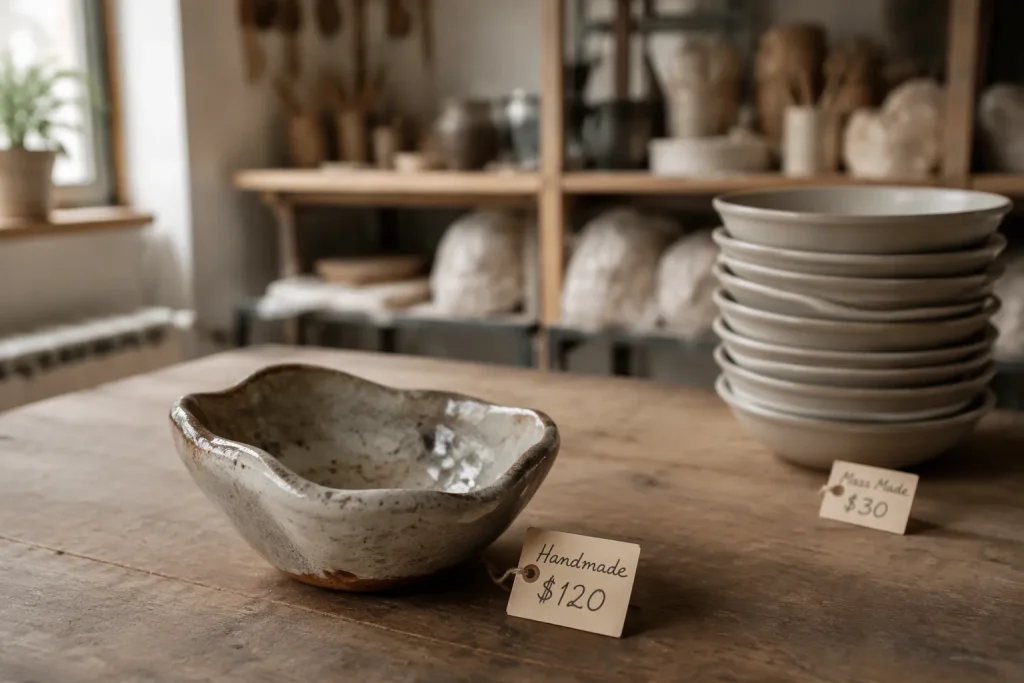
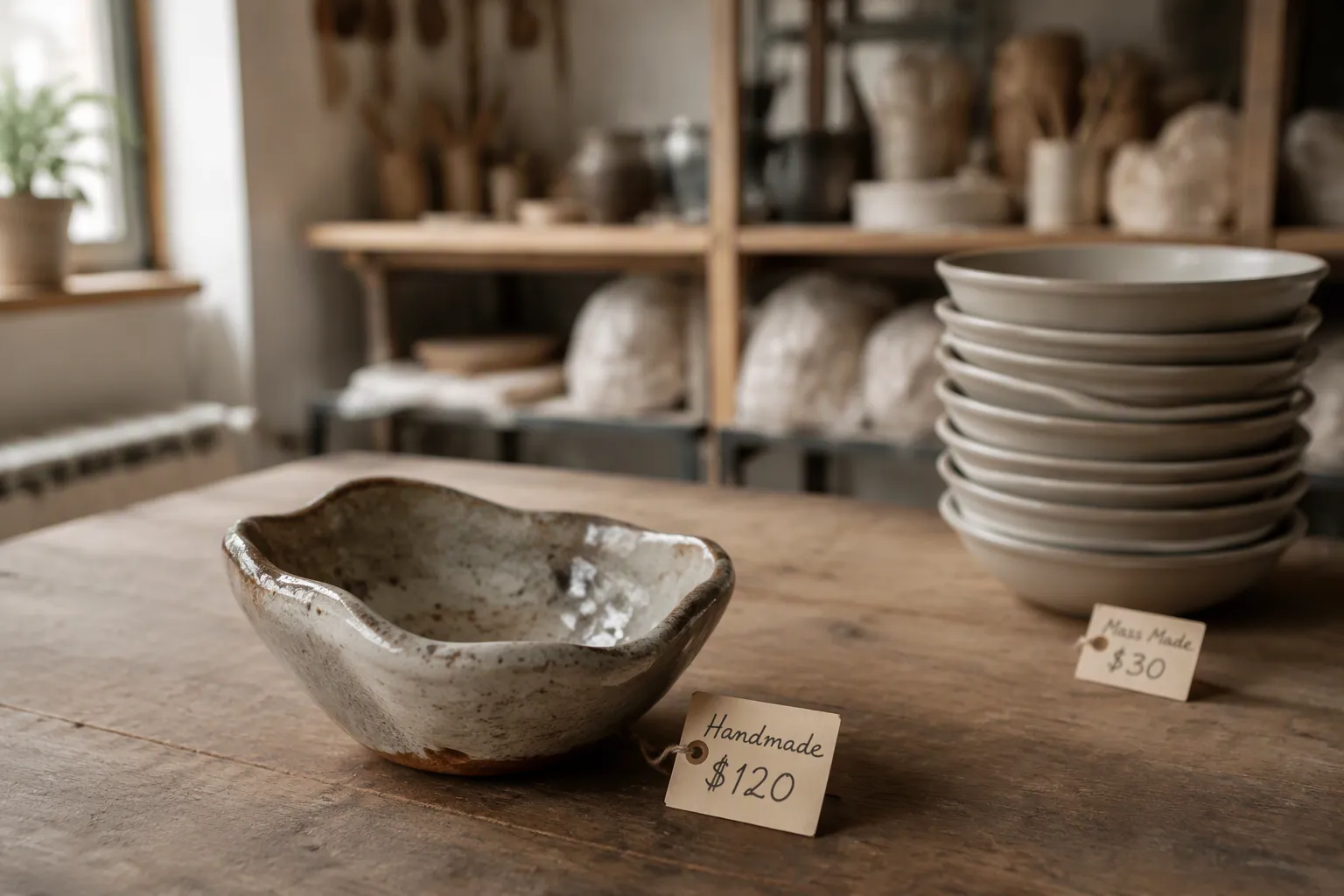
A handmade ceramic cup often costs $45. A factory mug might cost you $6. That price gap is not luck. It comes from four forces working together.
Uniqueness, skilled hand labor, high-end branding, and customer loyalty let makers charge a price far above production cost. That is why handmade ceramics earn much higher margins than mass-made ware.
You will see how each force widens that margin. The next sections explain the cost and pricing logic behind this difference.
Key Takeaways
Handmade ceramics are one of a kind. This uniqueness makes them rare. Rarity allows makers to charge higher prices.
Trained workers need a lot of time. Every piece takes many steps. This makes the cost higher, but the value higher too.
Value-based pricing sets prices by what buyers are willing to pay. This leads to bigger profits than cost-plus pricing.
Good branding makes a cup seem like a luxury product. It shares a story about tradition and skill. Buyers pay for that story.
Loyal customers buy again and tell friends. This cuts marketing costs. Happy customers become free advertisers.
Why Handmade Ceramics Beat Mass-Made Ware on Cost and Price
Margin is the profit you keep after you subtract production cost from the retail price. A $45 cup and a $6 factory mug show this margin gap clearly. To understand where that gap comes from, you must first look at the real cost of a piece of pottery.
The Real Cost of a Piece of Pottery
You might think the price of materials seems small. That is partly true. Here is an actual cost breakdown for a medium-sized ceramic mug:
Material | Cost |
|---|---|
Clay | $1–2 per pound |
High-fire glaze | About $36 per pint |
Underglaze | About $19 per pint |
Gold luster | $36 per 0.07 oz |
Total material cost | $3–8.50 |
Takeaway: if you see a fully handcrafted mug for under $10, the artist is basically giving away their time and skill…and may even be giving away materials…
Materials are only one piece. Labor is the bigger factor. A skilled potter tracks their time carefully. One case study shows an effective hourly compensation of $24.74 for a large wholesale order. The wage range for potters runs from $11 to $29 per hour. When you add the cost of firing, kiln maintenance, and studio overhead, the total cost climbs fast. The real costs of materials, labor, and firing add up quickly.
Compared to mass production, handmade dinnerware costs 20% to 50% more to produce. That retail price gap comes from the real cost of a piece of pottery. The price tag on artisan work reflects these real costs.
Cost, Price, and the Margin Gap
Mass production lowers unit cost by spreading fixed expenses over thousands of identical pieces. A factory can make a mug for $2. But mass production also flattens pricing power. You can only charge what the commodity market allows. The price per unit stays low. Mass production pricing follows a different logic.
This work takes the opposite path. You trade volume for pricing freedom. Your cost per piece is higher, but you set the retail price based on value, not on competing with factories. Your pricing strategy determines your profit. This pricing approach puts you in control.
Customers who appreciate quality, uniqueness, and craftsmanship are willing to pay more for handmade ceramics, and such work should not be priced against mass-produced alternatives. Value-based pricing answers the question of what the work is worth.
This is the heart of why handmade ceramics command stronger margins. The buyer pays for something no one else has. They pay for skill built over years. That value does not show up in a cost-plus calculation. The retail price should reflect what the work is worth, not just the item price.
Pottery pricing that works well accounts for both real costs and customer willingness to pay. The margin grows when you serve buyers who value what you make—and who expect to pay a higher retail price for it. Value-based pricing closes the gap between cost and price. Good pricing reflects what the work is worth.
So the margin gap comes from two directions. Mass production keeps cost low but price low too. Handmade accepts higher cost but captures a far higher retail price. The final price of artisan work includes uniqueness and skill. That is the real difference in pottery and ceramics pricing. A fair price for handmade work reflects both real costs and the value customers see.
Perceived Value and Uniqueness

The Economics of Scarcity
Every handmade cup is a one-of-a-kind object. No two pieces look exactly the same. The glaze spreads differently in each firing. The rim has small marks from the potter’s fingers. This uniqueness creates scarcity on purpose. You cannot ask one artist for a thousand matching pieces. Buyers know this limit. They understand the piece in their hands isn’t found anywhere else. That fact changes what they are willing to pay.
Scarcity raises value in every market. When few desirable things exist, their price goes up. Handmade ceramics work the same way. Each piece is one of a kind. A buyer who wants that exact cup, with that exact glaze design, must pay the set price. No factory can make a cheaper version of the same thing. This is why handmade ceramics keep their value. The price shows something the buyer cannot get elsewhere.
Mass production makes lots of things. Lots of things lower prices. A factory can fill the market with matching mugs. Competition becomes a contest of who can charge the least. Handmade work stays out of this problem. The artist controls how many to make. The artist sets the price. Having fewer items becomes a way to earn more.
Craftsmanship Buyers Can See and Feel
A machine can shape clay in the exact same way every time. That same shape is also its weakness. Factory-made ware has no personality. It feels plain and without warmth. A handmade piece shows the work of human hands. You can see the small unevenness of a handle made by hand. You can feel the texture of a painted glaze. These little things have a meaning. They link the buyer and maker even when they are far apart.
This connection explains high prices. A buyer does not just buy a container for tea or coffee. They buy a piece of art made by a person. That feeling has actual value in money. It turns a simple item into something you treasure.
Think of clayesouk as a good example. The brand works from Jingdezhen, a city with over 1,700 years of pottery history. Its artists have over ten years of skill in every piece. That history and skill are clear in the finished work. A buyer who understands this sees not just a cup. They see hundreds of years of tradition and years of practice. That idea supports a higher price. The skill can be seen, and the history is true.
The rules of scarcity and the signs of handwork join forces. They build the feeling of worth that factory goods cannot copy. That feeling lets makers set a fair price for their work.
Pottery Pricing and Production Strategy
Labor, Time, and the Anti-Scale Model
A factory can make a mug in just seconds. A potter spends much more time on one cup. One cost example shows 25 minutes of labor at $25 per hour. That labor costs $10.42. Then add clay at $1.13, glaze at $1.00, firing at $0.50, and packaging at $1.50. The total so far is $14.55. Overhead at 20% adds $2.91. The final total cost is $17.46. If you sell at two times the cost, the price is $34.92, or about $35.
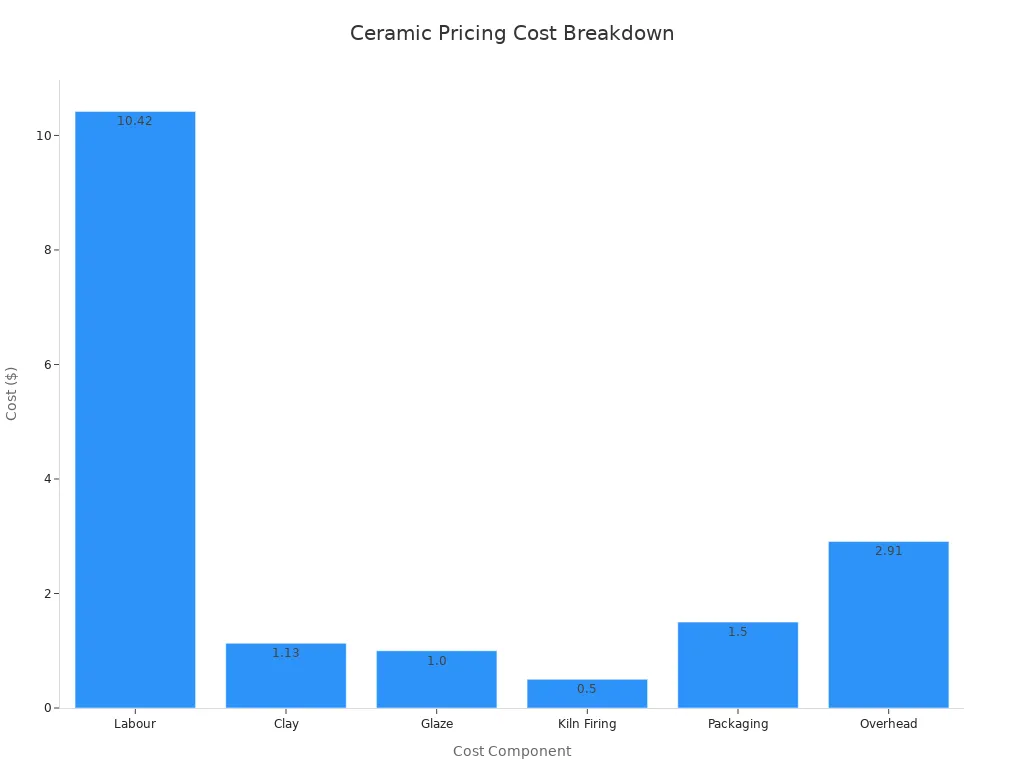
This math shows why handmade ceramics do not follow mass production logic. You cannot share your labor across many units. Each piece needs your hands, your time, and your focus. This anti-scale model protects your profit. When you cannot make more items, you compete on value rather than quantity. Your pottery pricing shows skill, not speed.
Pottery Pricing That Reflects Value
Cost-plus pricing focuses on your own costs to make sure you get a minimum profit. Value-based pricing sets prices based on what customers will pay. This often leads to higher profits. This difference matters when you price a handmade mug. With cost-plus, you might sell a mug for $12 from an $8 cost with a 50% markup. Value-based pricing asks a different question: what is this cup worth to the buyer?
Your pottery pricing should include more than just clay and glaze. A pottery pricing calculator is helpful, but it cannot cover everything. Pricing only from material costs leaves out your skill. Your pricing should include studio access, tools, insurance, and office time. These costs must be in your numbers. A common studio formula is price = (labor time × hourly rate) + materials + overhead at 20%. Overhead includes kiln wear, rent, insurance, website fees, and show costs.
Well-run studios usually earn gross margins of 40–50% on products. Materials and firing make up 15–25% of revenue. Labor takes 25–35% of revenue. These numbers show what good pottery pricing can do. The difference between artisan work, mass production, and hobby work matters here. Artisans price for long-term business. Hobbyists often charge too little. Factories compete on how many they make.
clayesouk shows how value-based pricing works in real life. The brand gives custom design services. You can change patterns, glazes, shapes, and sizes. Specific clays, glazes, and firing methods shape each piece. This customization justifies a higher selling price. The selling price shows the buyer’s idea, not just your cost. This is why handmade ceramics have better profit margins than factory items. Your pricing tells the story of your work.
Market Positioning and Branding
From Utility Item to Luxury Object
You can sell a ceramic cup as a simple bowl. Or you can sell it as a fancy art item. The difference is in branding, not in the clay. Handmade pieces earn more when makers sell them as special items, not everyday dishes. This change affects your whole pricing method.
Your branding tells buyers what to think. When you highlight tradition, skill, and rare supply, you make a story people will pay for. clayesouk is a good example. The brand works from Jingdezhen, the “Porcelain Capital of the World” with over 1,700 years of history. Being a national-level ICH productive protection demonstration base shows top quality. Many clayesouk works have been picked as national gifts. That status alone earns a higher price.
This positioning keeps you away from direct competition with factory items. A $6 mug competes only on price. A $45 artist cup competes on story, tradition, and art. You stop fighting over the lowest cost. The final price shows something factories cannot make.
Selling to a Niche That Pays Premium
Your target audience matters as much as your product. Handmade ceramics draw certain groups willing to pay more. Home decor lovers want unique items for their rooms. Gift buyers look for special, one-of-a-kind objects. Boutique hotels need unique tableware that has a story. Premium tea suppliers want vessels that honor their craft. Each buyer expects a fair price for real quality.
Research from the Craft Industry Alliance and Etsy shows millennial and Gen Z buyers driving demand for handmade ceramics. These buyers care about authenticity and skill. They let potters charge prices 3 to 10 times higher than mass-market goods. This willingness to pay more creates room for premium pricing that covers your costs and rewards your skill. The price gap between artisan and factory goods shows this demand.
clayesouk serves these buyers directly. Its custom design services let buyers change patterns, glazes, shapes, and sizes. A boutique hotel can order a unique set that matches its style. A tea supplier can ask for specific forms for traditional events. Each order meets a specific niche need. That fit earns a higher price. Your pricing plan should target these buyers directly. A smart price shows the value of your work. Premium pricing works when you serve customers who expect it. The market sets the final price for your work. Your price shows your brand’s place in the market. That is how artisan ceramics keep stronger profits from making to selling.
Customer Loyalty and Emotional Connection

Stories, Authenticity, and Repeat Buyers
A personal story turns a one-time buyer into a regular customer. When you share your journey as a maker, buyers connect with you as a person. That connection builds trust. Trust keeps them coming back.
Template | How the maker’s personal story builds loyalty |
|---|---|
The Artist Portrait | Shows the ceramicist in the studio as the human face behind the work. This turns a brand into a person and creates an emotional bond with the buyer. |
The Craft Fair Booth | Puts the maker at the point of sale, greeting customers and wrapping purchases. This human presence links each object to its maker. |
Buyers who form an emotional connection with a brand story are more likely to return, recommend the brand, and become long-term loyal customers.
Loyal buyers also lower your marketing cost. You spend less to win each new sale. That lower cost widens your margin over time. Repeat buyers already trust your price, so you avoid constant discounting.
clayesouk builds these relationships through after-sales support and cultural depth. Collectors and boutique clients return for guidance on care and for new pieces that match their growing collections.
Word-of-Mouth as Free Marketing
Happy customers become your best salespeople. They tell friends, family, and coworkers about your work. This word-of-mouth promotion costs you nothing. It also carries more weight than any paid ad.
Brands worldwide invest in tactics that encourage fans to promote their products. You can do the same. Give loyal buyers a small gift or a branded item. They then share your name with their circle. Each referral brings a new buyer who already trusts you.
This cycle protects your price. New customers arrive pre-sold on your story. They accept your price without haggling. Your cost to acquire them stays near zero. That is how loyalty compounds into stronger margins year after year.
You now understand why handmade ceramics earn higher profits. Perceived value, cost and pricing logic, premium positioning, and emotional loyalty all work together. They protect your price and make you stand out from factory goods. Buyers pay for uniqueness, story, and connection, not just clay and glaze. Your pottery pricing should capture this truth. A fair price reflects the full worth of your craftsmanship. For makers, this knowledge means you can build a lasting business around real skill and tradition. For buyers, you gain objects with meaning that last for years. The broader craft economy grows stronger when each purchase honors the human hand. Every sale becomes a vote for skilled work over disposable goods.
FAQ
Why can a handmade cup sell for $45 when a factory mug costs $6?
A handmade cup has special glazes, clear marks of craft, and the maker’s own story. A factory mug is the same as thousands of others. Buyers pay more for something rare and made by human hands. That willingness to pay lets artisans charge prices far above what materials cost.
Do higher production costs cancel out the higher price?
No. Handmade dinnerware costs 20% to 50% more to make than factory ware. But the retail price gap is much wider. A $45 cup earns more profit than a $6 mug even after you subtract labor, firing, and overhead. Value-based pricing protects your margin.
What makes customers willing to pay premium prices?
Buyers want realness, tradition, and a personal connection. They see the potter’s skill in every piece. They know no factory can copy that exact cup. This emotional pull lowers price resistance. Loyal buyers come back without asking for discounts.
How does branding turn a cup into a luxury object?
Branding shifts the story from a plain tool to art. clayesouk draws on Jingdezhen’s 1,700 years of porcelain heritage and its artisans’ 10+ years of experience. Being named a national-level ICH demonstration base strengthens that premium status. Buyers then compare your cup to art, not to factory mugs.
Does customer loyalty really affect profit margins?
Yes. Loyal customers buy again and tell others about your work. That word-of-mouth marketing costs you nothing. You spend less to win each new sale. Lower marketing costs widen your margin over time. Repeat buyers also accept your prices without haggling.
