
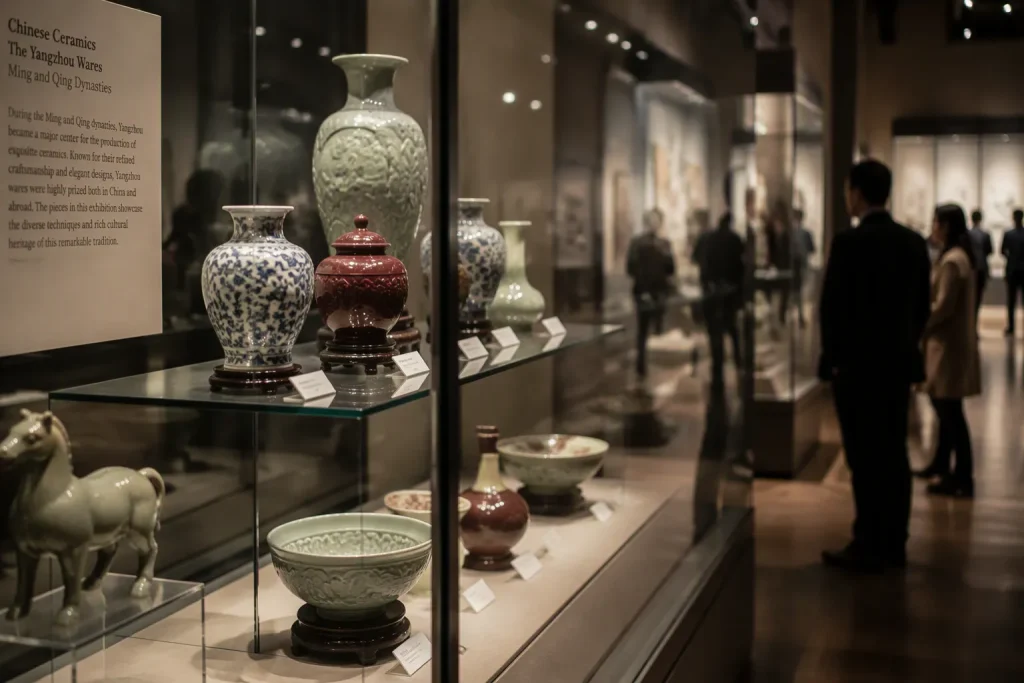
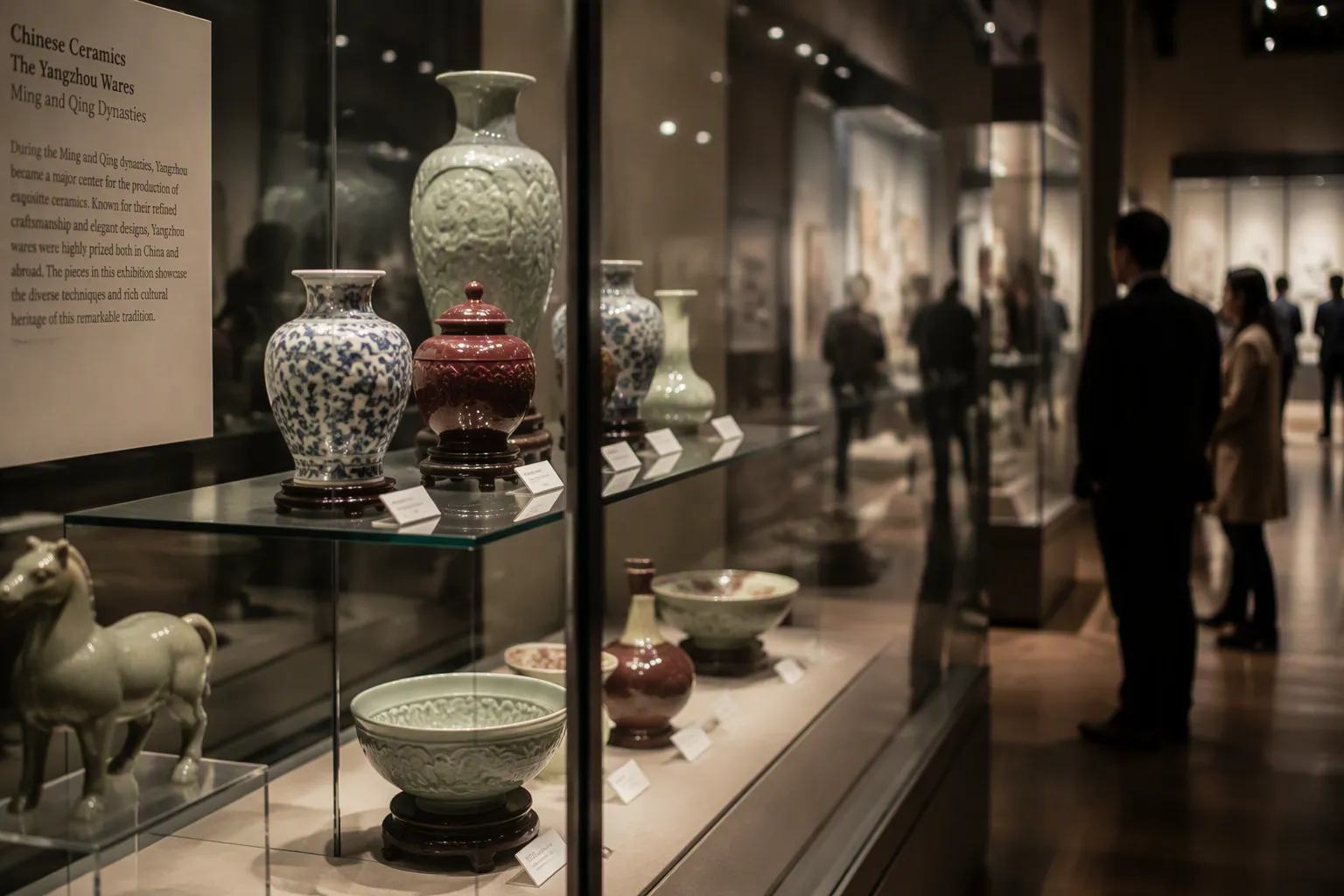
A visitor stands before a blue-and-white vase in a gallery thousands of miles from Jingdezhen. The glaze shines under soft light. How did this piece travel so far from where it was made?
Chinese ceramics are among the most collected and studied objects in any major museum. They hold centuries of craftsmanship, trade, and cultural exchange within their clay bodies. These vessels tell stories of emperors, merchants, and artisans across distant seas.
The journey moves from early earthenware through Tang, Song, Ming, and Qing dynasties. It explores remarkable collections in Europe and America. The story also connects to living makers who keep this heritage alive.
What makes these ceramics so enduringly valuable to institutions and viewers worldwide?
Key Takeaways
Chinese ceramics display centuries of skill and trade.
Museums around the world show these beautiful objects.
Today’s skilled workers in Jingdezhen keep the craft going.
You can see Chinese ceramics in many important museums.
Handmade cups from clayesouk still carry on this tradition.
Early Chinese Ceramics: Foundations
Neolithic Pottery to Han Earthenware
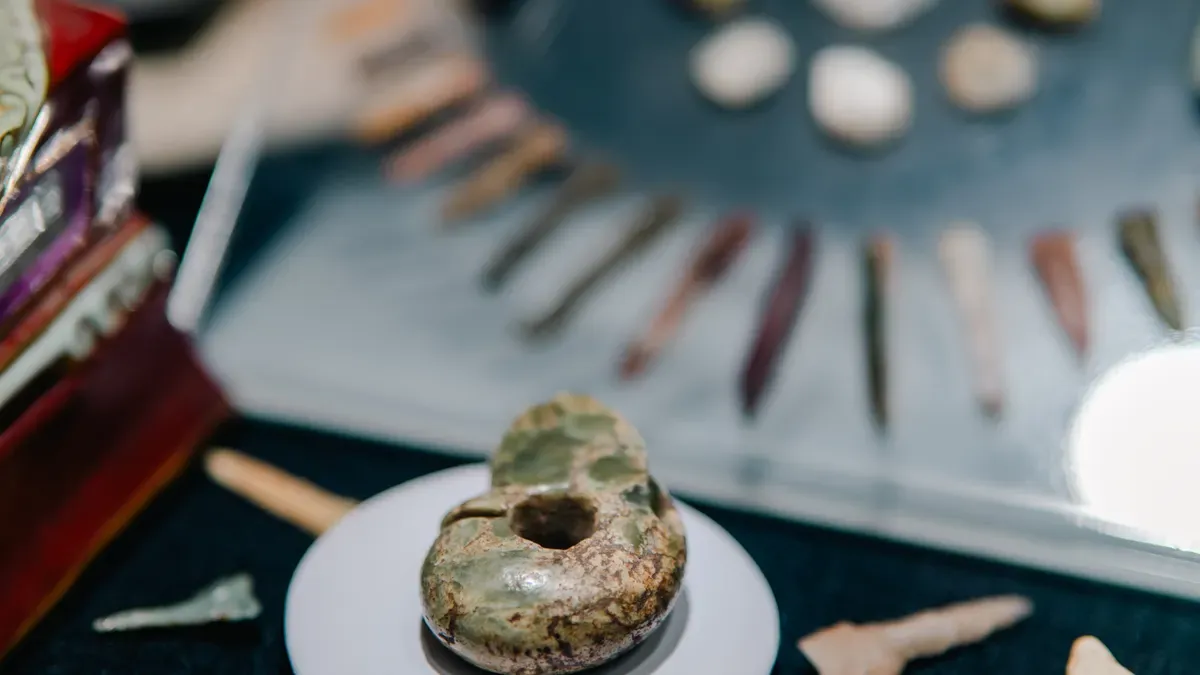
Chinese pottery starts with Neolithic cultures that already showed amazing skill. Yangshao artisans painted swirling designs on vessels they built by hand. Their cord-marked amphorae and painted basins now live in places like the Guimet Museum in Paris and the Rietberg Museum in Zürich. Longshan potters took a different path. They used the potter’s wheel to shape fine clay into black vessels with paper-thin walls. This “eggshell” pottery had a glossy black sheen and sometimes had openwork piercing. The Ashmolean Museum at Oxford holds important Neolithic jades and ceramics. It gives European viewers a key way into early Chinese art.
Han dynasty earthenware shows how burial goods reflected daily life. Elite tombs held ceramic drinking sets, dancer figurines, and archer figurines. These objects saved courtly entertainment and military roles for the afterlife. Tomb furnishings included ceramic vessels that copied grand palaces. Han royals wanted the afterlife to lack nothing. This ceramic-making traditions show advanced craftsmanship and deep beliefs about death.
Celadon in the Six Dynasties and Sui
Celadon came out as a major ceramic type during this period. Its special grey or green glaze comes from iron oxide changing during firing. Small kiln changes could make very different colors in a single firing. Green was the wanted color because it reminded the Chinese of jade. Mature celadon first showed up in the late Han dynasty. Southern kilns slowly made it better over the next few hundred years. By the Sui dynasty, production had spread across southeast China.
The most wanted celadon was evenly green, like nephritic jade, with a non-glassy surface. Potters took out brown flaws caused by iron oxide in the clay. They got finer crackle, sometimes so fine that the surface looked smooth. This celadon collection in museum settings shows how spiritual ties with jade shaped ceramic aesthetics. The ware became an important type for appreciation by the Tang dynasty.
Tang and Song Ceramics: A Golden Age
Tang Sancai and Early Porcelain
Tang potters improved how they made glazes and fired pots. Sancai, or three-color ware, uses lead oxide as a melting helper. It is often mixed with quartz in a three-to-one ratio and fired at about 800°C. Metal oxides make the colors: copper gives green, iron gives brownish-yellow, and imported cobalt gives blue. The main colors are brown or amber, green, and creamy off-white. Artists applied glazes loosely. They often splashed and spotted them, so colors ran together at the edges.
Lead-glaze base fired at about 800°C
Copper for green, iron for brownish-yellow, cobalt for blue
Loose application with splashing and spotting
White clay body, sometimes with slip or clear glaze
Sancai traveled along the Silk Road. Later, it shaped Syrian, Cypriot, and Italian pottery from the 1200s to the mid-1400s. It also became popular in Japanese and other East Asian ceramic arts. The Metropolitan Museum of Art has a sancai-glazed bowl from the 600s to 900s. The Victoria and Albert Museum shows a woman holding a mirror in sancai glaze from 700–750 CE.
Song Celadon and Ding Ware
Song ceramics may be the best ceramic art in the world. People valued regional wares so much that they gave them as tribute and yearly taxes to the emperor’s court. Some kilns made up to 20,000 objects a day for sale at home and abroad. Pieces of Song porcelain appear all over Asia. Examples live in the Minneapolis Institute of Arts, the Metropolitan Museum of Art, and the British Museum.
Longquan and Ru kilns made celadon with a jade-like green glaze. Ding ware stands apart with its ivory-white body and clear glaze tinted with a honey-brown color. Coal-burning kilns replaced wood-burning ones. This changed the glaze from blue-grey to warm white. Potters fired Ding ware rim-down in stacked saggars. This left the rim unglazed. They often bound it with copper, silver, or gold. The National Palace Museum, Taipei calls Ding ware the best white porcelain. Its carved and molded designs influenced later imperial wares. The Smithsonian National Museum of Asian Art holds a large Song collection.
Ming and Qing Ceramics: Global Icons
Yuan Blue-and-White and Ming Imperial Kilns
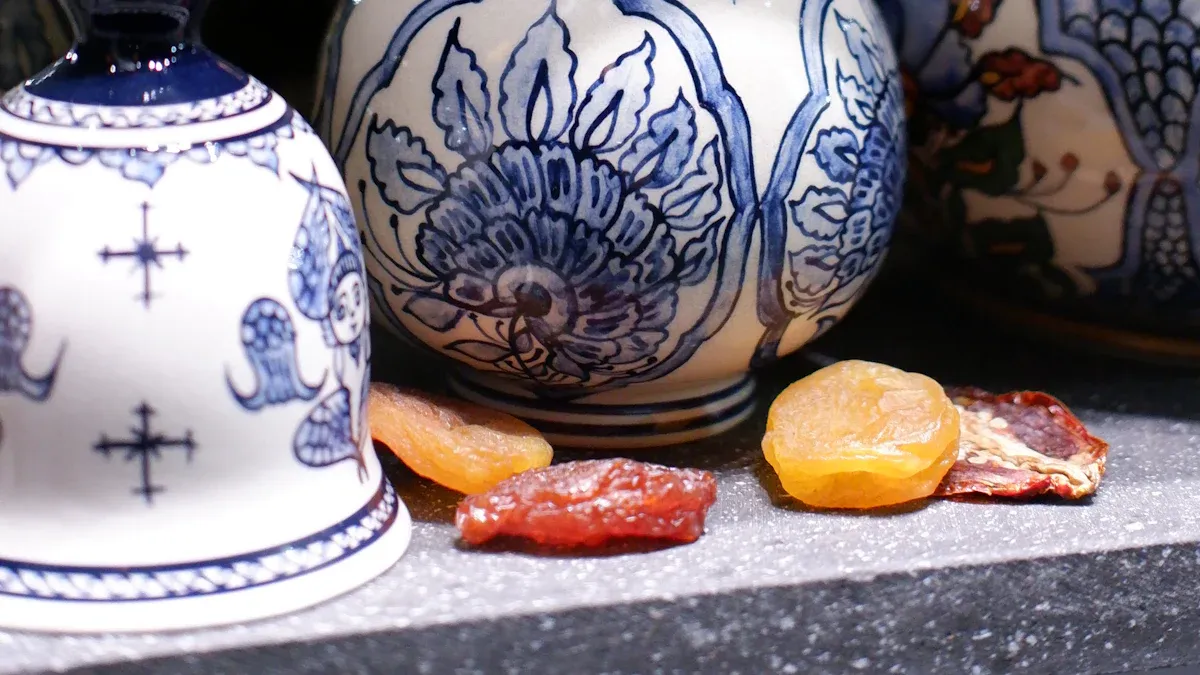
Potters at Jingdezhen during the Yuan dynasty changed ceramic history. They made clay recipes better by adding kaolin and improved how they fired pots. These advances created blue and white porcelain with bright colors. Imported cobalt from Persia made this possible. The pigment left dark iron spots on the underglaze blue surface.
Attribute | Detail |
|---|---|
Pigment source | Brilliant cobalt blue from Persia |
Visual feature | Dark iron spots on underglaze blue |
Vessel function | Meiping used as wine container |
Tong explains that the rise of Yuan blue-and-white porcelain showed a big change in Chinese aesthetics. Central Asian merchants brought imported cobalt pigments and Islamic motifs to China.
The Tianminlou collection keeps elegant blue and white ceramics that show Silk Road exchange between China and West Asian countries. A blue and white ‘Grapes’ barbed-rim charger from the Yongle period shows foreign influences. The grape motif came from Central Asia and rarely appeared on Chinese ceramics before the 15th century.
The Ming dynasty set up imperial kilns at Jingdezhen under direct government supervision. Officials provided models and appointed superintendents. From the Yongle reign, official wares bore the emperor’s reign mark. The Gardiner Museum holds 240 objects focused on Ming and Qing blue and white porcelain. These pieces show how Ming dynasty porcelain reached a golden age in the Yongle and Xuande reigns.
Qing Famille Rose and Export Porcelain
Late Kangxi-period potters developed a new overglaze palette by combining falang and wucai traditions. The West called this rose family. By the Yongzheng period, it had replaced green family as the preferred decoration. European consumers wanted porcelains with European themes. Designs adapted from European engravings included pastoral scenes, religious subjects, and nautical scenes.
The Dutch East India Company transported over 16 million pieces of Chinese porcelain between 1602 and 1682. Export ceramics often showed court and official women’s lives. These scenes became popular overseas and adapted to European tastes. Special designs emerged for the European market, such as garden life scenes and Western motifs.
The Peabody Essex Museum holds a world-leading Asian export art collection. A Chinese fan from 1790–1800 depicts Canton with seven national flags flying from Western headquarters. The Opium Wars dispersed imperial collections into Western museums. British and French troops looted palaces during the Second Opium War. The Boxer Rebellion from 1899 to 1901 saw as many as 1.5 million objects stolen or destroyed.
Chinese Ceramics in Global Museums
The Metropolitan Museum of Art and Beyond
Major museums around the world hold remarkable Chinese ceramics. The Smithsonian Institution alone cares for more than 13,000 Chinese objects. The World Museum Liverpool offers an immersive audio-visual display of seven Chinese ceramic objects. This presentation lets visitors experience these works through sound and sight together.
The Metropolitan Museum of Art holds an encyclopedic collection of Chinese porcelain. Samuel Putnam Avery gave more than 1,300 objects to the Met between 1879 and 1882. Samuel T. Peters donated more than 350 jade carvings between 1911 and 1916. The estate of Jacob S. Roger provided a baluster vase and cover in 1920.
Object or collection | Donor or source | Acquisition details |
|---|---|---|
Chinese and Japanese porcelains | Samuel Putnam Avery | More than 1,300 objects given between 1879 and 1882 |
Jade carvings | Samuel T. Peters | More than 350 jade carvings given between 1911 and 1916 |
Baluster vase and cover | Estate of Jacob S. Roger | Acquired in 1920 |
Jade ‘dragon’ boulder | Florence and Herbert Irving | Part of the Irving collection |
Lime-green enameled vase with dragon handles | Samuel Putnam Avery | Qianlong-Jiaqing period (1736–1820) |
The Met also displays rare Chinese ceramics from the R. Albuquerque collection. About 60 rare pieces appear publicly for the first time. These works include a Qing-dynasty figure of a European woman from circa 1735–45. A large Kangxi-period five-piece garniture from circa 1700 stands as one of only two known existing sets.
The Florence and Herbert Irving Gift brought exceptional works to the Met. These include an apple-green jadeite table screen from the Qianlong period. A celadon and russet jade boulder shows a quail and millet design. A peachbloom-glazed seal paste box and cover carries a Kangxi mark.
clayesouk and Living Craft in Jingdezhen
The story of Chinese ceramics does not end in museum cases. clayesouk, a Jingdezhen-based brand, carries forward more than 1,700 years of ceramic heritage. The city of Jingdezhen has produced porcelain for centuries. Its kilns still fire today.
clayesouk specializes in handmade ceramic cups. Each piece embodies traditional craftsmanship and personalized aesthetics. The brand’s artisans bring over a decade of experience to their work. They create each cup as a tangible work of art.
The connection to museum pieces runs deep. The blue and white ceramics seen in the Met and other institutions inspire modern makers. clayesouk produces hand-painted blue and white porcelain tea cups. These cups continue the legacy of Ming dynasty blue and white porcelain. The blue and white ceramics tradition lives on through such work.
Collectors in private and public collections value both historical pieces and contemporary creations. The art of Chinese ceramics bridges past and present. A handmade cup from clayesouk carries the same spirit found in ancient wares. The white clay body and blue underglaze decoration echo centuries of practice.
Museums preserve the past. Living artisans keep the craft alive. Together, they ensure that Chinese ceramics remain a vital part of global culture.
Chinese ceramics hold history, skill, and cultural exchange in every piece. They traveled from ancient kilns to museum galleries around the world. Collectors and viewers still value their beauty today.
World museums display these works with great honor. Modern makers like clayesouk keep the craft alive with handmade cups. The porcelain tradition lives on in Jingdezhen workshops. This living art links the past and present for new generations.
Readers can visit a nearby museum to see these treasures. They can also look at handmade ceramics from today’s artisans. This heritage stays alive and waits to be found.
FAQ
Why do museums around the world collect Chinese ceramics?
Museums collect Chinese ceramics because they are beautiful and important in history. These objects show how people traded and shared culture for hundreds of years. The Metropolitan Museum of Art and the Smithsonian keep thousands of them. People enjoy the skill seen in each piece.
What makes Jingdezhen important for porcelain production?
Jingdezhen has made ceramics for over 1,700 years. Its kilns created famous blue-and-white wares during the Ming dynasty. The city still makes handmade ceramics today. Artisans at clayesouk continue this tradition with hand-painted cups and custom designs.
How did Chinese ceramics reach Western museums?
Trade routes brought Chinese ceramics to Europe and America over many centuries. The Dutch East India Company shipped millions of pieces. Later, the Opium Wars scattered imperial collections. Donors like Samuel Putnam Avery gave thousands of objects to museums such as the Met.
What is the difference between celadon and blue-and-white porcelain?
Celadon has a green glaze that looks like jade. Potters get this color from iron oxide during firing. Blue-and-white porcelain uses cobalt color under a clear glaze. Yuan dynasty artists made this style with imported Persian cobalt. Both types are in major museum collections worldwide.
How can someone experience Chinese ceramics today?
Visitors can explore museum galleries with historical pieces. The Smithsonian and the Met show large collections. Buyers can also get handmade cups from living artists. clayesouk sells hand-painted blue-and-white tea cups that keep traditional skills alive for modern collectors.
