Importing ceramics in bulk is not like importing T-shirts. One wrong move and you are paying for a crate of shattered plates. A solid fulfillment process protects your profits at every stage. You find a reliable supplier and arrange shipping that suits fragile goods. You clear customs without surprises and store inventory in a warehouse built for breakables. You run dropshipping or direct orders through careful packaging. You also handle returns without losing money. Get these six steps right, and your import business enjoys fewer breakages and lower landed costs. You also get faster delivery and happier customers. A bulk import done well turns a risky gamble into a repeatable, profitable operation.
Key Takeaways
Check suppliers by asking for samples and certificates to make sure the products are good.
Use three layers of packing and cargo insurance to keep fragile ceramics safe.
Group goods with the right HS codes to prevent customs hold-ups.
Keep track of each SKU with reorder points to manage your inventory.
Use a careful packing process and a return policy to lower breakage.
Sourcing Ceramic Suppliers for Bulk Import
Finding the right supplier for your bulk ceramic tableware import starts with careful vetting. A successful bulk import depends on the supplier you choose. Your import journey requires a supplier who delivers consistent quality at scale. clayesouk, a Jingdezhen-based supplier with over a decade of artisan experience and ICH demonstration base status, shows what a quality ceramic supplier looks like. But you must verify every claim yourself.
Vetting Manufacturers and Requesting Samples
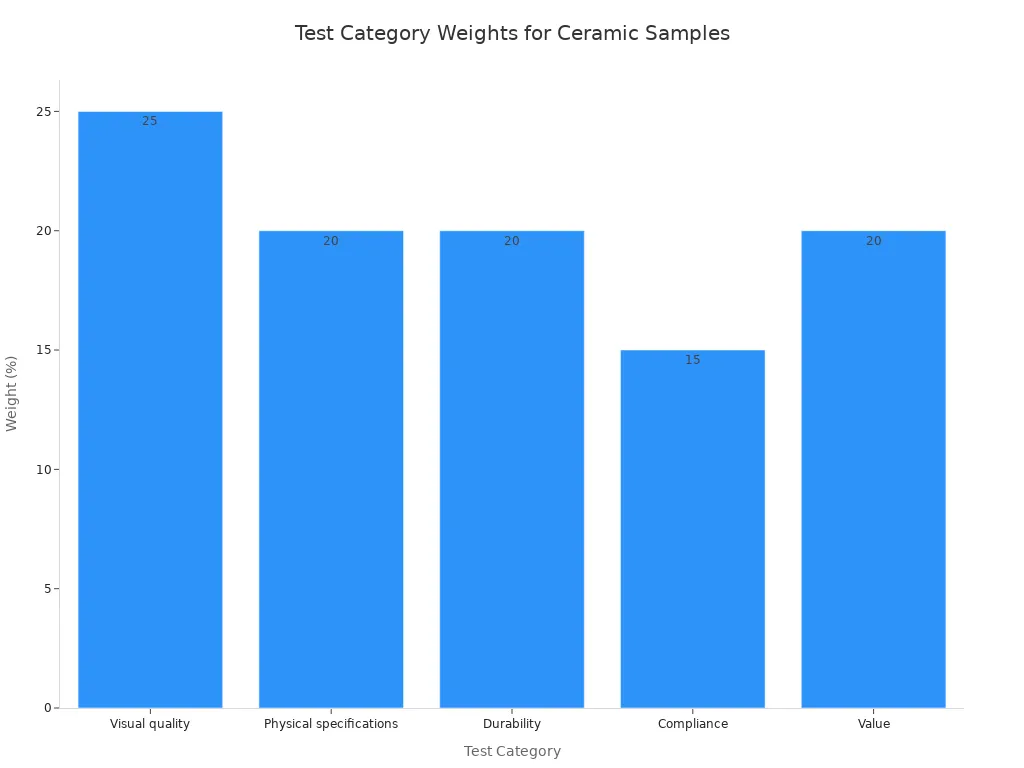
Ask for 3–5 pieces per SKU first. This lets you run destructive tests while keeping reference samples. Check ceramic samples in five areas. Visual quality is 25% of the score and covers glaze finish, color accuracy, and decoration precision. Physical specifications are 20%, including dimensional accuracy. Durability is also 20%, testing chip resistance and thermal shock. Compliance is 15%, involving food safety results. The final 20% looks at value: price per unit compared to quality delivered. Your business needs thorough testing before any commitment.
Ask for key certifications from each supplier. ISO 9001:2015 confirms good management practices. FDA 21 CFR ensures food safety. CE marking is needed for EU export. For Jingdezhen suppliers, ask which kiln fired your piece. Request photos of the artist with the piece during firing.
Use clear QC standards like AQL 1.5. Test each ceramic piece for durability and lead content. Third-party labs can verify thermal shock resistance. Your import starts with trust, so verify everything. This supplier vetting protects your import business from costly mistakes.
Negotiating Bulk Pricing and MOQs
Artisan workshops set ceramic MOQs between 50 and 200 pieces. Larger factories ask for 1,000 pieces per model. These numbers are opening bids from your supplier.
Propose a paid trial of 25–30 pieces across three to four designs. Expect a 15–25% premium. This premium is smart spending. It gives your import business real customer feedback before a large commitment. Frame the conversation around a long-term partnership. Explain you want to test designs first.
Other strategies work for getting lower order quantities from your supplier. Provide volume forecasts for 6–12 months. Bundle orders with a sourcing agent. Customize an existing model to avoid tooling costs. Cover mold development yourself. Confirm if the MOQ applies per color or finish. Your business benefits from flexible negotiation tactics.
These tactics make your import business more agile. You can test the market through tableware dropshipping or small-batch dropshipping before scaling. Smart supplier vetting and flexible MOQ terms turn a risky bulk import into manageable growth for your import business.
Shipping and Logistics for Fragile Ceramics
You picked your supplier and placed your order. Now you need to send heavy, breakable items around the world without smashing them. Shipping ceramics takes different steps than shipping soft items. Each choice changes your shipping costs, how fast you get your goods, and how many pieces break.
Choosing Freight Modes for Bulk Orders
Sea freight carries most bulk ceramic imports. It gives you the lowest cost per kilogram for heavy tableware. The problem is time. A container from Shanghai to Rotterdam takes 30–35 days. Shenzhen to Hamburg runs 28–35 days. Ningbo to Antwerp needs 32–38 days. These shipping times test your patience and your cash flow.
Air freight cuts the trip to days, not weeks. You pay a high price for that speed. Air works best for quick restocks or costly artisan pieces. Rail freight falls between the two choices. It balances cost and speed for your import business.
Rail freight from China to Europe takes 15–20 days compared to 30–40 days by sea — roughly twice as fast, making rail an increasingly popular option for shippers who need faster delivery than ocean can provide.
Rail fits medium-weight ceramic shipments. It skips the worst port backups. Your business gets steady transit times. Pick your mode based on order size, budget, and what you promise customers.
Packaging Standards and Breakage Insurance
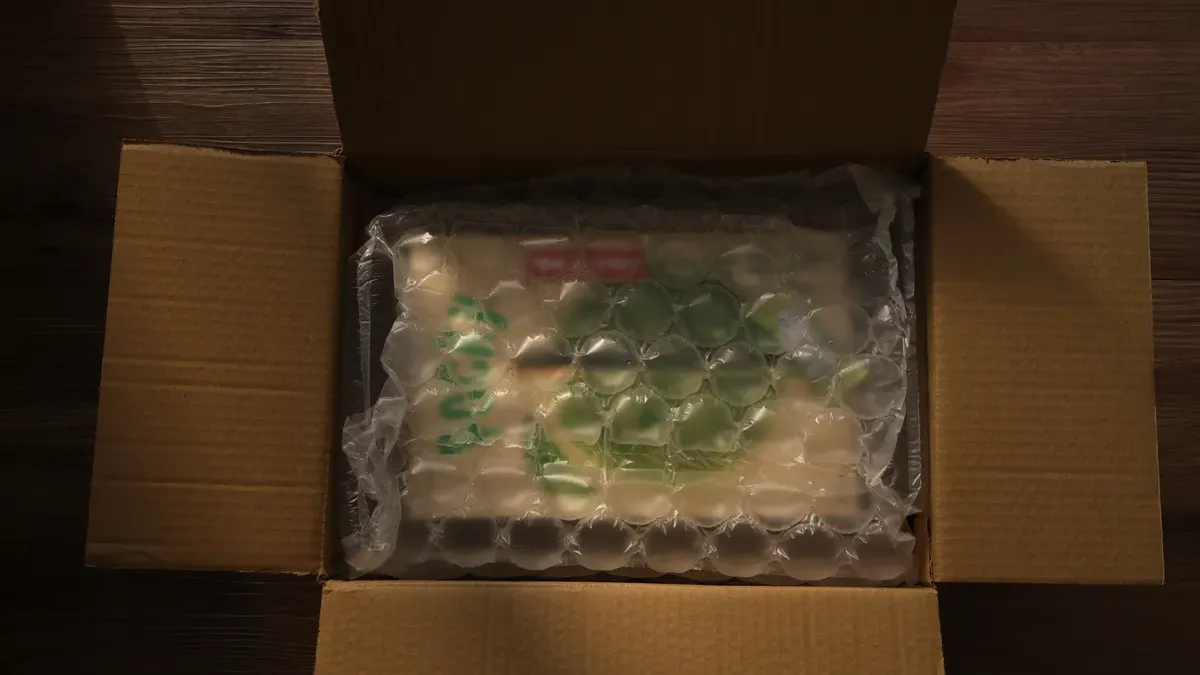
Ceramic packaging guards your profit margin. One broken piece wipes out the gain on several good ones. Build your packaging and shipping process around three layers. Double-boxing makes a stiff outer shell and a separate inner box. Foam inserts hold each piece and soak up shock. Palletizing keeps heavy cartons steady and stops crushing during stacking.
Follow well-known testing standards. ISTA 3A copies parcel delivery stress for single packaged products. Fragile products, including ceramics, clay, glass, and porcelain, need certain drop heights and vibration testing to copy transit stress. The standard calls for one test sample unless the product is fragile, and then more samples may be needed. For Amazon sellers, ISTA 6-Amazon.com requires 5 specimens for SIOC testing and 2 to 5 specimens for Over Boxing, depending on weight and setup.
clayesouk uses export-grade packaging as a best-practice example. Their ceramic packaging mixes molded foam, double-wall corrugated boxes, and reinforced corners. This method protects handmade ceramic cups and other fragile items through many handling points.
Cargo insurance covers what packaging cannot. Rates change by coverage type and route.
Insurance Type | Rate (percentage of insured value) |
|---|---|
All Risks marine cargo insurance (ceramics) | |
Container insurance (Sea Freight FCL) | 0.3% – 0.5% |
Freight insurance for fragile goods (e.g., ceramics) | ~1.0% ($1 per $100 of declared value) |
All-risk cargo insurance (international, fragile) | 0.5% – 2.0% of value |
Always insure your shipment. The premium is small next to the cost of a lost container. Your import business cannot take that loss by itself.
Customs Clearance and Import Compliance
Customs clearance sets your total landed cost. A wrong HS code or a missing certificate can hold up your shipment for weeks. You must classify your goods correctly and get every document ready before your freight arrives.
HS Codes, Duties, and Tariff Classification
Ceramic tableware falls under HTS Chapter 6911 for porcelain and Chapter 6912 for stoneware. The duty rate changes based on the exact subheading. HTS 6911.10.45 has a 26% MFN rate. HTS 6912.00.48 sits at 9.8%. Porcelain tableware sets under HTS 6911.10.8010 face 20.8% ad valorem. HTS 6911.90.00.50 drops to 5.4%.
HTS Code: 6911.10.3510 – Tableware Etc, Porcelain Or China (not Bone) Avail In Spec Sets, Agg Value (us Note 6b-12 Settngs) Not Over $56 Nes Plates Nov 27.9cm Othr Nov 22.9cm
Chinese ceramic goods also face Section 301 tariffs of 25% or more. These add on top of the base MFN rate. Ceramic dinnerware and tableware under 6911/6912 pays a 6–9% base rate plus 25% Section 301, for a total effective rate of 31–34%. Duties are added together, not blended. Each tariff applies to the customs value, not the amount already taxed. Your import business must plan for this stack before you commit to any bulk import.
Safety Certifications and Required Documents
The FDA controls lead and cadmium migration from ceramic tableware under CPG 7117.06 and CPG 7117.07. Testing follows ASTM C738, AOAC 973.32, and AOAC 973.82. California Prop 65 adds a separate exposure standard. FDA compliance alone does not satisfy Prop 65. You need independent third-party leachable lead and cadmium testing for every new glaze color. EU shipments require CE marking.
Prepare these documents for every shipment:
Commercial invoice
Packing list
Bill of lading or airway bill
Certificate of origin
Product testing reports and certifications
Import license, if required
clayesouk products meet international quality standards. This gives your import business a reliable supplier baseline. Whether you run dropshipping or direct sales, strong qc paperwork protects your business from customs delays and costly recalls. Your business grows faster when clearance runs smoothly.
Warehousing and Dropshipping Ceramic Tableware
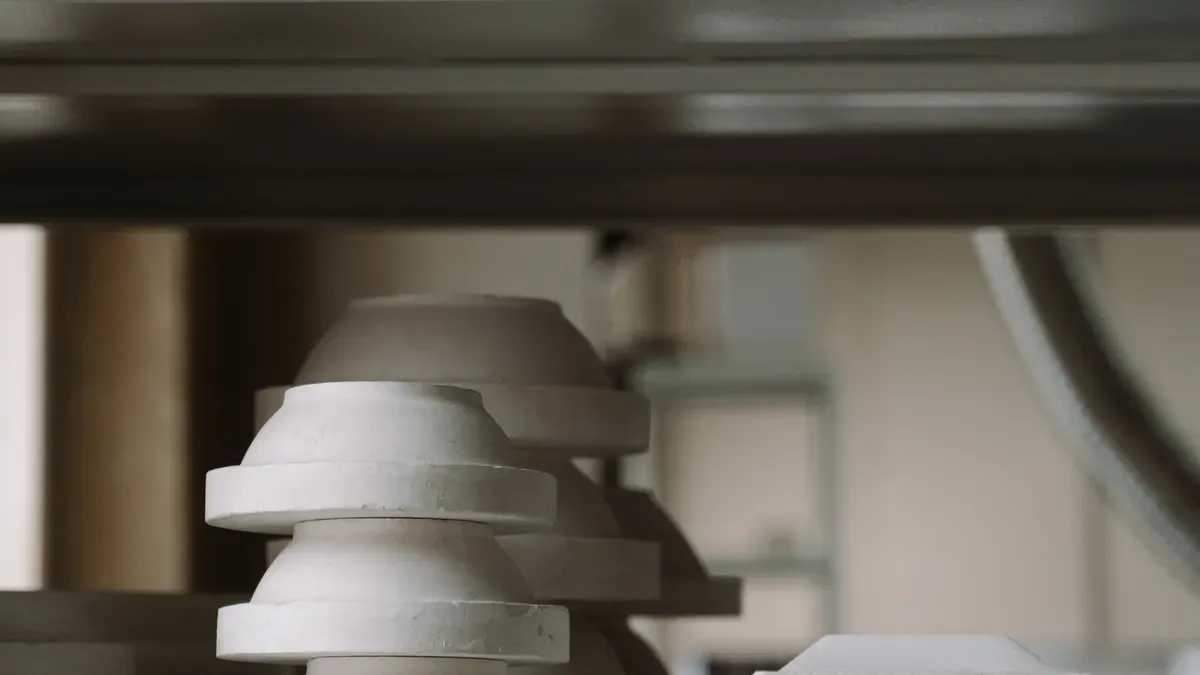
Your goods cleared customs. Now you need a warehouse that handles fragile items with care. This step decides how fast you ship and how many pieces arrive unbroken.
Selecting a 3PL or Self-Storage Setup
A third-party logistics provider (3PL) stores and ships items for you. This works well when you run dropshipping ceramic tableware across many regions. A 3PL gives you warehouse space without a lease. You pay per order or per pallet. For heavy, breakable items, you must check the provider carefully. Ask these questions before you sign:
Can the 3PL follow SKU-specific packing instructions with dividers, wraps, and inserts?
What happens when the right packaging is not available?
Does the system handle fragile flags and custom carton selection?
Is your brand-supplied protective material stored as inventory?
Can the packing process repeat across employees and shifts?
Test the provider against your most fragile ceramic piece, not the easiest one. Written packing instructions must exist. Verbal guidance fails at scale.
Self-storage suits small dropshipping operations. You control every box. You also carry the labor cost and the risk. Your import business grows faster with a 3PL once order volume rises.
SKU Tracking and Reorder Points
Handmade ceramic cups create SKU-heavy inventory. Each glaze, shape, and size becomes its own SKU. Map every SKU in your system before stock arrives. Use bulk CSV order import to load new items fast. This keeps your fulfillment process clean.
Set a reorder point for each SKU. The basic formula is: reorder point = (average daily usage × lead time in days) + safety stock. If a cup sells 10 units daily and lead time is 15 days, the base need is 150 units. Add safety stock for demand swings. For variable lead times, use statistical safety stock: Z × √((average lead time × demand deviation squared) + (average daily sales squared × lead time deviation squared)). A static 7-day buffer fails here. Track sell-through, damage, and reorder requests by SKU. Your business makes smarter buying decisions with real data.
Order Fulfillment Process and Returns
Your warehouse has the stock. Now you must get each piece from the shelf to the customer’s door without breaking it. This step builds your reputation. A good fulfillment process keeps every ceramic piece safe during picking, packing, and delivery.
Picking, Packing, and Last-Mile Delivery
Begin with a picking list that matches your SKU map. Pick each ceramic item by hand. Check every piece under bright light before you pack it. Look for chips, cracks, or glaze problems. A quick check now stops a return later.
Packing needs more care than picking. FedEx says to wrap fragile products one by one and fill empty space with good cushioning. Follow the same steps for every ceramic order.
Protect delicate parts first. Wrap handles, spouts, or sticking-out parts alone with bubble cushioning or foam sheets.
Wrap the whole piece in several layers of bubble cushioning, with bubbles facing in.
Hold the wrap with stretch wrap or blue painter’s tape. Never let adhesive touch the ceramic.
Add corrugated cardboard panels around the wrapped item to make it more stable.
Fill empty spaces inside mugs or open holes with packing material.
Line all sides of the box with cushioning so the item floats in a soft cloud.
Shake the box gently. Add more cushioning if the ceramic moves.
Seal both inner and outer boxes with strong packing tape.
Mark the outer box clearly as Fragile.
Pick your packing materials based on the piece. The table below shows common choices.
Packing Material | Best Use for Ceramic Cups | Cautions |
|---|---|---|
Bubble cushioning | Wrapping the whole cup, extra layers on rims and handles | Keep wrapped item away from box walls |
Foam wrap | Fits smooth or uneven surfaces | Thin material, so use enough layers |
Loose fill | Filling odd spaces around a wrapped cup | Heavy items can sink |
Air pillows | Steadying open space in a light box | Not a substitute for wrapping |
Corrugated wrap | Strengthening around mugs or pieces with handles | Use as support, not main cushioning |
Last-mile delivery ends the trip. Big carriers like USPS, FedEx, and UPS handle fragile packages well when packed right. For valuable ceramics, shipping insurance costs little and saves your import business from a total loss.
Returns Handling and Quality Control Claims
Returns cost a lot for heavy, breakable goods. You pay return freight, inspection labor, and replacement costs. A clear policy cuts losses. Accept returns only for proven damage or defects. Ask customers for photos before you approve any claim.
Check every returned ceramic piece when it arrives. Record the damage with photos and notes. Compare the damage pattern with your packing records. This data makes your ceramic quality control better over time. Track claims by SKU, carrier, and packing method. You will find patterns fast.
clayesouk offers a model for after-sales support. Their team gives product care guidance and quality problem solutions. They help customers learn how to care for handmade ceramics. This approach cuts unneeded returns and builds trust. Your import business gains from the same mindset. Train your support team to teach customers about proper use and care.
For dropshipping operations, returns add more work. Your 3PL must handle inspection and restocking. Set clear rules for what counts as resellable. Damaged pieces go to a claims process with your supplier or carrier. Good pieces go back to sellable inventory.
A smooth fulfillment process and fair returns policy keep customers loyal. Your business grows when buyers trust every order arrives in one piece.
You now have a clear plan for your ceramic import. Find a supplier you trust, set up careful shipping, clear customs, store your stock well, run tight fulfillment, and handle returns. This fulfillment process lowers breakage and keeps landed costs under control. Your import business gets expenses you can predict and room to grow.
Start with one action today. Ask a supplier for samples or check your current packaging. Small fixes protect your tableware and your profits. Whether you do dropshipping or direct sales, strong quality control keeps your business growing. Your dropshipping operation and your import business both win when every order arrives in one piece.
FAQ
What is the biggest risk when you import ceramic goods in bulk?
Breakage is your top risk. Ceramic pieces crack during transit, and one broken item can erase the profit on several good ones. You reduce this risk with double-boxing, foam inserts, and palletizing. Cargo insurance covers what packaging cannot. Test your packaging before you scale your import business.
How do you choose the right supplier for handmade ceramic cups?
Start with samples. Order 3–5 pieces per SKU and run visual, physical, durability, and compliance checks. Ask for ISO 9001:2015 and FDA 21 CFR certifications. A Jingdezhen supplier with ICH demonstration base status, like clayesouk, shows what strong credentials look like. Verify every claim yourself before you commit.
Can you run dropshipping with heavy, fragile tableware?
Yes, but you need the right setup. A 3PL must follow SKU-specific packing instructions with dividers and inserts. Test the provider against your most fragile piece. Self-storage works for small dropshipping volumes. Once orders rise, a 3PL handles scale better. Dropshipping ceramics succeeds when packing stays consistent across every shift.
How do you calculate a reorder point for ceramic inventory?
Use this formula: reorder point = (average daily usage × lead time in days) + safety stock. If a cup sells 10 units daily and lead time is 15 days, you need 150 units plus a buffer. Track sell-through and damage by SKU. Your business makes smarter buying decisions with real data.
What should you do when a customer returns a damaged ceramic piece?
Ask for photos before you approve any claim. Inspect every returned piece and record the damage with notes. Compare patterns against your packing records. Track claims by SKU, carrier, and packing method. This data improves your quality control. Train support staff to teach proper care, which cuts unneeded returns.