


Jingdezhen is special in history because of the Imperial Kilns. These kilns changed the city and helped Chinese art grow.
Royal kilns started by Emperor Zhenzong made Jingdezhen known for porcelain.
The imperial court wanted better skill and art.
Blue and White porcelain from Jingdezhen became wanted all over the world.
The city became famous as its porcelain showed new beauty and quality.
Key Takeaways
Jingdezhen became well-known for porcelain because of the Imperial Kilns. These kilns were made to produce special pieces for the royal court. The kilns had very strict rules. They used workers who were very skilled. This made sure every porcelain piece was very good in art and quality. During the Ming and Qing dynasties, people made new ways to glaze and decorate porcelain. These changes made Jingdezhen different from other places that made ceramics. Jingdezhen’s porcelain changed art around the world. Artists in Japan, Europe, and other places copied and changed its styles. Today, Jingdezhen still respects its old traditions. It also uses new methods. This helps Jingdezhen stay a top place for making porcelain.
Imperial Kilns and Their Role
Purpose and Origins
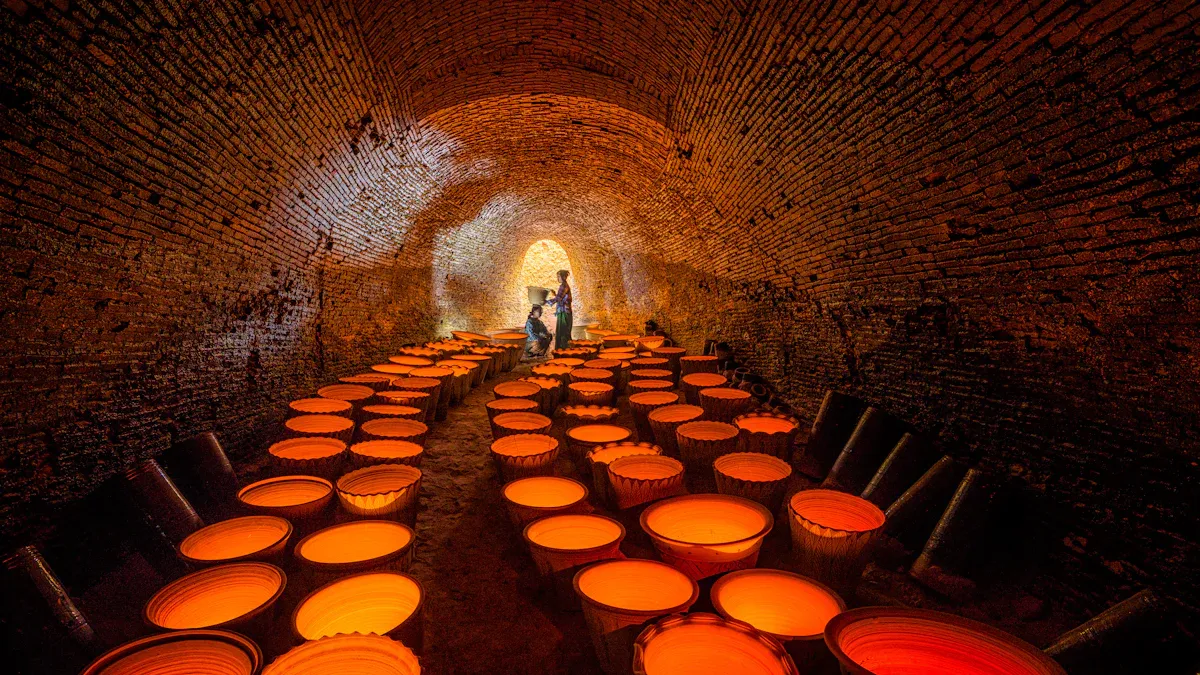
The Imperial Kilns started with a clear plan. Leaders wanted porcelain to be the best. Emperor Zhenzong gave Jingdezhen its name in the Song Dynasty. This tied the city to royal porcelain making. The city’s name and the kilns’ goal became linked. Later, the Fuliang Ceramics Bureau was made in the Yuan Dynasty. It watched over royal porcelain work. The kilns became more important in the Ming and Qing dynasties. They made porcelain only for the court.
Archaeologists found proof of how the kilns were set up.
The ‘Map of Jingdezhen’ from 1682 shows the kiln layout.
The ‘Illustration of the Imperial Kiln Factory’ from 1815 shows building details.
In 2014, digs found old workshops and kilns. This matched what history said.
The Imperial Kilns were different from other kiln places in China.
The court decided how the kilns looked and worked.
Other kilns used local ways and worked alone.
The Imperial Kilns had a system. They moved skilled workers to teach others.
Serving the Imperial Court
The Imperial Kilns made porcelain for the royal family and officials. The court asked for special designs and lots of pieces. Records show what types and how many were made for the palace.
Type of Porcelain | Quantity | Notes |
|---|---|---|
Various types | 60 types | Some copied older styles |
Dragon and phoenix designs | One big order from the palace in 1433 | |
Blue and white, red and white wares | N/A | The court liked these after 1402 |
The Imperial Kilns followed strict rules. They made pieces with dragon and phoenix designs. These showed power. The kilns also made blue and white wares. These became favorites with the court and later with people everywhere.
The Imperial Kilns helped Jingdezhen become famous. Their work set new levels for quality and beauty in porcelain.
Jingdezhen’s Rise as Porcelain Capital
Privileges and Resources
Imperial patronage gave Jingdezhen special help. The city got support from the royal court. This meant it could use the best materials. Workers were protected by the court. The Imperial Kilns had strict rules to keep quality high. Officials asked for lots of porcelain, so the kilns were always busy. The city got tax breaks and extra money. These benefits let Jingdezhen focus on making better porcelain.
Skilled Artisans and Materials
Jingdezhen had many skilled workers. The Imperial Kilns brought top potters, painters, and designers from all over China. These workers shared new ideas and skills. The city’s location was important too. Jingdezhen had lots of kaolinite and petuntse. These resources were great for making fine porcelain. Talented workers and good materials made Jingdezhen’s porcelain famous. Each generation learned from the last, making the city’s culture stronger.
Jingdezhen’s location gave it plenty of materials needed for porcelain, like kaolinite and petuntse. These materials were very important for making high-quality porcelain. This porcelain became popular, especially during imperial times. The mix of resources and culture helped Jingdezhen become a leader in porcelain making.
Influence of Ming Dynasty
The Ming Dynasty helped Jingdezhen grow. Leaders wanted the best porcelain for the court. They pushed for new ideas and better ways to make porcelain. The Imperial Kilns became places to test and improve methods. Many changes happened in the Ming period:
New technology was important for Jingdezhen’s porcelain industry.
Decal application and laser-etching made porcelain prettier and allowed more detailed designs.
3D printing changed how porcelain was made. It helped create complex pieces and kept traditional skills.
The Ming Dynasty’s focus on quality set new standards for Chinese art. Jingdezhen’s porcelain became known for excellence. The city’s success shaped porcelain making in China and the world.
Artistic and Technical Innovations
Evolution of Porcelain Techniques
Jingdezhen changed how people made porcelain over time. In the Yuan Dynasty, workers found kaolin clay. This helped them make hard porcelain instead of soft porcelain. The Ming Dynasty brought new ways to make blue and white porcelain. The Imperial Kilns made rules for how to make porcelain. In the Qing Dynasty, workers used enamel techniques. This made porcelain brighter and more colorful.
Making porcelain took many steps. Each step needed skill and care. The table below shows some important steps:
Procedure | Description |
|---|---|
Mining Stone and Preparing Clay | Workers found and got the raw materials ready. |
Ash Preparation and Glaze Mixing | They made glazes for the porcelain. |
Collecting Cobalt Blue Pigment | They got blue pigment for decoration. |
Washing and Refining Clay | They cleaned and shaped the clay. |
Repairing Moulds for Round Wares | They fixed molds for round items. |
Throwing Round Wares on Wheel | They shaped items on a potter’s wheel. |
Building Sculpted Wares by Hand | They made sculpted items by hand. |
Decorating Round Wares with Blue-and-White | They painted blue-and-white designs. |
Dipping and Spraying Glaze | They put glaze on the items. |
Firing and Unloading Kiln | They fired the porcelain to finish it. |
New Artistic Standards
The Imperial Kilns set new rules for art and design. In the Ming Dynasty, leaders wanted the best porcelain. They used cobalt blue from Persia to make bright blue designs. The kilns also used yellow pigment on top of the glaze. This made porcelain look even better. In the Qing Dynasty, artists used enamel colors. This let them paint detailed pictures. These changes made Jingdezhen porcelain famous for its beauty and skill.
The kilns had strict rules for design.
Artists learned new ways to paint and decorate.
Iconic Designs and Trends
Jingdezhen became famous for many designs. Blue and white porcelain started in the Yuan Dynasty. It had bold shapes and bright blue patterns. The Ming Dynasty made pieces like the “chicken cup.” They used one color or many colors. The Qing Dynasty added new enamel colors. This let artists make even more detailed work.
Blue and white porcelain became a symbol of Jingdezhen.
Wucai, a style with many colors, showed the city’s creativity.
Artisans made special pieces for other countries. They added European and Islamic designs.
Jingdezhen’s porcelain changed art around the world. The city’s artists showed great skill and new ideas in every piece.
Cultural Impact and Legacy
Influence on Chinese Art
Jingdezhen porcelain changed art in China and other places. Artists from different areas learned new ways to decorate from Jingdezhen. They mixed these ideas with their own styles. Many countries saw how beautiful Jingdezhen porcelain was and wanted to copy the designs.
Japanese artists used Jingdezhen decoration in their art. You can see this in bowls from the Qing dynasty.
Filipino ceramics have Chinese patterns. This shows there was early trade and sharing between China and the Philippines.
Japanese tea ceremonies in the Edo period used shapes and decorations from Jingdezhen.
These examples show Jingdezhen’s art spread far from China. Each place made the art their own, but Jingdezhen’s influence stayed strong.
Urban and Cultural Heritage
Jingdezhen’s city grew around making porcelain. Streets, workshops, and homes were built near the kilns. The Imperial Kilns helped shape how the city looked. Many families worked with porcelain for many years. Today, the Imperial Kiln Museum is a symbol of this history. The museum teaches people about old ways to make porcelain and the city’s place in art.
The museum keeps Jingdezhen’s spirit alive. Visitors can see old kilns, tools, and finished porcelain. This helps everyone remember the city’s long history.
Lasting Global Reputation
Jingdezhen porcelain became famous all over the world. The city made lots of porcelain for export before modern factories existed. Artists from Europe, Japan, and the Americas come to Jingdezhen to learn new skills. They bring new ideas and help the city stay important for ceramic art.
Influence | Origin | Description |
|---|---|---|
Nara Sancai | Japan | Japanese craftsmen used Jingdezhen skills to make tricolor pottery. |
Glost-firing | Egypt | Egyptian workers copied glost-firing from Jingdezhen. |
Italian Porcelain | Italy | Italian artists learned Chinese porcelain ways in the 1400s. |
Today, Jingdezhen keeps changing. New artists try modern styles and new firing methods. The city is still a leader in porcelain because it uses both old and new ideas.
Imperial kilns made Jingdezhen the porcelain capital. They also changed Chinese art for good. The royal court helped the city make blue-and-white porcelain. This kind of porcelain became famous everywhere. The city set new rules for art and design. Today, museums and shows remember this history. Artists in Jingdezhen still use old ways to make porcelain. They also try new ideas in their work. People all over the world love Jingdezhen’s porcelain.
Jingdezhen’s kilns changed art and culture everywhere.
Modern artists respect this tradition and add their own ideas.
FAQ
What made Jingdezhen porcelain special?
Jingdezhen porcelain was different because it used great materials. The workers were very skilled. The Imperial Kilns made sure everything was high quality. Artists tried new ways and used bright colors. People everywhere liked how pretty and well-made the porcelain was.
Why did emperors choose Jingdezhen for the Imperial Kilns?
Emperors chose Jingdezhen because it had the best clay. There were many talented workers in the city. The location made it simple to get what they needed. The Imperial Kilns could make a lot of good porcelain for the royal family.
How did Jingdezhen porcelain influence other countries?
Many places thought Jingdezhen porcelain was amazing. Artists from Japan, Europe, and the Middle East learned new ways from Jingdezhen. They used these ideas in their own art and pottery.
What is the Imperial Kiln Museum?
The Imperial Kiln Museum is in Jingdezhen. It tells the story of how porcelain was made. People can look at old kilns, tools, and pretty porcelain pieces. The museum helps everyone learn about the city’s history.
Can people still visit working kilns in Jingdezhen today?
Yes, people can see both new and old kilns in Jingdezhen. Many artists still make porcelain by hand. Some workshops let visitors watch or even try making porcelain.
