


The Ming Dynasty is known as the golden age of blue-and-white porcelain. Artists and workers made great progress in how they made porcelain and how it looked. Jingdezhen became well-known for its porcelain. People from China and other countries noticed it. Many things helped this time become special:
The Imperial Porcelain Factory in Jingdezhen made sure quality was very high.
New kiln technology helped artists make better designs.
Trade routes sent Ming porcelain to Europe, so it became valuable everywhere.
Today, brands like clayesouk keep Jingdezhen’s tradition alive. They mix old styles with new designs.
Key Takeaways
The Ming Dynasty was the best time for blue-and-white porcelain. Jingdezhen became the main place for making great porcelain. New kiln ideas and cobalt blue made Ming porcelain look brighter and prettier. This changed ceramics all over the world. The emperor helped porcelain makers a lot. They checked the quality to make sure only the best was made. Today, brands like clayesouk keep Jingdezhen’s tradition alive. They mix old skills with new designs. Ming blue-and-white porcelain is still a sign of culture. It inspires artists and collectors everywhere.
Ming Dynasty Origins and Blue-and-White Porcelain
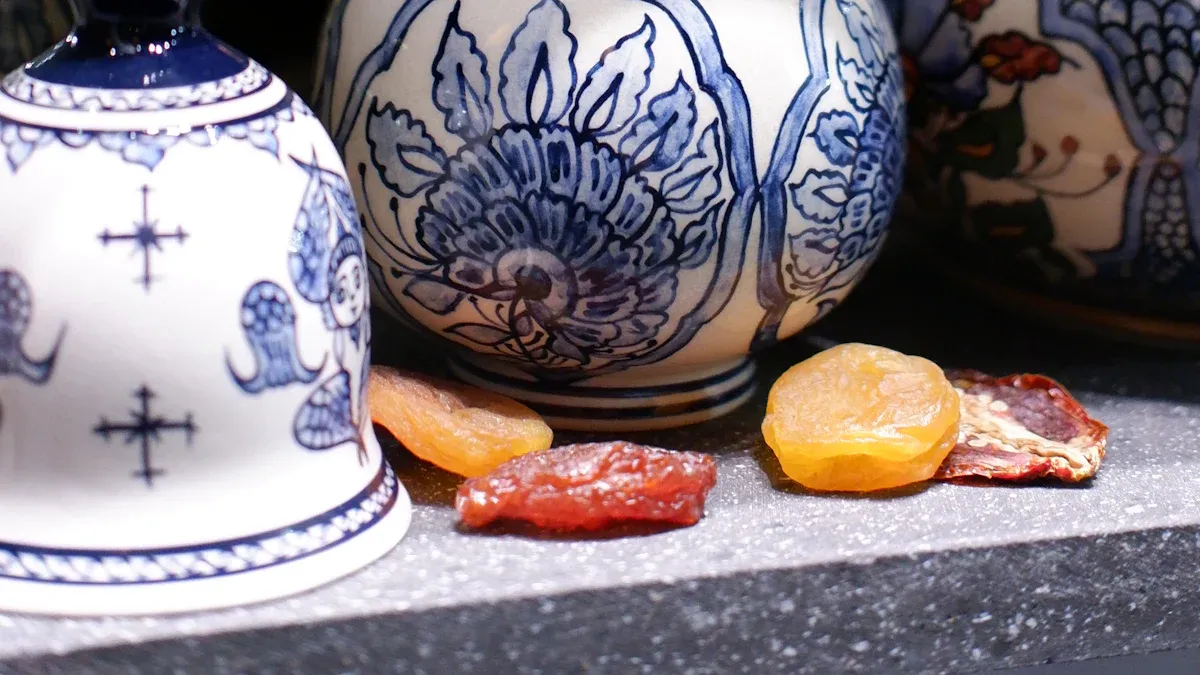
Early Development of Blue and White Porcelain
Blue-and-white porcelain became well-known in the Ming Dynasty. This porcelain used a blue color called cobalt. At first, Persian traders brought cobalt to China. Later, miners in China found their own cobalt. This made the color better and brighter. Jingdezhen was very important for making these items. Workers there used new kiln tools and got better at their work.
Cobalt blue spread fast during the Ming period. This made the porcelain look brighter and prettier.
Artists began using more Chinese patterns, like flowers and lucky signs.
The imperial kiln in Jingdezhen made top-quality pieces for the royal family and people in other countries.
Blue-and-white porcelain became liked in many places. Potters in other countries tried to copy it and made their own changes.
Archaeologists learned that making lots of blue-and-white porcelain started in the early 1300s. Chinese skills and Islamic trade mixed to make this new art. Ceramics found in Malacca City show how these designs moved and changed in different cultures. The Tang dynasty used a little cobalt, but the Ming Dynasty used it a lot. This helped blue-and-white porcelain become famous around the world.
Influence of Previous Dynasties
Blue-and-white porcelain started in the Tang dynasty. The Tang period used blue decoration, but only a little. The Song and Yuan dynasties made the glaze and firing better. For example, late Song potters added more potassium to the glaze. Yuan Dynasty workers fired their ceramics hotter, making them stronger and less see-through.
Dynasty | Key Contribution |
|---|---|
Tang | First use of blue decoration on porcelain |
Song | Improved glaze recipes and firing techniques |
Yuan | Higher firing temperatures and global trade links |
Ming | Perfected blue-and-white porcelain and unique motifs |
In early Ming times, emperors like Yongle and Xuande helped the arts. They wanted more cobalt-blue designs under clear glaze. Early Ming art showed Mongol ideas from the Yuan dynasty. Later, Han Chinese styles became more common. This made Ming blue-and-white porcelain special. This tradition shaped Chinese blue and white porcelain and inspired artists everywhere.
Jingdezhen, Imperial Patronage, and clayesouk
Jingdezhen: Porcelain Capital of the World
Jingdezhen is the most famous city for porcelain in China. People call it the “Porcelain Capital of the World” because it has made porcelain for a long time. The city is known for making very good porcelain. During the Ming dynasty, Jingdezhen became the main place for blue-and-white porcelain. The city got a strong name for its skilled workers and new ways of making things. By 1402, Jingdezhen had twelve imperial kilns. These kilns made lots of porcelain for the palace and for trade.
The table below shows why Jingdezhen got its name:
Evidence Description | Details |
|---|---|
High-quality porcelain production process | Jingdezhen set up a way to make great porcelain that people all over the world noticed. |
Imperial patronage and large orders | In 1433, the palace asked for 443,500 pieces of porcelain, showing how much they could make. |
Role in international trade and brand recognition | Porcelain from Jingdezhen was traded easily, and its name became known everywhere. |
Control of official kilns by the emperor | The emperor was in charge of the kilns, and they made porcelain for the court. |
Jingdezhen porcelain went to many countries. People in Europe and Asia liked how pretty and strong it was. Workers in the city worked in teams, and each team had a special job. This teamwork helped Jingdezhen make enough blue and white porcelain for everyone who wanted it.
Imperial Kilns and Court Commissions
The imperial kilns in Jingdezhen were very important for blue-and-white porcelain. The emperor was in charge of these kilns and asked for special pieces for the court. In 1278, the Imperial Porcelain Factory started to make things for the palace. By early Ming times, the court set up twelve kilns to make porcelain for the emperor and his family. In 1433, the palace wanted 443,500 pieces in one order. This big order showed how much the imperial family needed Jingdezhen.
Workers in Jingdezhen had to follow strict rules to make sure every piece was good. The Fuliang Porcelain Office picked the best workers for these jobs. The Tao Ye Tu, a famous book, talked about the careful steps used to make imperial blue-and-white porcelain. The emperor’s help made Jingdezhen better at making porcelain and creating nice designs.
Here is a table that shows how the imperial kilns got better:
Evidence Description | Impact on Quality and Quantity |
|---|---|
Re-organization of the imperial kiln in 1682 under Zang Yingxuan | They stopped using forced labor and paid workers, so the porcelain got better and they made more. |
The meticulous documentation of porcelain-making techniques in the Tao Ye Tu | The book set high standards and made sure skilled people watched the work. |
Transition to a paid craftsman system under the Kangxi Emperor | Paying workers made the porcelain better and let them make more. |
Direct involvement of Tang Ying, the kiln supervisor, in the Tao Ye Tu | Tang Ying wrote about the steps, which helped control quality. |
Jingdezhen and the imperial court worked closely together. This helped blue and white porcelain become even better. The city became famous for its imperial porcelain, and people everywhere wanted it.
clayesouk: Preserving Traditional Craftsmanship
clayesouk keeps the Jingdezhen porcelain tradition alive today. The brand’s story starts in Jingdezhen, where people have made ceramics for over 1,700 years. During the Ming dynasty, Jingdezhen was the center for imperial blue-and-white porcelain. The imperial court was in charge of the kilns and wanted the best pieces. This history still shapes how workers make porcelain now.
clayesouk’s workers use the same care and skill as people did in Ming times. Every ceramic cup is made by hand, so you can see the work and history in each one. The brand cares about old ways of making things and personal art. Workers with more than ten years of experience make each piece special. They mix old skills with new ideas, so their products are good for today but still honor the past.
clayesouk makes things for people who like nice living, tea, and coffee. Their handmade ceramics are in homes, small hotels, and tea shops. Each piece tells the story of Jingdezhen and the beauty of blue-and-white porcelain. By keeping these old ways, clayesouk helps people remember how great Ming porcelain and Chinese blue and white porcelain are.
Technological Advances in Blue-and-White Porcelain
Kiln Innovations and Cobalt Blue Techniques
In the Ming dynasty, artists changed how they made blue-and-white porcelain. They got better materials and tools. Cobalt blue pigment was used a lot during this time. Artists learned to make the blue color look deeper and brighter. Miners in China found potangqing cobalt. This meant workers did not need Persian Blue anymore.
Jingdezhen led these new ideas. The kilns in Jingdezhen changed a lot. Workers started using egg-shaped kilns. These kilns mixed the best parts of Dragon and U-shaped kilns. The new shape helped control heat better. It also made firing more even. Because of this, porcelain got stronger and colors looked nicer.
Cobalt blue pigment made blue-and-white porcelain well-known.
Potangqing cobalt let artists control how their work looked.
Egg-shaped kilns were a big step in kiln technology in the Ming dynasty.
Perfection of Imperial Blue-and-White Porcelain
The imperial kilns in Jingdezhen had very high standards. During the Yongle and Xuande times, workers followed strict rules. They threw away any piece that was not perfect. This careful work made sure only the best porcelain went to the court. The focus on detail set new goals for beauty and skill. Later dynasties copied these high standards.
The table below shows how making perfect imperial porcelain changed ceramics:
Evidence Description | Impact on Ceramic Production |
|---|---|
The ‘heaped and piled’ effect with cobalt made strong blue and black colors on white porcelain. | This made imperial porcelain look better and set new rules for future potters. |
Better kiln work meant fewer mistakes and smoother glazes. | These changes made Xuande wares famous for quality and became a model for later ceramics. |
Imperial porcelain from the Ming dynasty became a guide for later artists. The focus on quality and new ideas helped blue-and-white porcelain become a symbol of Chinese art. These changes made imperial ceramics some of the most loved in the world.
Global Trade and Chinese Blue and White Porcelain

Maritime Silk Road and International Demand
The Maritime Silk Road helped blue-and-white porcelain travel far from China. Merchants left ports like Jingdezhen with ships full of porcelain. They sailed to busy places like Malacca. These ports linked China to Southeast Asia and Europe. People in these places thought porcelain showed wealth and high status.
More people wanted blue and white porcelain as ships traveled.
Trading centers helped buyers from many countries get porcelain.
In the 1500s, Portuguese traders became very important. They found new sea paths and built trading posts like Macao. This helped move porcelain to Europe and Asia.
Shipwrecks such as the Nanhai One and Geldermalsen show how much porcelain was shipped. The Nanhai One had over 13,000 ceramics. The Geldermalsen carried more than 239,000 pieces. These shipwrecks help historians see how big the porcelain trade was.
Note: Blue-and-white porcelain started to be sold to other countries in the Yuan dynasty. The Ming dynasty made this trade even bigger. This helped Chinese blue and white porcelain become famous everywhere.
Influence on European and World Ceramics
Blue and white porcelain changed how people made ceramics in many places. Islamic potters started using blue designs after seeing Chinese porcelain. European potters also tried to copy the look and ways of making it. They wanted to make fancy items too, but their ceramics were not as good as China’s imperial porcelain.
The table below shows how different places changed their ceramic styles:
Region | Influence on Ceramic Style |
|---|---|
Europe | Artists used blue and white designs from Ming porcelain. |
Delft, Netherlands | Factories made lots of blue and white ceramics like Chinese export porcelain. |
Worcester, England | Early makers used Oriental blue and white styles. This led to Chinoiserie trends. |
During the Renaissance, blue and white porcelain became a fancy item in Europe. Rich families collected these pieces to show off their taste and wealth. The art of Ming ceramics still inspires artists and collectors today.
Artistic Styles and Lasting Legacy
Iconic Designs and Masterpieces
The Ming Dynasty was a special time for blue and white porcelain. Artists in Jingdezhen made new kinds of porcelain that amazed people. Early Ming porcelain, especially from the Yongle and Xuande times, was the best in both quality and style. These pieces had many different patterns and shapes. The Scrolling Peony Pattern Plum Vase became a famous symbol of beauty and skill. Imperial porcelain from this time showed bright cobalt blue under a clear glaze. This made each piece look fancy and different from others.
Iconic Design | Description |
|---|---|
Scrolling Peony Pattern Plum Vase | A well-known example of Ming Dynasty blue and white porcelain. |
Porcelain from Yongle and Xuande reigns | Seen as the best Chinese blue and white porcelain, famous for its fine quality and beautiful style. |
Jingdezhen made lots of great ceramics. The city’s kilns became known for careful work. Today, collectors and museums love Ming porcelain for its history and beauty.
Modern Legacy: clayesouk and Contemporary Artistry
Ming blue and white porcelain still inspires artists today. clayesouk uses old patterns and ideas from classic ceramics. Artists use blue and white colors, which are important in Ming style, to make art that people everywhere like. The brand’s workers mix old Ming Dynasty skills with new art styles. They take their time and use their hands to show their talent and let their ideas grow.
clayesouk mixes old ways of making things with new ideas.
New pieces show both old traditions and new ideas, so collectors and fans from all over the world enjoy them.
Ceramics from clayesouk show that the art of imperial porcelain is still alive. The brand works hard to keep old skills alive, so every piece has the spirit of Jingdezhen and the Ming Dynasty. Modern ceramics respect the past but also try new things, so this art is still important today.
The Ming Dynasty was an important time for blue and white porcelain. Experts say Ming artists used porcelain to tell stories and share ideas. They mixed Chinese and Islamic traditions in their work. This time changed culture and affected art and daily life. Collectors and museums see each piece as a sign of cultural history. Ming porcelain still inspires people today. It shows how culture and creativity can last for a long time.
FAQ
What makes Ming Dynasty blue and white porcelain special?
Ming Dynasty blue and white porcelain is easy to spot. It has bright cobalt blue pictures and a smooth white surface. The patterns are very detailed. Artists in Jingdezhen used new kiln tools and good materials. These pieces became well-known for their beauty and skill.
Why is Jingdezhen called the “Porcelain Capital of the World”?
How does clayesouk keep traditional porcelain-making alive?
clayesouk’s workers use old ways from Jingdezhen. They shape and paint each cup by hand. The brand cares about history and personal art. Their work links the past with life today.
Where can people see Ming blue and white porcelain today?
Museums all over the world show Ming blue and white porcelain. People can visit the Palace Museum in Beijing, the British Museum in London, or the Metropolitan Museum of Art in New York to see these special pieces.
