


Chinese porcelain made people excited in many countries. The beauty and worth of Chinese porcelain drew merchants and collectors from far away. Artisans in China made porcelain with great skill and new ideas. Traders took Chinese ceramic goods on world routes. This connected different cultures and economies. Today, brands like clayesouk keep this tradition going. They share handmade porcelain that shows many years of art.
Key Takeaways
Chinese porcelain started in Jingdezhen. Artisans there made special ways to create ceramics. These ceramics were pretty and tough.
Blue-and-white ceramics became liked all over the world. They changed art and culture in Europe and the Middle East.
People traded porcelain on the Silk Road and by sea. This trade brought cultures together and helped many economies grow.
Export porcelain showed that people were rich and important. Wealthy families put it in their homes to show off.
Today, brands like clayesouk keep Chinese porcelain’s story alive. They mix old skills with new styles.
Chinese Porcelain Origins and Innovation
Jingdezhen and the Rise of Porcelain
Jingdezhen is where chinese porcelain began. The city has made ceramics for a very long time. Archaeologists found old kilns at the Luomaqiao site. These kilns show that people made ceramics in Jingdezhen during the Southern Song and early Ming dynasties. Yuan dynasty blue-and-white ceramics were also found there. This proves Jingdezhen was important for porcelain. The city became well-known for making great ceramics. Artisans learned to use special clay and new firing ways. They made tang-dynasty porcelains that surprised many people. The tang dynasty changed how ceramics were made. Jingdezhen’s kilns made ceramics that were both strong and pretty. The city’s history and ceramic making connects to brands like clayesouk. Clayesouk still makes handmade ceramic cups in Jingdezhen today.
Jingdezhen’s story continues with modern ceramic brands. Clayesouk’s artisans use skills taught for hundreds of years. Each cup shows the city’s long ceramics history.
Technological Advances in Porcelain Making
Chinese artisans in Jingdezhen changed ceramics for everyone. They came up with new ways and styles. In the Yuan dynasty, they made blue-and-white and underglaze red decorations. In the Qing dynasty, they made glazes and enamels even better. These changes made porcelain more creative and strong. The city became famous all over the world for its ceramics. Ming dynasty traders sold Jingdezhen ceramics in Asia and Europe. Chinese porcelain is special because of its raw materials, glazing, and high firing heat. These things make porcelain both strong and nice to look at. The story of ceramics shows how Jingdezhen led the way. Tang-dynasty porcelains and new ideas changed ceramics everywhere. The city’s ways of making ceramics spread to many countries. Clayesouk keeps this tradition by mixing old ways with new designs.
Jingdezhen’s kilns made ceramics that were the best.
Chinese porcelain making inspired artists and collectors around the world.
Clayesouk keeps Jingdezhen’s spirit alive in every handmade ceramic cup.
Blue-and-White and Export Porcelain
The Global Appeal of Blue-and-White Ceramics
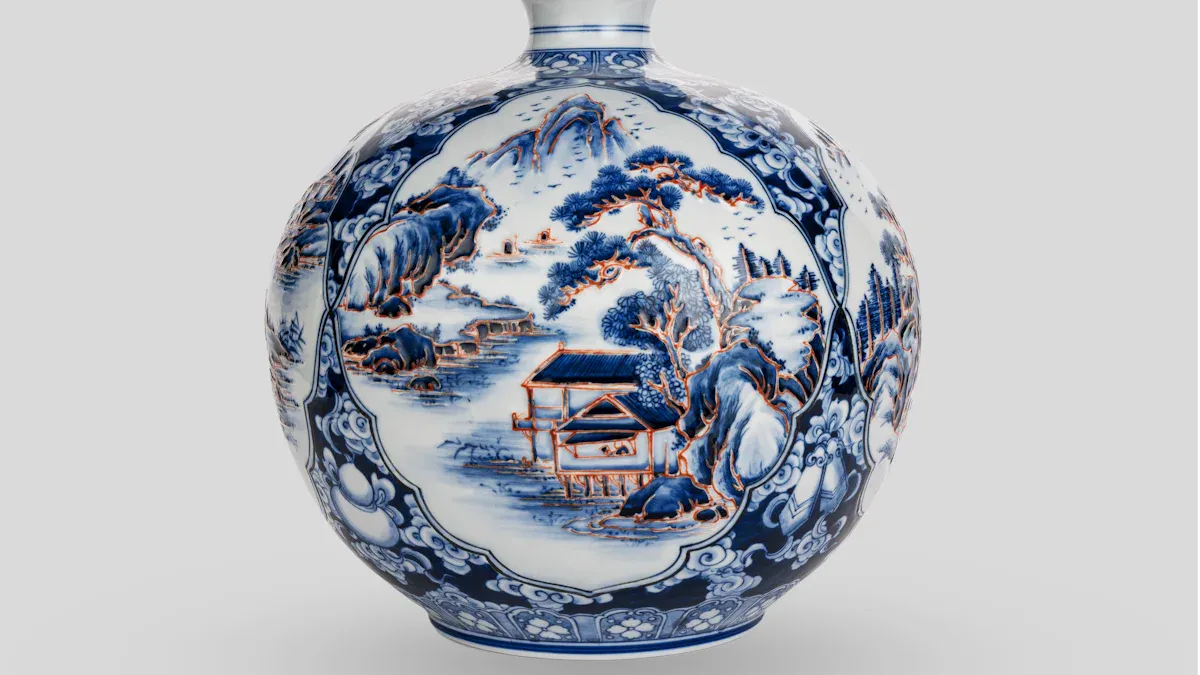
Blue-and-white ceramics became popular in many countries. Artisans in Jingdezhen started making them in the 1300s. They used cobalt from Persia to make bright blue patterns. These designs stood out on white porcelain. Traders took blue-and-white ceramics to faraway places. Archaeologists found pieces on the island of Hormuz in Iran. This shows people liked blue-and-white ceramics outside China. Jingdezhen made lots of blue-and-white ceramics to meet demand in Southwest Asia. Potters in other countries tried to copy the style. They added their own ideas, but the Chinese look stayed strong.
“Chinese blue-and-white porcelain changed ceramic art around the world from the 6th to the 18th century. Over 70 million porcelain pieces went to Europe in the 1600s and 1700s. Porcelain helped people from different places meet and share ideas. The text says porcelain shows how early global culture grew through trade and art.”
Blue-and-white ceramics changed art and taste in many places. People in Europe and the Middle East wanted these beautiful objects. Blue-and-white became a sign of style and culture.
Chinese Export Porcelain in World Trade
Chinese export porcelain traveled across seas and lands. Merchants shipped export porcelain to Europe and America. Cargo lists from the Dutch East India Company showed many kinds of export porcelain. Archaeologists found export porcelain in shipwrecks and old trading posts. These finds show people wanted export porcelain everywhere.
Researchers looked at cargo records and saw many export porcelain items sent to Europe.
Archaeologists found export porcelain in the Americas and Africa.
Shipwrecks had export porcelain, showing its part in world trade.
Export porcelain became a sign of wealth and high status. Rich families in Europe showed off export porcelain in their homes. Some people ordered special export porcelain with family crests. Even when prices dropped, export porcelain still looked fancy.
Evidence | Explanation |
|---|---|
In the 1600s and 1700s, Chinese porcelain became part of British life. | This shows porcelain changed from a luxury to a common sign of social status as it became part of daily life. |
From the late 1600s, people started ordering special wares. | Armorial wares show people wanted personalized and special porcelain, making it even more of a status symbol. |
Even when prices went down, Asian porcelainware stayed fancy. | This means porcelain was still linked to wealth and style, even as more people could buy it. |
Today, brands like clayesouk keep the story of export porcelain alive. Artisans in Jingdezhen still make blue-and-white ceramics by hand. Clayesouk brings export porcelain to people who love art and history. Each piece connects the past with today, showing export porcelain’s lasting power.
Trade Routes and China’s Global Reach
Overland Silk Road Connections
The Silk Road was very important for china trade. Merchants crossed deserts and mountains to sell chinese porcelain. They brought it to Central Asia and other far places. During the Han Dynasty, people started exporting colorful porcelain. Traders sent these items west, and collectors loved how they looked. More porcelain left China during the Tang and Yuan dynasties. People in many countries wanted these nice objects. Porcelain traveled with tea, silk, and other chinese goods. The Silk Road helped China connect with faraway lands. Trade with china became part of daily life for many people.
The Silk Road took porcelain, tea, and silk to Central Asia and Europe.
Porcelain showed wealth and good taste in many places.
Marco Polo wrote about porcelain after his trips to china.
Maritime Routes and Shipwreck Discoveries
Sea routes made china trade reach even more places. The Maritime Silk Road was the first big sea-trading route in Chinese history. Ships full of porcelain left Chinese ports for Southeast Asia, the Middle East, and Europe. Porcelain was both cargo and ballast, which shows it was very important. Sending porcelain around the world changed art and daily life in many places.
The Maritime Silk Road helped spread blue-and-white ceramics everywhere.
Archaeologists found shipwrecks in the Philippines with Chinese porcelain from the 1400s.
Some porcelain has Islamic designs, which shows people traded ideas through trade with china.
New sea routes in the Ming Dynasty made china trade bigger and made porcelain a sign of wealth.
Porcelain trade changed how people made and used things. People in Europe and the Americas wanted chinese porcelain, so trade networks grew. Porcelain became a key part of early world trade. Today, the story of china trade still inspires collectors and brands everywhere.
Porcelain’s Cultural and Economic Impact
Influence on Art and Daily Life
Chinese porcelain changed art and daily life in many places. Artists in Europe and the Middle East liked how porcelain looked and felt. They started using new shapes and patterns from china. People put porcelain in their homes, churches, and palaces. They used it for tea, coffee, and special events. Porcelain was shiny and white, so it stood out from other things.
Porcelain also changed religious and special ceremonies. Spanish Talavera ceramics used Chinese designs. Spanish artisans mixed these designs with their own styles. This mix made local art different and changed some celebrations.
Spanish Talavera ceramics have Chinese designs in their decorations.
Local artists made Chinese designs into new art.
These changes shaped religious and special events in Spain.
When porcelain came to Europe, it brought new ideas about things people owned. People thought porcelain showed they were rich or important. The white color of porcelain meant something special. Porcelain was not just a dish or cup. It became a sign of good taste and high status.
Aspect | Description |
|---|---|
Materiality | Porcelain changed how people thought about beauty and social rank in Europe. |
Hard-paste Porcelain | This kind of porcelain was shiny and see-through, which made it different from soft-paste porcelain and changed how people valued it. |
Cultural Impact | Porcelain made people in Europe see themselves and their culture in new ways, and it became a sign of being part of the upper class. |
Racial Dimension | The white color of porcelain showed what people in Europe thought was important, and it changed how they saw themselves and others. |
Historical Significance | Bringing Chinese porcelain to Europe and making it there changed not just pottery but also European culture. |
Porcelain changed more than just art. People showed off porcelain as decoration. Rich families put porcelain in gold or silver frames. The Medici family in Florence collected porcelain and paid for workshops to copy it. Porcelain became part of history and everyday life.
Shaping Global Commerce and Local Industries
Porcelain was important in world trade. Merchants sold porcelain across many lands. The East India Company sent porcelain to Europe and America. Selling porcelain helped China’s economy during the Ming and Qing dynasties. Traders got rich and famous by selling porcelain. Porcelain became something people wanted everywhere.
The East India Company grew huge by trading porcelain.
Merchants like Harry Gough got rich from selling porcelain.
Porcelain showed who was rich and powerful. Chinese rulers ordered special pieces for their courts. Merchants and kings along sea routes wanted porcelain. European traders brought porcelain to rich homes. People loved porcelain because it was rare and beautiful.
Time Period | Key Events | Impact on Status Symbol |
|---|---|---|
Early Days | Porcelain made for Chinese rulers | |
700s | Wanted on the Maritime Silk Road | More demand from merchants and kings |
1500s-1600s | European traders made new trade routes | Porcelain became common in rich European homes |
Porcelain’s spread made people try to copy it. Potters in Europe and the Middle East tried to make porcelain like the Chinese. They used blue pigment from Persia. Some pieces had Arabic words and Islamic designs. Local workshops changed porcelain to fit what people wanted.
Blue pigment from Persia was used in porcelain.
Some pieces had Arabic words and Islamic art.
Workshops changed porcelain for different places.
Porcelain trade changed how things were made. European factories started making their own porcelain. They learned from Chinese ways. Porcelain made new markets and new ideas.
Brands like clayesouk keep this going. Clayesouk’s workers in Jingdezhen use old skills. They keep old ways alive and make handmade ceramics for people today. Each piece shows the care of the maker and the heat of the kiln. Clayesouk links the past with people who love nice things now.
Clayesouk’s goal is to respect porcelain’s history. The brand mixes old art with new looks, so every cup is useful and also a piece of art.
Chinese porcelain helped people from faraway places connect. Trade networks made this happen and still affect business today. Ming Dynasty ceramics were beautiful and set new art rules. Potters in Europe, Turkey, and Japan learned from these ceramics. Zheng He traveled far and opened new trade paths. He also helped people share their cultures. Museums like the Benaki Museum and Jamestown Settlement show this history. Brands like clayesouk keep old ways alive. They teach how to make ceramics, change designs, and use earth-friendly materials. Handmade ceramics are strong and pretty. People use them every day because they last and look nice.
Today’s ceramic brands mix old and new styles.
People like real and meaningful designs in handmade ceramics.
FAQ
What makes Chinese porcelain special?
Chinese porcelain is strong and beautiful. It has bright colors that stand out. Artisans use fine clay and high heat to make it. These pieces last a long time. Many people like the smooth surfaces and detailed designs.
How did porcelain influence world trade?
Porcelain moved on the Silk Road and by sea. Merchants took it to Europe, Asia, and Africa. People traded porcelain for things like spices and gold. This helped different cultures meet and share goods.
Why do collectors value blue-and-white ceramics?
Collectors like blue-and-white ceramics for their patterns and history. The bright blue color comes from cobalt. Many museums show these pieces as great examples of art.
How does clayesouk keep traditional craftsmanship alive?
Clayesouk’s artisans learn skills from older generations. They shape and paint each cup by hand. The brand mixes old ways with new styles to make art for daily use.
Where can people buy handmade porcelain from Jingdezhen?
People can go to clayesouk’s website to buy handmade porcelain. The site has many ceramic cups and mugs. Customers can pick designs they like best.
