


You may not know there are many types of Chinese tea. Green, White, Yellow, Oolong, Black, and Pu’er are all different. Each one has its own special taste. If you use the right teaware, like handmade ceramic cups from clayesouk, you can taste the difference. Do you want to see them all quickly? Look at the quick guide below!
Key Takeaways
There are six main types of Chinese tea. These are Green, White, Yellow, Oolong, Black, and Pu’er. Each type tastes different and has its own story.
Brewing tea the right way makes it taste better. Use the correct water heat and steep time for each tea. This helps you get the best flavor.
Handmade ceramic cups from clayesouk make tea drinking nicer. They keep your tea hot and help the smell and color stand out.
You can use tea leaves more than once. Each time you steep them, you get new tastes. This makes drinking tea more fun.
Storing tea the right way is important. Put it in a container that closes tight. Keep it away from light and strong smells to keep it fresh.
Types of Chinese Tea
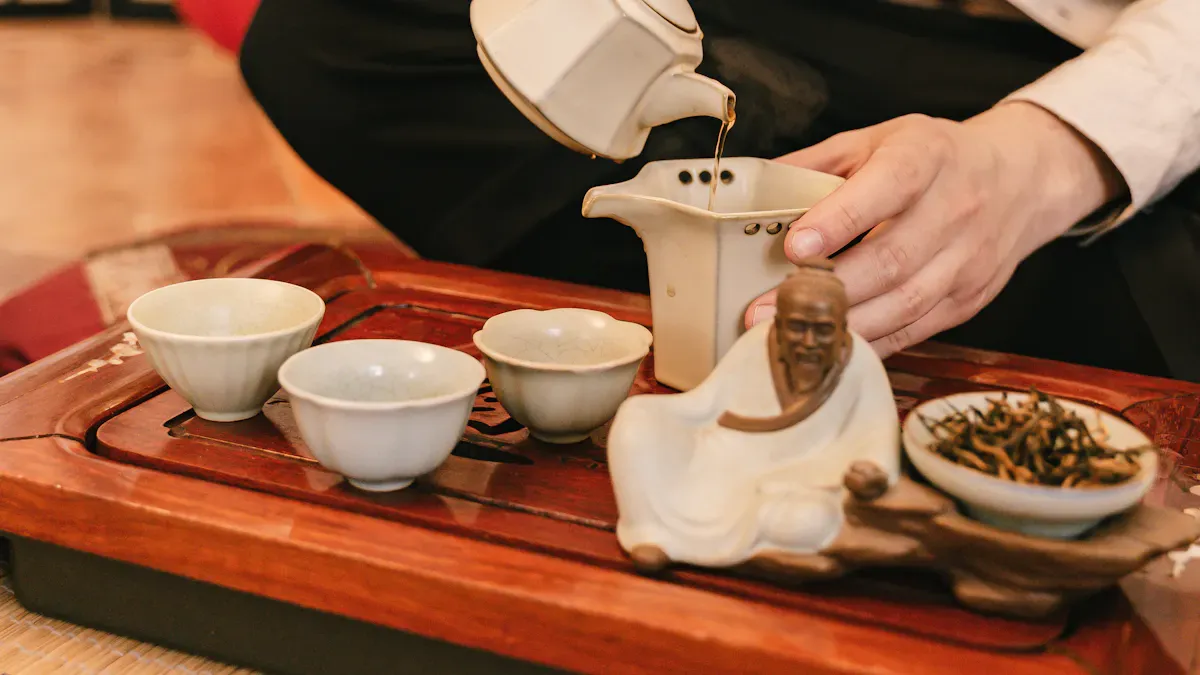
Overview of Chinese Tea Types
All six types of chinese tea come from Camellia sinensis. What makes each one different is how people treat the leaves. These teas are important in Chinese history and culture. Each type has its own story and meaning.
Here’s a quick look at the six main types:
Tea Type | Historical Origin | Cultural Significance |
|---|---|---|
Green Tea | Ancient China, earliest form | Stands for freshness and purity; enjoyed daily for health |
White Tea | Made from young buds, ancient | Known for delicacy and natural taste |
Yellow Tea | Rare, unique process | Symbolizes mellow and refined taste |
Oolong Tea | Ming & Qing dynasties | Linked to artful tea making and scholar culture |
Black Tea | Ming & Qing dynasties | Important in trade, shows richness and boldness |
Pu’er Tea | Southwestern China | Connected to aging, rituals, and longevity |
Did you know? Shen Nong found tea in 2737 BCE. Over time, tea became a sign of harmony and respect in China.
How Types Differ by Processing
The biggest difference is how people handle the leaves. Each way brings out new flavors, colors, and smells.
Green Tea: People stop oxidation fast by steaming or pan-firing. This keeps the tea fresh and green.
White Tea: The leaves dry on their own with little work. This gives a light and sweet taste.
Yellow Tea: Makers use a “smothering” step. This makes the tea golden and mellow.
Oolong Tea: The leaves are bruised and partly oxidized. This gives many flavors, from floral to roasted.
Black Tea: The leaves are fully oxidized. You get a deep color and bold taste.
Pu’er Tea: This tea is fermented and aged. It can taste earthy and rich, and some people collect it like wine.
Tea Type | |
|---|---|
Green Tea | Least oxidized; steamed or pan-fired |
White Tea | Lightly processed; air-dried |
Yellow Tea | Partially oxidized; smothered for color and aroma |
Oolong Tea | Semi-oxidized; leaves are bruised |
Black Tea | Fully oxidized; withered, rolled, dried |
Pu’er Tea | Fermented and aged; can be raw or ripened |
You can see that how tea is made changes everything. It changes how it looks and tastes. This is why trying different types is so much fun!
Green Tea Guide
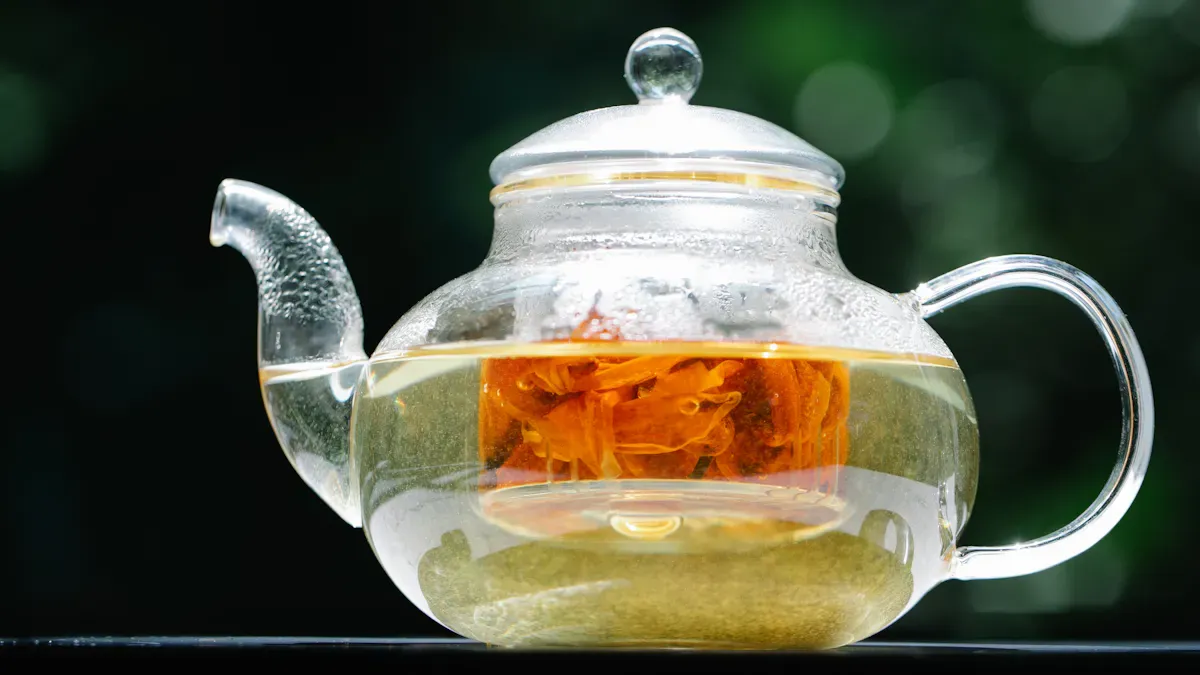
Green Tea Features
You might notice that green tea stands out from other Chinese teas. It keeps its fresh, grassy color because people stop the leaves from oxidizing right away. This tea tastes light and mellow. Some types, like Huangjin green tea, have a special aroma. You may smell hints of flowers or even a sweet, nutty scent. The taste feels smooth and gentle on your tongue. This comes from a balance of amino acids and tea polyphenols. Every sip gives you a clean, refreshing feeling.
Green tea has a bright, clear color.
The flavor can be floral, nutty, or grassy.
It feels smooth and not too strong.
The aroma comes from special compounds like linalool.
Brewing Green Tea
You want to get the best taste from your green tea. The right steps make a big difference. Here’s a quick guide:
Aspect | Recommendation |
|---|---|
Water Temperature | 175-185°F (80-85°C) |
Steeping Time | 2-3 minutes |
Tea-to-Water Ratio | 1 tsp (≈2 g) per 8 oz cup |
Tip: Use filtered or spring water for a pure taste.
Here are some common mistakes and how to avoid them:
Don’t use boiling water. Hot water can make green tea bitter.
Don’t steep for too long. Two to three minutes is enough.
Measure your tea. Use one teaspoon for each cup.
Choose fresh, high-quality green tea.
Avoid squeezing the leaves after steeping.
Try cold brewing if you want a softer taste.
If you follow these steps, your brew will taste fresh and smooth every time.
Enjoying Green Tea with clayesouk Ceramics
Drinking green tea feels special when you use the right cup. Handmade ceramic cups from clayesouk keep the heat just right. The smooth glaze lets you enjoy the color and aroma. Each cup feels good in your hand. You can taste the care and tradition in every sip. When you use a clayesouk cup, you turn a simple drink into a moment of art and comfort.
White, Yellow, and Oolong Tea
White Tea Essentials
You might find white tea to be the gentlest of all Chinese tea types. People make it from young buds and leaves. The process uses very little handling. This keeps the tea light and mellow. You can taste a soft sweetness and a smooth finish. Many people love white tea in summer because it helps cool you down.
Here are some reasons why you might want to drink white tea:
It has a mild and mellow taste.
It helps clear heat and reduce fever.
Drinking it for a long time can improve eyesight.
It has detoxifying and anti-inflammatory properties.
Some studies say it may help prevent heatstroke and even lower cancer risk.
Brewing White Tea
You want to get the best flavor from your white tea. Use water that is not too hot. Let the leaves steep for a few minutes. Here is a simple guide:
Tea Type | Amount per 8oz | Water Temp (°F/°C) | Steep Time (min) |
|---|---|---|---|
White | 2g (1 tsp) | 160–185°F / 70–85°C | 2–5 |
Tip: Try using a handmade ceramic cup from clayesouk. The smooth surface keeps the taste pure and lets you enjoy the color of the tea.
Yellow Tea Overview
Yellow tea is rare and special. People use a unique process called “sealed yellowing.” They wrap the leaves and let them gently steam. This step gives yellow tea its golden color and smooth taste. You will notice it tastes less grassy than green tea. It feels mellow and has a sweet, corn-like finish.
Aspect | Yellow Tea |
|---|---|
Processing | Involves ‘sealed yellowing’ where leaves are wrapped to promote oxidation, differing from green tea. |
Flavor Profile | Smooth and mellow, with a subtle sweetness and less grassy taste compared to green tea. |
Brewing Yellow Tea
You can make a great cup of yellow tea by following a few easy steps:
Use water no hotter than 80°C (about 176°F).
Steep the tea for up to 2 minutes.
For later brews, add a few seconds each time to explore new flavors.
Choose a glass, porcelain, or coated ceramic teapot. This keeps the aroma clear and bright.
Note: A clayesouk ceramic cup can help you enjoy the golden color and gentle aroma of yellow tea.
Oolong Tea Insights
Oolong tea sits between green and black tea. You get many flavors in one cup. Some oolong tea types taste floral and fresh. Others taste roasted and rich. The most famous oolong teas come from Fujian, Guangdong, and Taiwan.
Variety | Characteristics | Production Area |
|---|---|---|
Northern Fujian Oolong | Darker, bright infusion, rich aroma, includes Da Hong Pao | Fujian |
Southern Fujian Oolong | Lighter, greenish hue, fresh taste, includes Tie Guan Yin | Fujian |
Guangdong Oolong | Complex, high quality, includes Phoenix Shui Xian and Dan Cong | Guangdong |
Taiwanese Oolong | Neutral, sweet flavor, includes Dong Ding and Bai Hao Oolong | Taiwan |
Drinking oolong tea can boost your energy and help you focus. It also supports heart health and keeps your skin looking young.
Brewing Oolong Tea
You can unlock many flavors with the right brewing method. Use more leaves and steep them for a short time. Try several infusions to taste how the tea changes.
Tip: Use a handmade ceramic cup from clayesouk. It holds heat well and brings out the best in oolong tea.
Black and Pu’er Tea Types
Black Tea Profile
You might know black tea as the boldest of all Chinese tea types. It has a deep color and a strong taste. People in China have made black tea for hundreds of years. Each region creates its own special flavor. Take a look at some famous black tea varieties:
You can see that black tea offers many flavors. Some taste sweet and floral. Others taste smoky or malty. Each cup tells a story from its home.
Brewing Black Tea
You want to get the best taste from your black tea. Here’s how you can do it:
Boil water to about 90°C (194°F).
Use 1 teaspoon of loose-leaf tea for every 250ml (about 8 oz) of water.
Let the tea steep for 3 to 5 minutes, depending on how strong you like it.
Pour the tea into your favorite cup and enjoy.
Tip: Try using a handmade ceramic cup from clayesouk. The cup keeps your tea warm and lets you enjoy the color and aroma with every sip.
Pu’er Tea Introduction
You may have heard of pu erh tea. This tea comes from Yunnan Province and has a long history. People started making pu erh tea during the Tang Dynasty. Traders carried it along the Ancient Tea Horse Road. They pressed the tea into cakes to make it easy to carry. As the tea aged, its flavor grew richer and deeper. The special fermentation process makes pu erh tea different from other types. You can find two main types: raw (sheng) and ripe (shou). Raw pu erh tea ages slowly and changes over time. Ripe pu erh tea uses a faster method to create a smooth, earthy taste.
Processing Method | Flavor Profile | |
|---|---|---|
Sheng (Raw) | Naturally aged, slow fermentation over years | Bright, lively, floral, fruity, vegetal; matures into honeyed, earthy flavors |
Shou (Ripe) | Accelerated fermentation over weeks | Dark, mellow, smooth, earthy, woodsy, cocoa-like, less astringent |
Brewing Pu’er Tea
You can brew pu erh tea in a few ways. Here’s a simple method for ripe pu erh tea:
Boil fresh water (212°F).
Preheat your ceramic cup with hot water, then pour it out.
Break off 1 teaspoon of tea and place it in your teapot.
Pour 8-10 ounces of boiling water over the leaves.
Let the tea steep for 5 minutes.
Strain and serve.
Brewing Method | Teaware Used | Infusion Time |
|---|---|---|
Ripe Pu-erh Cakes | Teapot | 5 minutes |
Raw Pu-erh Cakes | Teapot | 3 minutes |
Gaiwan Style | Gaiwan | 5-20 seconds (first) |
Western-style | Infuser | 1-3 minutes |
Note: A clayesouk handmade ceramic cup brings out the earthy aroma and deep color of pu erh tea. You can feel the warmth and tradition in every sip.
Chinese Tea Quick Reference
Tea Types Comparison Table
You might want a quick way to see how each type of chinese tea stands out. Here’s a handy table that shows the main differences in taste, aroma, and appearance. This can help you pick the right tea for your mood or occasion.
Type of Tea | Taste | Aroma | Appearance |
|---|---|---|---|
Green | Grassy, vegetal | Fresh, grassy | Bright green |
White | Delicate, sweet | Light, floral | Silvery-white leaves |
Yellow | Smooth, mellow | Subtle, sweet | Light yellow |
Oolong | Floral, creamy | Fragrant, floral | Green to dark brown |
Black | Bold, malty | Sweet, fruity | Dark brown to black |
Pu’er (Dark) | Rich, earthy | Strong, complex | Dark, often glossy |
Tip: If you want to enjoy the full color and aroma, try using a handmade ceramic cup. The right cup can make your tea time feel special.
Brewing Methods at a Glance
You don’t need to memorize every detail to brew a great cup of chinese tea. Here’s a simple chart to guide you:
Tea Type | Tea Amount (per 8oz) | Water Temp (°F/°C) | Steep Time (min) | Re-steep? |
|---|---|---|---|---|
Green | 1 tsp (2g) | 175–185 / 80–85 | 2–3 | Yes |
White | 1 tsp (2g) | 160–185 / 70–85 | 2–5 | Yes |
Yellow | 1 tsp (2g) | 175 / 80 | 2 | Yes |
Oolong | 1 tsp (rolled) / 1 Tbsp (longleaf) | 185–206 / 85–97 | 3–5 | Yes |
Black | 1 tsp (2g) | 194 / 90 | 3–5 | Yes |
Pu’er | 1 tsp (2g) | 212 / 100 | 3–5 | Yes |
Note: You can re-steep most chinese tea leaves several times. Each brew brings out new flavors.
Quick Tips for Best Results
Keep your tea in a cool, dry place away from light and strong smells.
Use airtight containers to keep your tea fresh.
Pick the right teaware. The shape, size, and clay type can change how your tea tastes.
Some teas, like green and light oolong, stay fresher in the fridge.
You can now compare, brew, and enjoy every type of chinese tea with confidence!
You now know that brewing tea is both an art and a science. When you understand each tea type and use the right water temperature and steeping time, you unlock amazing flavors. Trying new teas and methods can turn every cup into a fun adventure. Want to make your tea time even better? Sip from a handmade ceramic cup from clayesouk. You’ll taste the difference and enjoy every moment.
FAQ
What is the best way to store Chinese tea?
You should keep your tea in an airtight container. Store it in a cool, dry place away from sunlight and strong smells. This helps your tea stay fresh and tasty.
Can I reuse Chinese tea leaves?
Yes, you can! Most Chinese teas taste great after several infusions. Each brew brings out new flavors. Just add a little more time for each steep.
Why does water temperature matter when brewing tea?
Water that is too hot can make your tea taste bitter. Cooler water brings out gentle flavors. Always check the right temperature for your tea type.
Do handmade ceramic cups really change the tea experience?
Absolutely! Handmade ceramic cups from clayesouk keep your tea warm and show off the color. You feel the smooth glaze and enjoy every sip more.
