
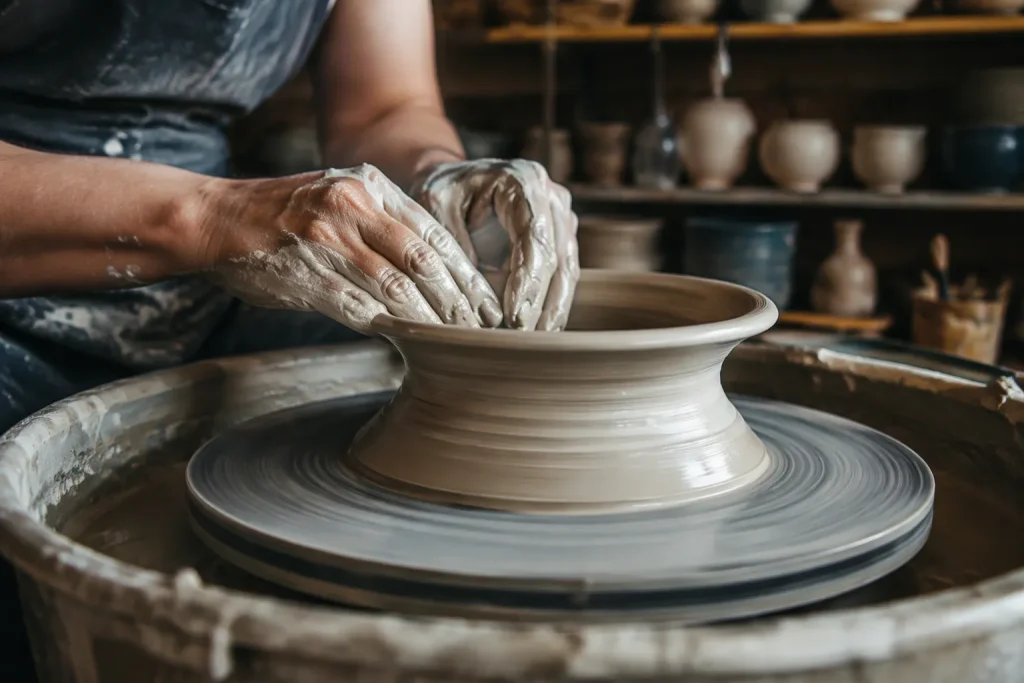
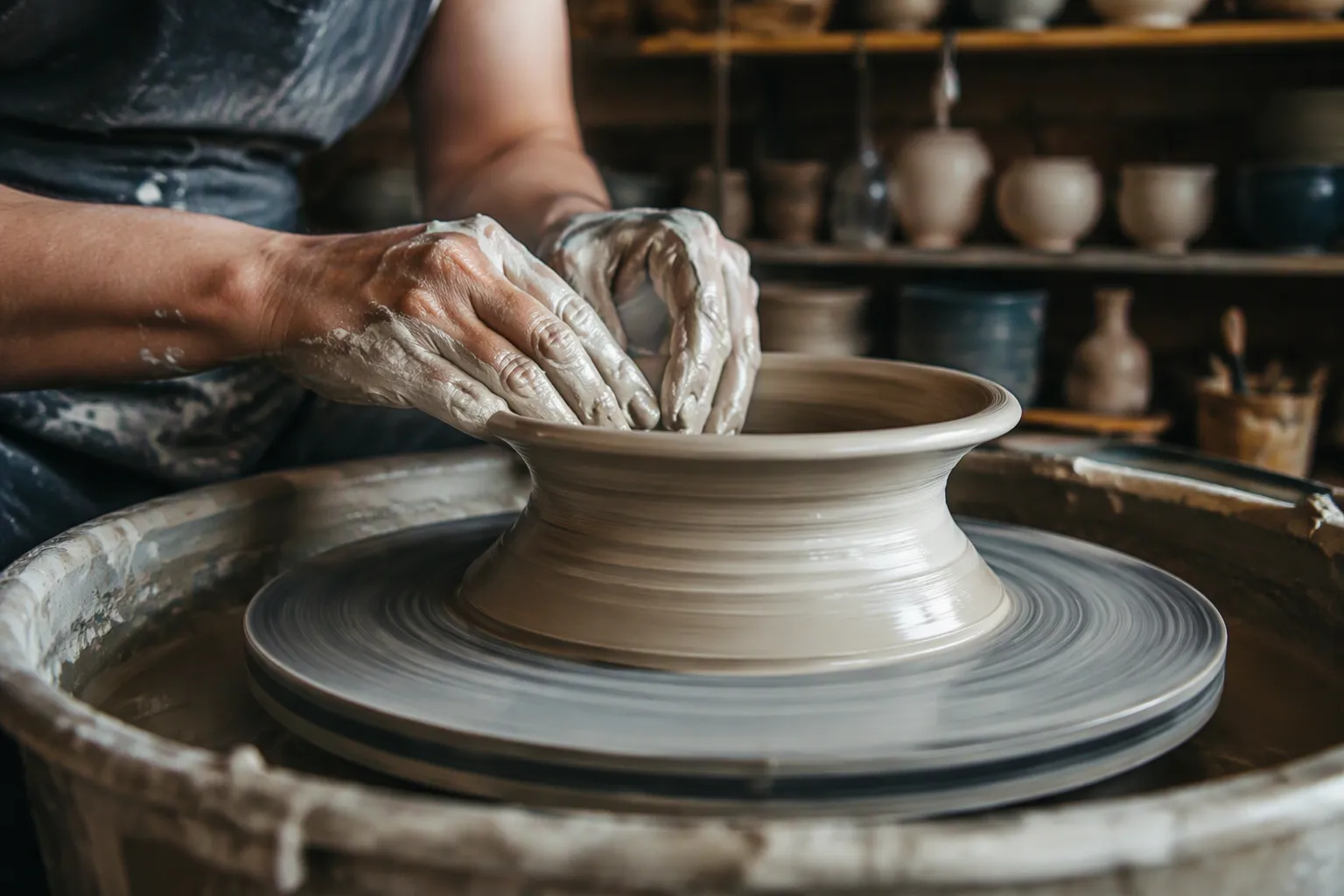
Centrifugal force is the invisible grip that holds your CLAYE clay on the spinning wheel. Without it, shaping would be impossible. This is why centrifugal force matters for every potter. The force shapes three practical stakes: centering, shaping, and preventing failure. A lump of clay that fights the wheel will wobble, collapse, or fly off. The same lump that works with the force becomes a vessel. You do not need a physics degree to use it. This explanation stays in plain language. It shows how wheel speed and hand pressure let you manage the force at every stage of pottery throwing.
Key Takeaways
Centrifugal force pushes clay outward on the spinning wheel. This force helps hold clay in place and shape it evenly.
Control wheel speed to manage the force. Use fast speed for centering and slow speed for shaping walls.
Use hand pressure to balance the outward push. Press inward with both hands to keep walls vertical.
Practice coning up and down to center clay. This technique aligns clay particles and improves symmetry.
Avoid speed mistakes: too slow causes wobble, too fast makes clay fly off. Adjust speed gradually for best results.
Why Centrifugal Force Matters on the Wheel
Every potter feels the pull of the spinning wheel. That pull is the force you learn to work with, not against. This section explains what the force is and how rotation creates it. The answer is simple, and it changes how you approach the task.
A Simple Definition for Potters
Centrifugal force is the outward push you feel when something spins. Picture a drop of water on a turning record. The drop slides toward the edge. The faster the spin, the harder the drop presses outward. Your clay behaves the same way on the potter’s wheel. The spinning motion pushes the clay outward, away from the center.
You do not need physics to understand this. Think of the force as the machine’s way of pressing clay against your hands. That pressure is useful. It holds the clay in place and helps it find a round shape. Pottery beginners often fight this push. Skilled hands use it instead. This simple picture shows why centrifugal force matters for every beginner.
How Rotation Creates the Force
Rotation creates the force. Faster rotation means a stronger outward push. Slower rotation means a weaker push. The centrifugal pull grows with speed. A gentle push on the pedal changes the force almost at once. This is why rotation velocity regulation is a key control parameter during throwing. You change the speed, and you change the force.
Here is where centrifugal force matters for centering. A slow spin gives you little outward push. The clay stays soft and hard to control. A fast spin gives you a strong push. The clay stiffens against your hands. During wheel throwing, you match speed to the task. Low speed suits opening and shaping. Higher speed suits centering and pulling walls. The forces of the wheel respond to your foot on the pedal. Small changes in speed create small changes in centrifugal forces. That control is the heart of throwing.
Centering Clay with Centrifugal Force
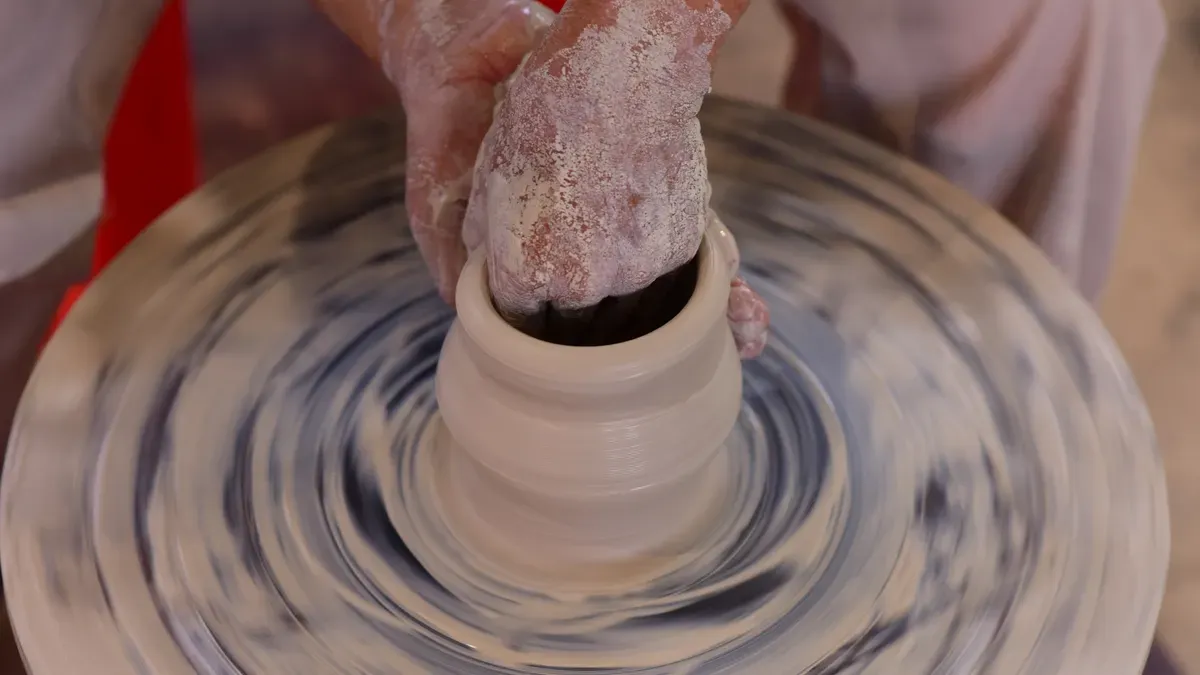
Centrifugal force does more than hold clay in place. It helps the clay find symmetry as the wheel turns. Every lump has high and low spots. The outward push presses those uneven areas against your hands. Your hands act as a fixed boundary. The clay rotates against that boundary and slowly evens out. This is the heart of centering clay on the wheel. You are not forcing the clay into shape. You are letting the spin and your hands work together.
The Push Against Your Hands
You feel the push most clearly during centering. The wheel spins, and the clay presses outward into your palms. That pressure tells you where the clay is off-center. A wobble becomes a pulse against your skin. Skilled potters read that pulse and adjust. This feedback loop makes proper centering possible. You center your clay by responding to the force, not by overpowering it. The centering process rewards patience. Rushing this stage undermines the foundation of wheel throwing.
Larger lumps demand more than arm strength. Centering clay on the potter’s wheel with a big mound requires your whole body. Lean your torso into the clay. Brace your elbow against your hip. Let your body weight do the work. Arm muscles tire quickly. Body weight stays steady through the long push. This approach reflects techniques for centering clay on the wheel that artisans have refined over generations. In Jingdezhen, where clayesouk‘s craftsmen work, this body-centered method has passed down through centuries of pottery tradition.
Coning Up and Down for Symmetry
Coning up and down is the classic technique for centering clay. The motion aligns clay particles and continues the work of wedging. Think of it as wheel wedging. You move the clay through a full cycle of up and down. Each pass brings the mass closer to true center.
Here is a step-by-step guide to centering through coning. First, cone up. Wrap both hands around the clay and squeeze inward with the heels of your hands. The clay rises into a cone shape. Use a high wheel speed to make this step easier. Second, cone down. Keep the wheel fast and add water. Hook the elbow of your non-dominant arm into your waist and extend that arm straight ahead. Cup the side of the clay with your non-dominant hand, pinky touching the wheel head. Lean your whole body into the clay for maximum control. Push downward with the side of your dominant hand. Brace the clay with the palm and fingers of your non-dominant hand. Control how it distributes on the way down. Finish with a dome or a flat hockey puck shape.
Repeat coning up and down several times. Each cycle improves symmetry. The result is centered clay ready for opening. If the clay drifts, re-center with another cone. This rhythm defines successful throwing.
Throwing Walls and Shaping Forms
Centrifugal force does more than hold clay steady. It gives you the energy to draw walls upward and stretch them into shape. This stage of throwing on the potter’s wheel rewards a light touch and a steady foot on the pedal.
Energy for Drawing Clay Upward
The outward push of the spinning wheel works in your favor when you pull walls. As you draw clay upward, centrifugal force naturally pushes outward. This outward motion helps shape walls evenly. You must guard against over-flaring, though. The force will always try to turn your cylinder into a plate.
Due to the centrifugal force of the spinning wheel, the clay will always want to become a plate. Make sure to exert sufficient and equal force with your fingers to pull the clay upward.
Your hand pressure and wheel speed must work as partners. After centering, slow the wheel to a medium to medium-low speed for throwing. Throwing too fast raises the risk of the clay flaring out and collapsing. Adjust speed at different stages. Reduce the wheel to half speed when pulling up the walls. As the project grows taller, turn the wheel progressively slower. This rhythm keeps the force manageable.
Forming Curves and Openings
To counter centrifugal force, hold your hands in a caliper position and treat them as a single tool. While lifting the walls, press this hand-tool inward toward the central axis of the pot. This inward pressure produces a tall tapered cylinder. It stops the clay from flaring outward.
Collaring is another hand-pressure technique. Use your fingers to press the walls inward. This refines the shape and creates curves. Collaring works well for forming bowls and vases. Inward finger pressure controls the wall as it curves.
Rim control matters too. Hold a firm rim statement while throwing. Centrifugal force drives the clay outward toward the rim. Control the outside high point, and the clay rebounds inward and upward along the core of the new wall. The rim grows, and the pot nearly completes its throwing. Gravity pulls clay down while the wheel’s spin pushes it up and outward. Read the clay’s state at each moment. Respond and direct its movement.
These forces shape every handmade ceramic cup at clayesouk. Each piece of pottery carries the mark of hands that read the wheel and worked with its energy. Mastering this stage of wheel throwing turns a rough cylinder into a finished form.
When Wheel Speed Goes Wrong
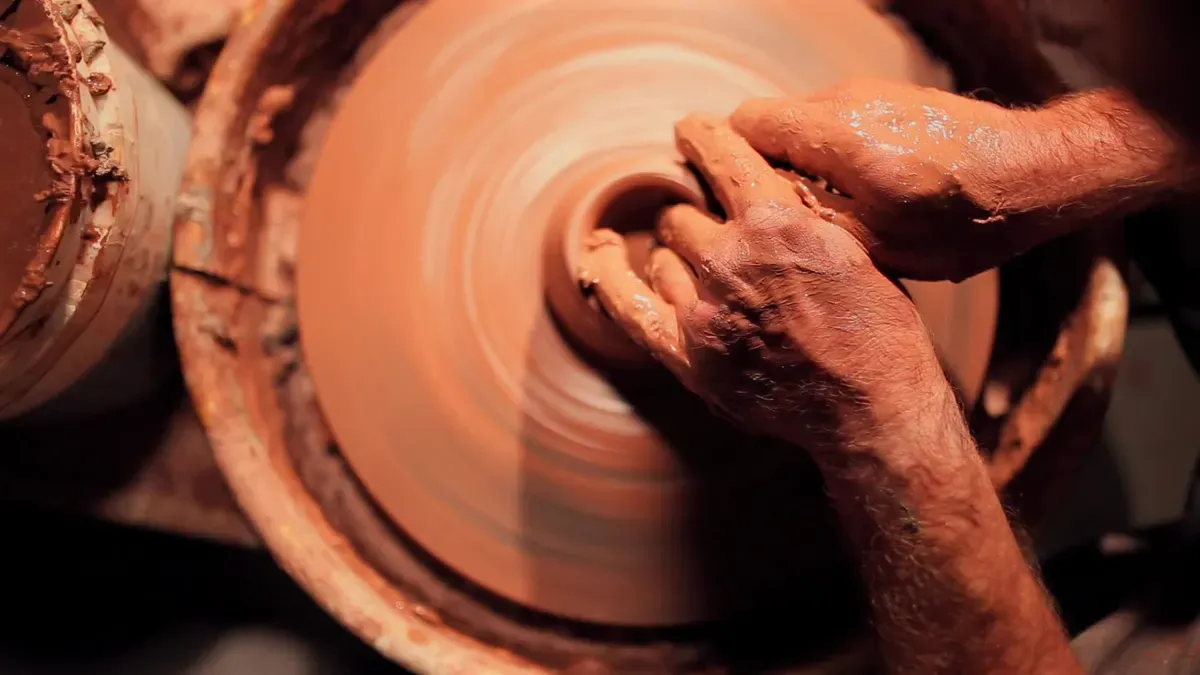
Wheel speed is your main control, and it can fail you in two opposite ways. A slow spin starves the lump of outward push. A fast spin overwhelms your hands. Both mistakes cause the same result: a pot that will not hold its shape. Learning to spot each problem early saves you from starting over.
Too Little Force: Wobble and Collapse
A slow wheel may not provide enough centrifugal force for effective centering. The clay stays soft and drifts under your palms. You press harder to compensate, and the lump wobbles like a loose tire. Each revolution adds a new bump instead of smoothing the old ones. This is one of the most common centering challenges and how to overcome them: raise the speed before you add pressure. A faster spin stiffens the clay against your hands and lets the force do its work.
Weak force also ruins the walls. As you pull upward, the clay sags back down. The rim thickens and the cylinder leans. Beginners often blame their hands when the real problem sits under your foot. Give the wheel more speed at the start, then ease off for shaping. That rhythm keeps the clay stable through every stage of wheel throwing.
Too Much Force: Clay Flies Off
High speed is hard for beginners to control. The outward push grows strong, and a small slip of the hand sends the lump sliding across the wheel head. Water makes it worse. Wet clay loses grip and leaves the bat entirely. Keep your speed modest until your hands learn to read the force. Add speed in small steps, never in one jump.
Speed also stirs up dust once clay dries. Airborne silica particles from pottery work settle on floors and shelves, and dry sweeping sends them back into the air. Mop floors instead of sweeping, and wipe surfaces with a damp cloth. Wear a fit-tested N95 respirator during dusty work, and run an air purifier to trap particles your cleaning misses. Clean habits protect your lungs as much as your pots.
Managing Force in Wheel Throwing
Matching Wheel Speed to the Task
Good wheel throwing starts with a simple habit. Change speed before you change hand position. Set a fast spin for centering and coning. The strong outward push stiffens the clay and helps it find true center. Ease the wheel to a medium speed for opening the mound. Slow it further as you pull walls upward. Taller forms need a gentler spin, because the force grows with height and speed together.
Keep your foot light on the pedal. Small adjustments beat big jumps. If the clay starts to drift, raise the speed slightly and let the force steady it. If the rim begins to flare, slow down. Practice this rhythm on scrap clay until it feels natural. A steady foot makes every stage of wheel throwing more predictable.
Using Hand Pressure as a Counterbalance
Your hands are the brake for the outward push. Press inward with equal force on both sides of the pot. This inward pressure balances the force and keeps walls vertical. Think of your hands as a caliper. Treat them as one tool, and move them together.
Coning teaches this balance well. Cone up with firm inward pressure, then cone down with the same steady grip. Repeat coning up and down until the lump stops wobbling. If the clay drifts off axis, re-center it with another cone before you open it. This step builds centered clay you can trust.
Every pottery form depends on this partnership between speed and pressure. During centering clay on the wheel, let your body weight support your hands. Lean in, brace your elbow, and stay relaxed. These habits carry you through wheel throwing with fewer collapses and cleaner forms.
Centrifugal force is the working force behind every step of working with CLAYE clay. It holds the lump during centering, powers the pull as you draw walls upward, and shapes the final form. The five sections above all point to one takeaway. Control the force through wheel speed and hand pressure, and wheel throwing becomes predictable. You set the pace with your foot and balance the push with your hands. That partnership turns a wild spin into a steady rhythm. For beginners, this one skill separates clay that cooperates from clay that collapses. Keep practicing, and the wheel will feel like a partner, not an opponent. Knowing why centrifugal force matters changes how you approach every pottery session.
FAQ
Does a faster wheel always make throwing easier?
No. Speed helps during centering, when the outward push stiffens the clay. Speed hurts during wall pulling, when the force flares the rim. Match speed to the task. Raise it for centering, then ease off for shaping. Your foot sets the pace for every stage.
Why does my clay keep sliding off the wheel head?
Wet clay loses grip on a fast-spinning wheel. The outward push grows strong, and a small slip sends the lump across the bat. Slow the wheel and use less water. Press the clay down firmly before you start. A secure base keeps the clay in place.
How do I know when the force is working for me?
You feel steady pressure against both palms. The lump stops pulsing and turns smoothly under your hands. That even push means the clay has found center. If you feel a wobble, add a little speed and cone up and down again. The wheel tells you through your hands.
Can beginners practice this without wasting clay?
Yes. Recycle scrap clay and practice coning up and down at different speeds. Feel how the force changes with each pedal adjustment. Short practice sessions build the habit fast. Pottery skills grow through repetition, and scrap clay costs nothing.
