


Dutch traders imported over three million pieces of Chinese porcelain to Europe from 1604 to 1657. Eager European rulers constantly craved this shiny white treasure. Jingdezhen led world ceramic making as the top porcelain city, guarding its craft for centuries. But history shifted suddenly in 1708 when Saxon chemist Johann Friedrich Böttger and smart scientist Ehrenfried Walther von Tschirnhaus discovered kaolin clay in Saxony. Their skill helped them finally Crack Porcelain Secret methods that had eluded Western artisans for generations. They started Meissen to create fine hard ceramics and famous Meissen porcelain. This success sparked rival European pottery makers and changed factory tech. Europe created its own porcelain center to compete with Asian trade power.
Key Takeaways
Jingdezhen ruled world pottery making for hundreds of years by protecting its high-fire clay methods and secret porcelain recipes.
Saxon researchers Böttger and Tschirnhaus discovered the secret to making porcelain in 1708 by combining local kaolin clay with alabaster.
Meissen opened Europe’s first hard-paste porcelain factory in 1710, creating fierce global trade competition with Chinese potters.
At first, European artists copied Asian styles. However, they soon created unique Chinoiserie designs to match what Western customers wanted.
Today, companies like Clayesouk keep long-held Jingdezhen traditions alive by making real, hand-painted blue and white pottery.
Jingdezhen and the Porcelain Monopoly
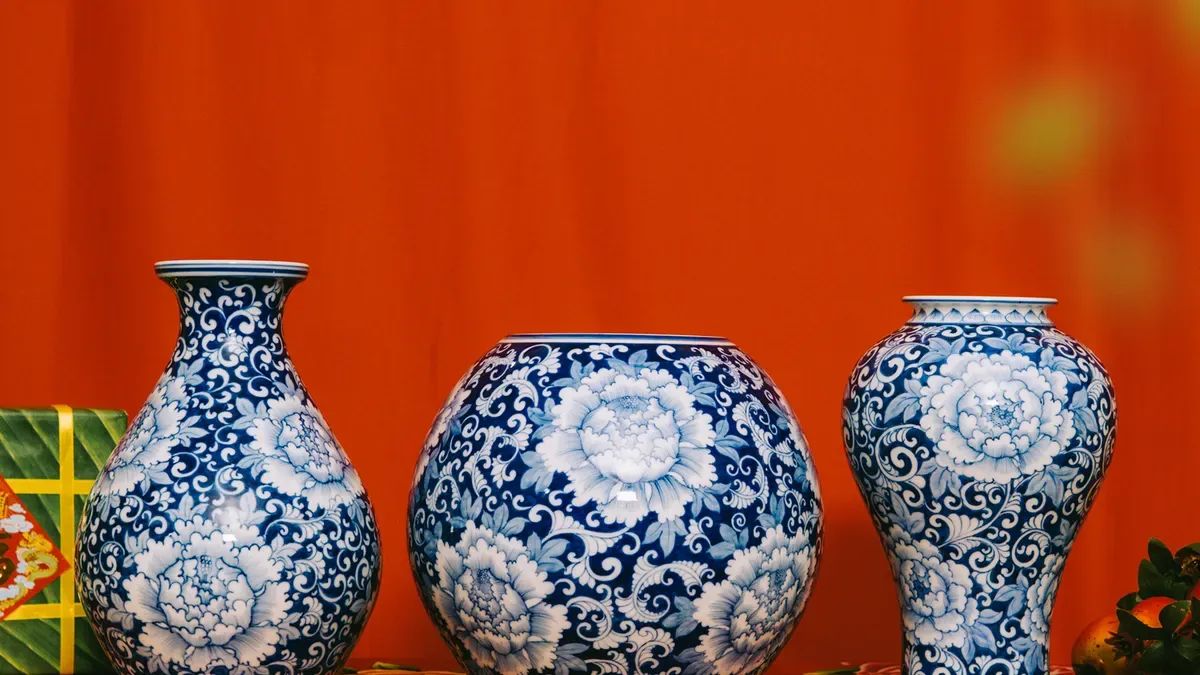
China’s Millennia of Ceramic Dominance
Long ago, potters changed simple dirt into shiny containers during the Han Dynasty. This exciting start began an amazing period of ceramic skill. Local craftspeople improved their methods over hundreds of years. They constructed huge ovens on slopes near rivers. These early achievements turned a peaceful mountain town into the world capital of porcelain. Craftspeople discovered the hidden tricks for using high-heat clay. They created smooth containers that possessed incredible toughness and charm.
In the year 1402, the royal oven area held twelve working ceramic ovens. Powerful leaders kept these private methods very safe. Rulers wanted perfect Jingdezhen items for their large grand homes. Expert makers guarded their clay formulas like valuable gold. Each group of delicate Jingdezhen porcelain needed strong heat and accurate manual skills. Many generations of employees protected this active traditional history. Jingdezhen items established the worldwide benchmark for wonderful quality. Truly, this famous porcelain city possessed complete control over global pottery styles.
The European Obsession with White Gold
Royal families throughout Europe adored clear Chinese porcelain items. Powerful leaders saw these smooth white vessels as magical items. They named Chinese export porcelain white gold since it was extremely valuable. Wealthy people paid huge fortunes to buy real Jingdezhen porcelain tea dishes. Possessing real blue and white porcelain provided great political power and popular social standing. Merchants carried many thousands of delicate boxes over dangerous ocean waves to reach rich buyers.
Kings created large show rooms to present exotic Jingdezhen items. Interest grew quickly for traditional blue-and-white styles and detailed historic designs. European potters failed many times while trying to copy this Chinese export porcelain. Soft local clays broke apart in low-heat ovens. European makers lacked the deep local experience and careful skill of the great porcelain city. Jingdezhen items had special strength that no European shop could copy. Foreign leaders wanted this Eastern craft. So, overseas buyers relied completely on the famous porcelain city to provide their royal homes with outstanding art and supreme pottery quality.
How Saxony Solved the Race to Crack Porcelain Secret
Père d’Entrecolles and Imperial Espionage
A clever French priest named Père d’Entrecolles traveled to the famous porcelain capital back in the early 1700s. He lived in this grand porcelain capital to learn its prized ceramic making steps. Local makers in the porcelain capital protected their porcelain manufacturing techniques with deep devotion. Still, the wise visitor secretly gathered information about Chinese porcelain production while staying in the porcelain capital. He sent long, detailed letters to Europe about these prized craft practices. His famous reports revealed the amazing hidden steps used in this porcelain capital:
Makers combined white kao-lin clay with ground pe-tun-tse rock to create the finest raw material mix. Average pieces used four parts kao-lin mixed with six parts pe-tun-tse.
Artists split up their daily tasks smoothly. One person drew simple round lines while another painted wild animals.
Oven workers packed blue cobalt underneath heavy gravel for a full day to prepare rich blue paint.
Makers produced bright red colors by heating copperas inside tightly sealed jars until small clouds formed.
Workers built tough clay boxes called saggars out of cheap yellow clay to guard raw pots inside ovens.
These shocking letters amazed readers all over the European continent. Makers across Europe respected the deep creative tradition of Jingdezhen. Chinese export porcelain demanded great skill, steady oven heat, and very high clay quality. The priest wrote down this active tradition to help Western makers compete with the porcelain capital. European factories read these notes carefully to crack porcelain secret techniques. Still, European workers lacked the exact local rocks needed to copy real Jingdezhen ceramics.
Böttger and the Saxon Breakthrough
At the same time, King Augustus the Strong started a dangerous project over in Saxony. The strict king trapped an alchemist named Johann Friedrich Böttger inside a cold stone fortress. The ruler ordered Böttger to turn cheap metal pieces into real shiny gold. Luckily, a smart researcher named Ehrenfried Walther von Tschirnhaus watched the trapped worker during these forced tests. Tschirnhaus guided Böttger toward unlocking the old secret of Chinese porcelain instead. The two men ran hundreds of hot fire tests to build sturdy heat-resistant pots. This great partnership produced fantastic results through careful science work:
Augustus the Strong locked up young Böttger to demand real gold under close watch.
Böttger labored right under the watchful eye of Tschirnhaus during required lab experiments.
The pair created dark red stoneware items while trying to form tough laboratory gear.
Tschirnhaus figured out Chinese porcelain came from baked clay instead of mysterious magical potions.
Böttger mixed local kaolin clay from Aue with smooth alabaster in 1708 to produce white ceramics.
The team opened the royal Meissen factory in 1710 to start early European ceramics production.
This remarkable 1708 event helped Saxony crack porcelain secret recipes that had confused Western minds for centuries. The royal Meissen factory fast changed international trade routes. Wealthy leaders praised the wonderful value of these fresh European clay products. Even so, the old porcelain capital held onto its proud ceramic background. Skilled artists in Jingdezhen kept making classic Jingdezhen porcelain with unbeatable visual appeal. European buyers kept prizing the ancient background of Jingdezhen ceramics. Today, art fans around the world honor the famous history of Jingdezhen ceramics. Collectors respect the long history of Jingdezhen ceramics, knowing that true Jingdezhen ceramics deliver amazing handmade work. The grand history of the first porcelain capital continues on right now.
Meissen vs Jingdezhen: Craft and Chemistry
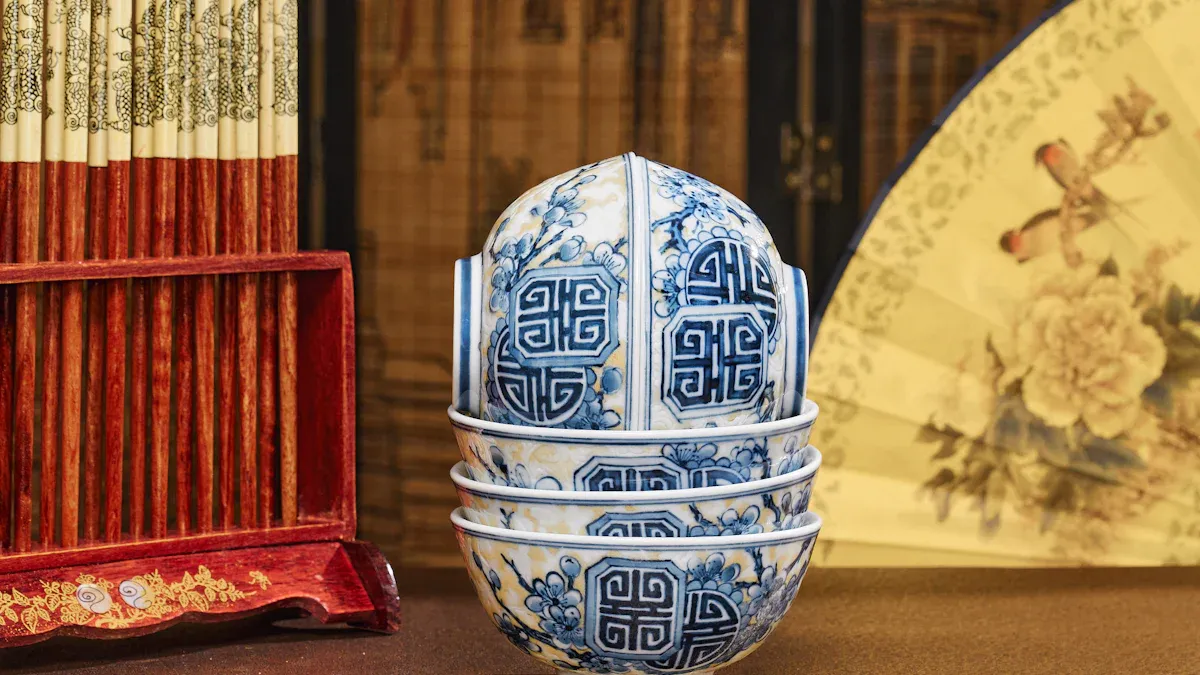
Chemical Formulations and Kiln Technology
Long ago, Chinese potters figured out how to use special earth. Their white clay made dishes incredibly strong and well-made. Local workers processed rare rocks to keep their famous craft alive.
Kaolin is a soft, white clay made mostly of the mineral kaolinite (a hydrated aluminum silicate, chemical formula Al₂Si₂O₅(OH)₄).
European makers tried for hundreds of years to copy these secret clay recipes. Then, German chemists built hot ovens and created tough porcelain in 1708. Meissen workers mixed white stone with local clay to improve their pots. Even so, Asian potters kept making the best dishes around. Skilled oven masters in Jingdezhen guarded their old methods carefully. Their deep knowledge guaranteed great results every time. These artists made light, smooth cups that looked amazing. Local workers fired giant dragon ovens with total accuracy. Their long history changed ceramic making forever. Extreme heat turned raw clay into smooth, glass-like pots.
Chinoiserie and Original Chinese Aesthetics
European buyers really loved exotic dishes imported from Asia. German painters studied real Chinese pots to create colorful new art. Western artists changed traditional Asian designs to fit local tastes.
Phase One (c. 1710–1720): Meissen directly imitated Dehua blanc de Chine, but produced smaller, stiffer, and crack-prone pieces due to material differences.
Phase Two (c. 1720–1730s): Under Höroldt, Meissen abandoned direct copying and developed painted chinoiserie motifs on white porcelain, using it as a canvas for a new visual language.
Turning point: The shift from ‘copying China’ to ‘imagining China’ marks the fundamental difference from original Chinese decoration.
Chinoiserie was not a direct reflection of East Asian artistic traditions but rather a Westernized impression. At times, it was imaginative, but also inaccurate.
Real Jingdezhen pottery shows off a rich cultural background. Local craftspeople paint classic blue and white bowls entirely by hand. These creative masters decorate delicate dishes with incredible detail and skill. Every blue line painted on the white clay honors old traditions. Workers still make brilliant blue and white items of top quality. Artists passed down these classic patterns across many generations. Expert painters coated every plate with a shiny finish before firing.
The famous pottery city protected its valuable craft through many centuries. Today, genuine Jingdezhen pieces display beautiful balance and style. Western collectors love real Asian porcelain for its deep history. Each fresh batch of pottery shows off incredible craftsmanship. True Jingdezhen items express complete creative freedom and beauty. Modern buyers praise this porcelain because the old culture remains alive. Authentic dishes carry the proud story of the world pottery capital. Every single item displays world-class skill and beauty.
This lively tradition continues today inside the famous pottery capital. The historic city still makes smooth white vessels of high quality. These fine ceramic items bring great joy to art lovers everywhere. Masters craft pure clay art inside busy local workshops. Small shops display rare ceramic pieces under bright showcase lights. Today, this ancient pottery tradition remains strong and active. Experienced potters work hard inside quiet studios every morning. They shape soft white clay using steady hands and strong passion. Dedicated teams inspect each finished vase to ensure perfect quality. Happy owners treasure these beautiful items for many long years.
Modern Porcelain Heritage and Clayesouk Mastery
The Evolution of Fine Material Science
Modern science transforms porcelain research into advanced material tech. A major 2024 study in Nature introduced a special ceramic that bends like metal while keeping its strength. This discovery turns old ceramic ideas into strong tools for industry.
Engineers use ancient porcelain concepts for modern uses:
Bioceramics: Material made from bone minerals helps create dental implants and bone coatings that easily bond with human tissue.
Ceramic bearings: These last three times longer than steel, create less friction, resist rust, and work well in tough spots.
Ceramic engine parts: Scientists test these parts in gas turbines to save fuel and handle higher heat, but manufacturing remains hard.
Authentic Jingdezhen Craftsmanship at Clayesouk
Today, ancient traditions stay alive in Jingdezhen. Workers protect this famous ceramic history by hand-making delicate blue and white cups. Skilled artists guard these old methods inside the famous craft city. Creative painters brush detailed blue and white patterns onto raw clay to deliver supreme porcelain quality.
The brand clayesouk honors this rich ceramic history. Master painters blend traditional Chinese styles with practical home designs. They craft blue and white tea cups to celebrate classic pottery traditions. Every cup shows off great skill and deep cultural roots. Local shops keep these historic methods alive all across the city.
Craftspeople in the region select top kaolin clay to guarantee amazing quality. They shape blue and white containers by following traditional pottery steps. Experienced workers check every piece carefully to maintain high standards throughout the city. They paint blue and white cups with amazing detail and skill. This careful work shields local history and honors true traditions. Buyers actively search for authentic hand-made quality. Today, clayesouk shares this rich ceramic history with pottery lovers everywhere. Artists create blue and white pieces that show real passion and history. This famous local background guarantees supreme quality for collectors who love traditional art.
German science met Asian art as Meissen workers tried hard to figure out hidden porcelain recipes. Chinese makers guarded their Jingdezhen pottery methods well inside the old craft city. This intense global race boosted early chemistry knowledge and changed how Europe built factory goods. Quick competition opened huge trade routes across oceans to ship smooth dishes to far nations.
Today, genuine Jingdezhen pottery holds huge value in global stores. Careful buyers want real Jingdezhen pieces since true Jingdezhen porcelain provides top strength and deep history. The famous craft town guards its active culture with total dedication. Expert makers protect this old tradition, making sure every Jingdezhen ceramic item shows great skill, clear historical roots, and lasting beauty.
FAQ
What makes Jingdezhen the world famous porcelain capital?
Jingdezhen became famous as the top porcelain town by mastering clay arts for over 1,700 years. Local makers guarded their deep roots while running royal fire ovens. Now, Jingdezhen dishes display total perfection. These hand-made items show off ancient roots along with top-tier strength.
How did Meissen discover the secret of white porcelain?
A worker named Johann Böttger found the trick to hard white clay back in 1708. He combined local German clay with smooth white stone. Meissen then built the very first real shop across Europe. This big success tested Jingdezhen pots while establishing brand new benchmarks for shop quality and raw material science.
Why do collectors prefer authentic Jingdezhen ceramics today?
Buyers love Jingdezhen pottery because of its ongoing story and custom charm. Talented workers praise old ways inside this legendary art city. These artists make every cup using incredible care, which guarantees top strength, rich shades, and long-lasting build standards.
How does Clayesouk preserve traditional ceramic techniques?
Clayesouk honors hundreds of years of local art roots right in Jingdezhen. Skilled local workers paint detailed blue and white tea cups by hand. They hold tight to high product standards, bringing buyers real Jingdezhen pottery that has classic style plus wonderful build quality.
